
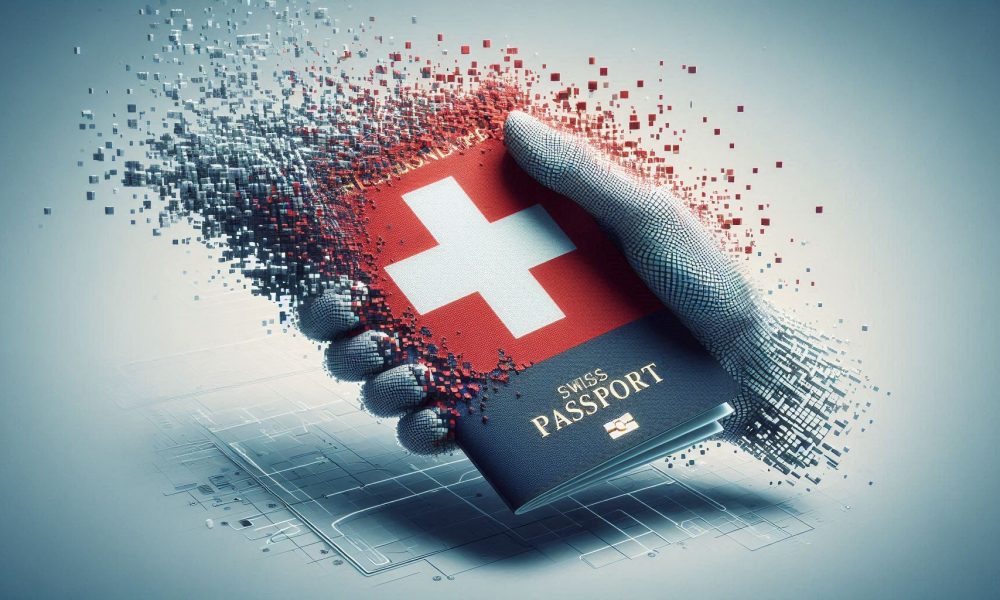
Vancouver, Canada, 2025 — For a growing number of Canadian entrepreneurs, executives, and high-profile professionals, the question is no longer whether they should consider diversifying their legal and geographic footprint, but how and when. In an interconnected world where governments share more data than ever before and commercial records are increasingly accessible to the public, relying on a single legal identity tied to one jurisdiction can present real risks. Political shifts, economic volatility, reputational exposure, and even criminal targeting can turn a secure life into one defined by uncertainty.
In some cases, the vulnerabilities extend beyond the individual to include spouses, children, and extended family members. For these clients, separating business operations and family life into distinct legal, geographic, and financial frameworks is not just a privacy measure; it is a resilience strategy. This is what experts in the field call creating a “parallel life,” an entirely lawful, alternative legal footprint in a second jurisdiction that allows both the individual and their dependents to pivot instantly if circumstances demand it.
Amicus International Consulting, a leading global advisory firm specializing in legal identity transformation and multi-jurisdictional structuring, recently completed an extensive project for a Canadian client who sought precisely this outcome. The process involved designing and implementing a parallel life that gave him the freedom to manage a thriving technology business while ensuring his family’s safety and privacy in a separate jurisdiction. The entire structure was engineered to comply with the laws of Canada, the host country, and international regulations.
Why a Parallel Life Is More Relevant Than Ever
The concept of building a second, lawful identity footprint has traditionally been associated with high-net-worth individuals, political figures, and those operating in sensitive industries. However, in recent years, the rise of data integration across borders and the speed at which personal and professional information can be connected has made this strategy relevant to a much wider range of people.
The vulnerabilities that can be mitigated by parallel life planning include:
Litigation risk: Keeping family assets separate from potential business disputes or liability claims.
Political exposure: Reducing the risk that a change in government policy will affect both personal security and business operations simultaneously.
Economic instability: Ensuring that a downturn or crisis in one jurisdiction does not limit the ability to operate or reside elsewhere.
Privacy erosion: Preventing the consolidation of personal, financial, and corporate data into easily searchable databases.
Travel restrictions: Maintaining mobility if one jurisdiction imposes restrictions or becomes diplomatically isolated.
Case Study: The Canadian Technology Entrepreneur
The client, a 50-year-old founder and majority shareholder of a Canadian software firm, had achieved substantial growth over two decades. His business provided proprietary systems to clients in sectors ranging from healthcare to logistics, many of which required compliance with sensitive data protection rules.
While his success provided financial security, it also made him more visible to the public. He spoke at industry events, was quoted in national publications, and appeared on television as a subject matter expert. The publicity was good for business but came with drawbacks: competitors scrutinized his operations, political advocacy groups critiqued his technology’s applications, and cybercriminals targeted his company and personal accounts.
On the personal side, his family, a spouse, and two teenage children lived in a well-known neighborhood in Canada. Their address, property ownership, and even some personal details had become accessible online through real estate listings, school newsletters, and social media. The family’s movements could often be inferred from public appearances, making them vulnerable to unwanted attention.
Recognizing the risks, the client sought a solution that would:
Separate business identity and operations from personal and family life.
Create a physical and legal refuge for the family in a jurisdiction with strong privacy and safety records.
Ensure that both the business and family can operate independently in the event of geopolitical, economic, or reputational threats.
Phase One: Selecting a Residency Anchor for the Family
Amicus identified a politically neutral European jurisdiction with a stable economy, excellent healthcare, and strong legal protections for residents. It offered a property investment-based residency program that allowed for immediate permanent residency, renewable indefinitely, and provided a path to citizenship after several years of continuous residence.
Residency documentation for the client’s spouse and children was processed simultaneously, ensuring the entire family could relocate together without staggered timelines. This was not merely an immigration measure, but it was the foundation of their “family life” identity, distinct from the client’s business profile in Canada.
The jurisdiction was selected for several strategic reasons:
Privacy laws that limited public access to residency information.
Education infrastructure with reputable international schools.
Low political risk and neutrality in global conflicts.
Tax regime favorable for residents without domestic-sourced income.
Phase Two: Corporate Restructuring for Business Independence
The next step was to restructure the client’s software company into a layered corporate framework. The original Canadian entity remained the intellectual property owner and brand holder, but a newly formed operational company was incorporated in a business-friendly jurisdiction outside of Canada.
This operational company was designed to handle:
Client contracts in high-risk jurisdictions where Canadian incorporation could be a disadvantage.
Employment of international contractors and developers.
Revenue collection from specific markets to optimize cross-border tax efficiency.
By legally separating ownership from operations, the Canadian entity was shielded from operational risks abroad, and the operational entity gained flexibility in markets where the Canadian connection could cause delays or political complications.
Phase Three: Banking and Financial Segmentation
Amicus established separate banking arrangements for the client’s business and personal life.
Personal banking was set up in the family’s new residency jurisdiction, leveraging local institutions with strict confidentiality policies and multi-currency accounts.
Business banking was split between Canada and the operational jurisdiction, allowing for seamless international payments and compliance with client requirements in multiple currencies.
This structure ensured that business disputes, account freezes, or compliance reviews in one jurisdiction would not affect family finances.
Phase Four: Implementation of Privacy Protocols
While the legal structures were essential, Amicus also addressed the operational side of privacy. The family’s residence abroad was leased through a corporate vehicle rather than under personal names. Secure forwarding companies handled mail services, individual phone numbers were registered in jurisdictions with strong data protections, and travel itineraries were booked through intermediaries to avoid direct associations with the client’s public-facing business identity.
Social media practices were also adjusted. Family members received guidance on limiting geotagging, sharing photos without revealing addresses or schools, and avoiding patterns that could indicate the family’s schedule.
Phase Five: Travel and Mobility Planning
With two legal residencies, Canadian and the new European jurisdiction, the client and family gained expanded mobility. This meant that if one jurisdiction became restrictive due to geopolitical tensions, public health measures, or security issues, the family could remain in the other without disruption.
The client’s business travel continued under his Canadian identity, allowing him to maintain professional relationships and benefit from Canada’s trade agreements. Meanwhile, personal travel with the family could be conducted under the new residency, keeping the family’s movements decoupled from his business visibility.
Phase Six: Legal and Tax Compliance
Parallel life structures can only be sustainable if they are fully compliant with the laws of all involved jurisdictions. Amicus coordinated with tax attorneys in Canada and the new residency country to ensure that:
Personal taxes were filed correctly in each jurisdiction according to residency rules.
The operational company’s tax obligations were met without triggering double taxation.
International reporting obligations, such as under the Common Reporting Standard (CRS), were fulfilled without compromising privacy.
Outcome: A Fully Functional Parallel Life
Within a year, the Canadian client had two distinct yet lawful identities: one for professional and business operations, and another for personal and family life. His software company continued to grow, now insulated from political, regulatory, and reputational shocks that might have otherwise affected his personal life. His family enjoyed a high standard of living in their new country of residence, with enhanced privacy and security.
Perhaps most importantly, the structure gave the client peace of mind. He knew that any disruption, whether a geopolitical event, a targeted legal dispute, or a reputational crisis, would not threaten both his livelihood and his family at the same time. The ability to shift between jurisdictions, assets, and operational structures allowed for resilience in a world where certainty is increasingly scarce.
The Broader Significance of Parallel Life Strategies
What began as a niche solution for ultra-wealthy individuals has evolved into a practical strategy for professionals across industries. Lawyers, doctors, executives, digital entrepreneurs, and even academics are beginning to recognize the value of separating personal and professional legal identities.
By structuring life in this way, individuals:
Reduce the likelihood that one event can destabilize both the family and the business.
Gain flexibility in responding to changes in immigration policy or taxation.
Protect family privacy from business-related media attention.
Preserve international mobility regardless of the domestic political climate.
As global interconnectivity grows, so too does the risk of overexposure. For this Canadian client, the creation of a parallel life was not about secrecy or avoidanc;e it was about control, preparedness, and the right to operate on his terms.
Contact Information
Phone: +1 (604) 200-5402
Email: [email protected]
Website: www.amicusint.ca




