Heparin Market Overview :
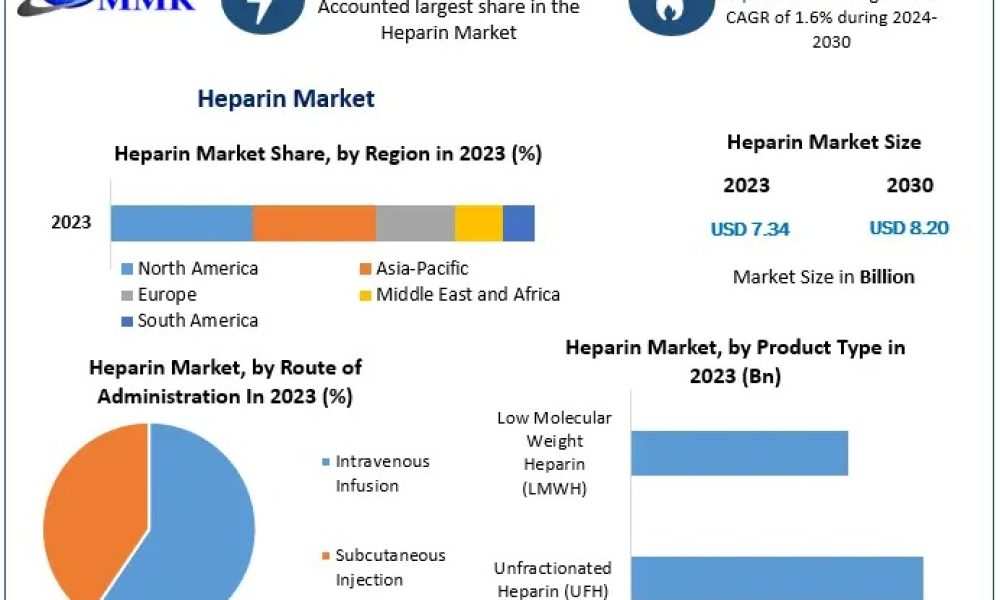
Heparin Market was valued at USD 7.34 billion in 2023 and is forecasted to grow at a modest CAGR of approximately 1.6% over the period from 2024 to 2030, reaching an estimated market size of USD 8.20 billion. Heparin, a critical anticoagulant medicine, finds extensive use in treating cardiovascular disorders, blood clot-related diseases, and during surgical procedures. North America dominates the heparin market, driven by a robust healthcare infrastructure, increasing incidence of chronic cardiovascular diseases, and ongoing innovation in product types.
Market Overview
Heparin is a naturally occurring anticoagulant widely used in hospitals and clinics to prevent and treat thrombosis and embolism. It is administered mainly in the form of unfractionated heparin (UFH) or low molecular weight heparin (LMWH), with the latter increasingly preferred due to its predictable efficacy and fewer side effects. The market growth is bolstered by increasing cardiovascular disease prevalence, growing surgical interventions, and expanding home healthcare utilization of subcutaneous LMWH injections.
Key Drivers
Rising incidence of cardiovascular diseases such as atrial fibrillation and pulmonary embolism, especially in aging populations.
Growth in surgical interventions like orthopedic procedures that require anticoagulant therapy.
Increasing awareness among healthcare providers and patients about the effectiveness and safety of LMWH.
Advances in drug development including ultra-low molecular weight heparins and biosimilars expanding market options.
Growing trend of home care and self-administration of subcutaneous injections.
Market Segmentation
By Product Type: Low molecular weight heparin dominates the market due to higher safety and efficacy compared to UFH.
By Route of Administration: The subcutaneous injection segment leads, driven by LMWH use in treatment and prevention regimes.
By End-User: Hospitals and ambulatory surgical centers hold majority market share, reflecting the reliance on healthcare professionals for administration and monitoring.
Regional Insights
North America accounts for nearly 39% of the global market, supported by extensive healthcare infrastructure, high expenditure on cardiovascular care, and presence of major pharmaceutical players. The region also benefits from proactive government health initiatives aimed at reducing cardiovascular risk factors and improving anticoagulation management. Asia Pacific is the fastest-growing region, driven by increasing healthcare investments, expanding patient base, and improving accessibility to anticoagulant therapies in emerging markets such as China and India.
Challenges
Concerns regarding raw material scarcity, particularly porcine sources for heparin extraction.
Higher costs related to advanced LMWH formulations limiting access in developing countries.
Regulatory hurdles and safety concerns related to anticoagulant therapies.
Recent Developments
FDA approval of new biosimilar LMWH drugs and advanced pathogen reduction systems improving safety and broadening product offerings.
Companies like Baxter, Pfizer, Fresenius, and Dr. Reddy’s actively investing in R&D to develop next-generation heparins and delivery systems.
Increasing adoption of home-care administration protocols encouraging patient compliance and expanding market outreach.
Competitive Landscape
Key market participants include Baxter International, Pfizer Inc., Fresenius SE & Co., Dr. Reddy’s Laboratories, B. Braun Medical, and Sanofi. These companies compete through innovations in drug formulations, strategic acquisitions, and geographic expansion into emerging markets to capitalize on growing demand.
Outlook
Although the global growth rate is moderate, the heparin market is characterized by evolving technology and increasing patient awareness, which sustain demand over time. The transition towards LMWH and ultra-LMWH, coupled with growing needs in surgical and cardiovascular domains, offer a steady roadmap for industry stakeholders seeking long-term growth.
Quote
North America’s leadership in the heparin market stems from its strong healthcare systems, advanced treatment modalities, and dynamic pharmaceutical innovation. Despite some raw material challenges, continuous research is fueling safer, more effective anticoagulant therapies worldwide,” said a leading market analyst.
With increasing burden of cardiovascular diseases, expanding surgical needs, and innovations in anticoagulant treatments, the global heparin market is positioned for sustainable growth, especially led by North America and emerging economies through 2030.The global heparin market was valued at approximately USD 7.34 billion in 2023 and is forecasted to grow at a modest CAGR of around 1.6% during the period from 2024 to 2030, reaching a market size of USD 8.20 billion by 2030. Heparin is a vital anticoagulant extensively used for preventing and treating blood clots in a variety of cardiovascular conditions such as atrial fibrillation, deep vein thrombosis, pulmonary embolism, and in perioperative management during surgeries like orthopedic replacements.
The market growth is primarily driven by the rising prevalence of chronic cardiovascular diseases globally and the aging population, along with increasing awareness about the effectiveness of heparin products. Among product types, low molecular weight heparin (LMWH) dominates with the largest share due to its predictable anticoagulant effects and safer profile compared to unfractionated heparin (UFH). The subcutaneous injection route, used mostly for LMWH administration, holds the leading share for ease of use and home healthcare adoption.
Regionally, North America is the dominant market, accounting for close to 39% of global sales due to its well-developed healthcare infrastructure, significant R&D presence, and high healthcare spending. Growing cardiovascular disease incidence in North America, coupled with the presence of major players like Pfizer, Baxter, and Fresenius, fuels market growth. The Asia Pacific region is the fastest growing, spurred by improving healthcare access, an expanding patient base, and increased adoption of modern anticoagulant therapies in countries such as China and India.




