
The global healthcare system depends heavily on seamless logistics. From life-saving vaccines to critical surgical devices, the ability to transport, store, and deliver medical products safely and efficiently is a cornerstone of modern healthcare. Disruptions in logistics can cause severe consequences—shortages of essential drugs, delays in surgical procedures, and higher patient risk.
Healthcare logistics plays a pivotal role in ensuring timely access to medicines, equipment, and services across hospitals, clinics, and pharmacies worldwide. The recent COVID-19 pandemic exposed vulnerabilities in global supply chains but also accelerated investment in resilient, technology-driven logistics solutions.
As healthcare markets expand and patient needs evolve, logistics providers are turning to digitalization, automation, and sustainability to meet rising demand.
Industry Overview
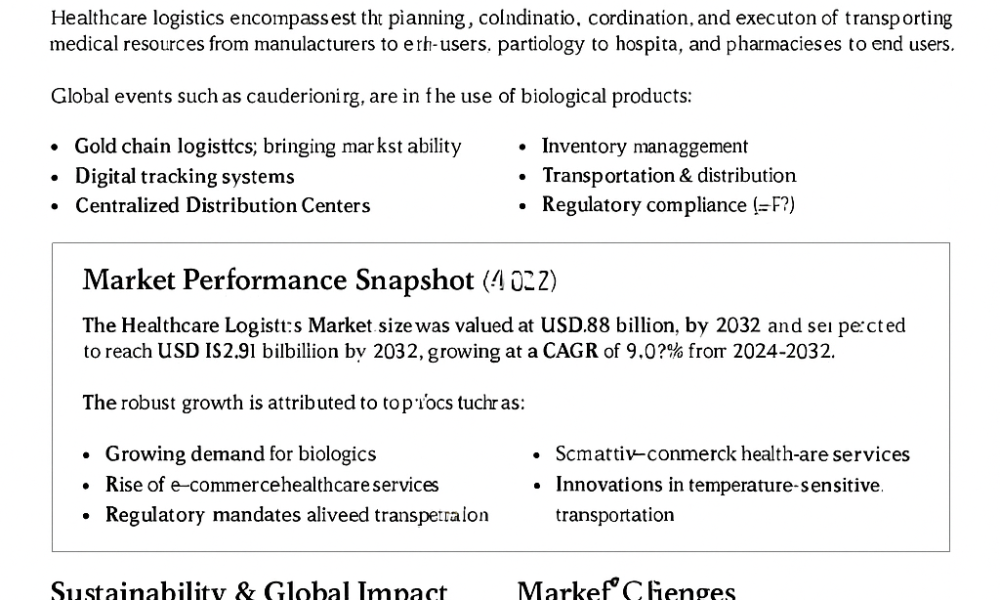
Healthcare logistics covers the planning, execution, and management of the flow of medical products and services. This includes:
Cold chain logistics for vaccines, biologics, and blood products.
Transportation management for medical devices and pharmaceuticals.
Warehousing solutions with climate control and advanced inventory systems.
Last-mile delivery to hospitals, pharmacies, and even patients’ homes.
The growing complexity of healthcare systems requires integrated logistics solutions that balance speed, compliance, and cost-efficiency. Major logistics firms, pharmaceutical companies, and specialized service providers are investing in infrastructure and technology to improve reliability.
Healthcare Logistics Market Performance Snapshot
The Healthcare Logistics Market size was valued at USD 88.04 billion in 2023 and is expected to reach USD 192.81 billion by 2032, growing at a CAGR of 9.07% from 2024–2032.
This strong growth reflects several major trends:
Globalization of healthcare trade: Rising cross-border demand for pharmaceuticals and medical devices.
Vaccine distribution expansion: Accelerated by COVID-19 and ongoing immunization programs.
Increasing demand for cold chain logistics: Particularly in biologics, gene therapy products, and specialty drugs.
Regulatory compliance: Governments imposing stricter standards for handling sensitive products.
E-commerce and direct-to-patient delivery: Expanding logistics needs beyond traditional clinical networks.
Asia-Pacific is emerging as the fastest-growing market, driven by investments in healthcare infrastructure, while North America and Europe continue to dominate with established supply chain ecosystems.
The market outlook highlights not only the rising demand for efficiency and safety but also the opportunities for innovation-driven logistics providers to expand globally.
Expansion Strategies & Innovations
1. Cold Chain Advancements
Specialized refrigerated containers, smart sensors, and real-time tracking are helping maintain strict temperature control during transport.
2. Digital Supply Chain Solutions
AI-driven demand forecasting, blockchain for traceability, and cloud-based logistics platforms are enhancing transparency and accuracy.
3. Automation in Warehousing
Robotics and automated storage systems reduce errors, improve efficiency, and optimize space utilization.
4. Sustainable Logistics
Green fleet adoption, optimized routing, and eco-friendly packaging are helping providers reduce their carbon footprint.
5. Direct-to-Patient Delivery
The shift toward home healthcare and e-pharmacy models has accelerated investment in last-mile delivery solutions.
Sustainability & Global Impact
Healthcare logistics contributes directly to public health outcomes. Timely deliveries ensure that patients receive life-saving treatments without delays. At the same time, sustainable logistics practices are helping the sector reduce its environmental impact.
By adopting eco-friendly packaging, renewable energy-powered facilities, and electric fleets, logistics companies align with global sustainability goals while ensuring operational resilience.
Furthermore, global initiatives—such as vaccine delivery programs in developing nations—underscore the role of healthcare logistics in bridging health equity gaps worldwide.
Market Challenges
Despite its growth, the healthcare logistics market faces hurdles:
Cold chain risks: Even minor temperature deviations can render drugs ineffective.
Regulatory complexity: Compliance varies across borders, creating challenges for global supply chains.
High operational costs: Specialized facilities, technology, and equipment require significant investment.
Geopolitical disruptions: Trade restrictions and conflicts can destabilize global logistics flows.
Cybersecurity threats: As supply chains digitize, risks of cyberattacks and data breaches rise.
Addressing these challenges requires continuous innovation, partnerships, and investments in risk management strategies.
Final Insights
The healthcare logistics market is evolving into a strategic pillar of global health systems. From vaccines and life-saving medicines to advanced medical devices, effective logistics ensures that patients receive timely care.
Future growth will hinge on digital transformation, sustainability practices, and robust cold chain infrastructure. Logistics providers who can balance innovation with compliance will define the next era of healthcare supply chains.
As the industry expands, healthcare logistics will not only improve efficiency but also enhance patient outcomes and strengthen healthcare resilience worldwide.




