
Overview
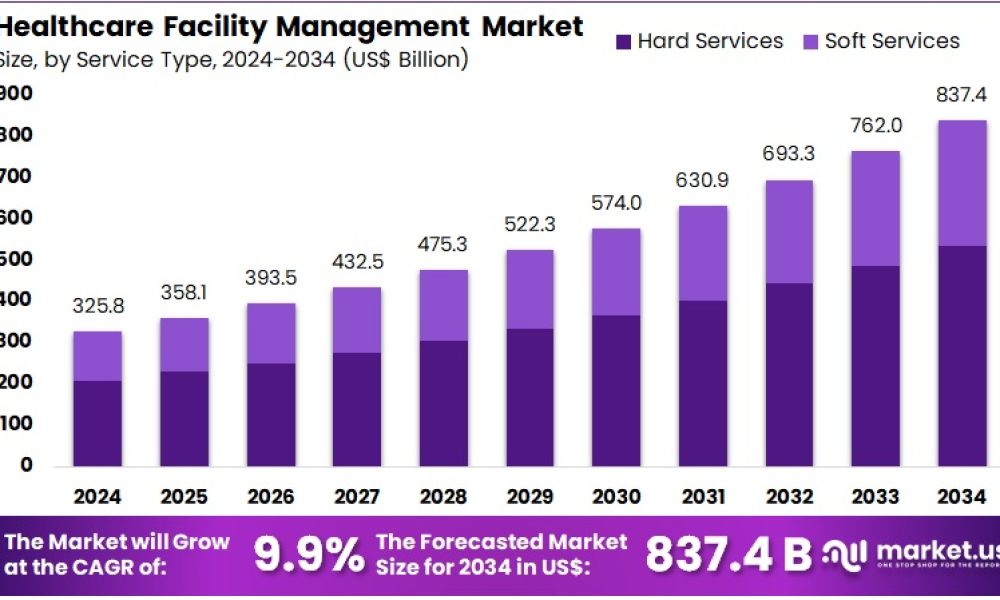
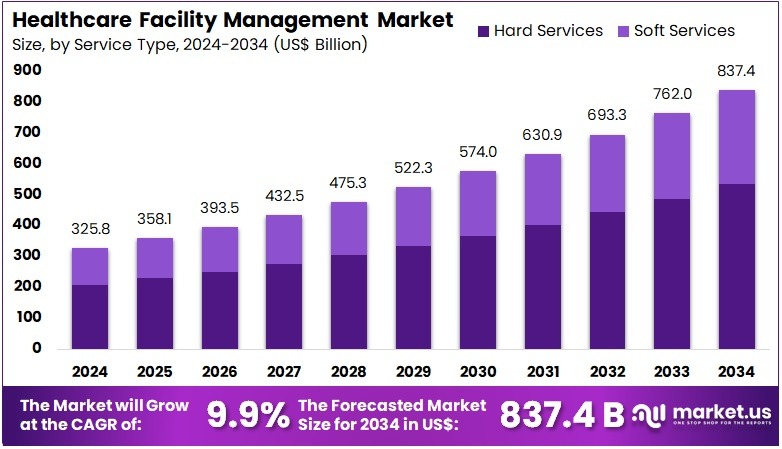
The Healthcare Facility Management Market is projected to reach approximately US$ 837.4 billion by 2034, rising from US$ 325.8 billion in 2024. This growth reflects a strong CAGR of 9.9% from 2025 to 2034. The market expansion is fueled by increasing pressure on healthcare systems to improve operational efficiency. Facility management supports key functions such as maintenance, compliance, and energy use. These services are vital in ensuring smooth healthcare operations, especially in an era marked by increasing patient volumes and complex medical needs.
A major factor driving the market is the rising burden of chronic diseases. According to the World Health Organization, chronic illnesses cause about 41 million deaths annually. Of these, cardiovascular diseases account for 17.9 million deaths. This sharp rise in long-term patient care needs is pushing healthcare providers to enhance their infrastructure. Well-managed facilities can help reduce complications, shorten hospital stays, and improve treatment outcomes. Proper facility management also plays a vital role in maintaining hygiene and infection control.
Healthcare facility management includes a wide range of services. These cover equipment maintenance, waste management, sanitation, energy management, and safety monitoring. All these services are essential for uninterrupted clinical care. The demand for efficient systems is also driven by regulatory compliance. Healthcare organizations must meet national and international standards. Failure to do so may result in penalties or reduced service quality. Thus, robust facility management strategies are becoming essential for both private and public healthcare institutions.
Emerging technologies are transforming the healthcare facility management landscape. IoT-based systems and AI-powered predictive tools are now being used to improve asset performance. These technologies help identify maintenance needs before failures occur, thus reducing downtime. Many healthcare providers are also adopting cloud-based platforms to centralize operations. This results in better control and transparency. Moreover, facilities are integrating sustainable energy solutions to meet environmental goals. These innovations not only boost efficiency but also cut long-term operational costs.
The shift toward patient-centric care is also influencing facility management. Modern healthcare settings must ensure comfort, safety, and accessibility for patients. Efficient facility management contributes to creating a therapeutic environment. It also supports healthcare staff by reducing administrative and logistical burdens. As the healthcare sector continues to evolve, the role of facility management will grow in importance. Investing in smart, scalable, and compliant solutions will be critical in delivering quality care and meeting future healthcare demands effectively.
Key Takeaways
- In 2024, the global healthcare facility management market generated approximately US$ 325.8 billion, projected to reach US$ 837.4 billion by 2034.
- The market is growing at a robust CAGR of 9.9% during the forecast period from 2025 to 2034, reflecting rising infrastructure demands.
- The service type segment includes hard and soft services, with hard services commanding the largest share of 63.7% in 2024.
- Hospitals and clinics emerged as the primary end-users, accounting for a dominant 71.4% market share in healthcare facility management services.
- North America led regional performance in 2024, securing a substantial 42.4% share of the global healthcare facility management market.
Get Sample: https://market.us/report/healthcare-facility-management-market/request-sample/
Segmentation Analysis
Service Type Analysis
The hard services segment accounted for 63.7% of the market share in 2024. This is due to the rising demand for maintaining and operating healthcare infrastructure efficiently. Hard services include HVAC, electrical systems, plumbing, and building maintenance. These services are essential for ensuring patient safety and meeting compliance standards. Hospitals are expected to invest more in hard services to reduce equipment downtime. Ongoing hospital construction and modernization projects worldwide are also driving demand. This segment will continue to grow as facilities prioritize safety and performance.
End User Analysis
Hospitals and clinics held a major share of 71.4% in the healthcare facility management market. These institutions face high patient volumes and require efficient management of assets and utilities. As healthcare infrastructure grows, demand for facility management will increase. Hospitals aim to improve operational efficiency and control costs while maintaining compliance. The expansion of hospital networks and adoption of new technologies support this trend. Their role in delivering critical care makes hospitals key drivers of growth in this market segment.
By Service Type
- Hard Services
- Fire Protection Systems
- Mechanical and Electrical Maintenance
- Plumbing, Air Conditioning Maintenance
- Others
- Soft Services
- Catering
- Cleaning & Pest Control
- Laundry
- Security
- Waste Management
- Others
By End User
- Hospitals and Clinics
- Long-Term Healthcare Facilities
- Others
Regional Analysis
North America held the largest share of the healthcare facility management market in 2024, accounting for 42.4% of total revenue. This leadership is driven by the increasing complexity of healthcare infrastructure and a strong focus on operational efficiency. The Centers for Medicare & Medicaid Services (CMS) is actively promoting quality and safety in healthcare settings. Additionally, growing healthcare spending in the U.S. supports continuous investments in facility modernization. In 2024, the American Cancer Society projected over 1.8 million new cancer cases, reinforcing the need for reliable healthcare infrastructure.
The Asia Pacific region is projected to grow at the highest CAGR during the forecast period. This growth is driven by rising investments in healthcare infrastructure and an increasing number of hospitals and clinics. India’s public healthcare expenditure reached 2.1% of GDP in 2021–22, reflecting a growing focus on health system improvements. A rising elderly population and a surge in chronic diseases are further fueling demand. Additionally, the expansion of medical tourism in countries such as India is increasing the need for efficient and well-maintained healthcare facilities.
Buy Directly: https://market.us/purchase-report/?report_id=149220
Get in Touch with Us:
Market.us (Powered By Prudour Pvt. Ltd.)
Address: 420 Lexington Avenue, Suite 300, New York City, NY 10170, United States.
Contact No: +1 718 874 1545 (International), +91 78878 22626 (Asia).
Email: [email protected]



