
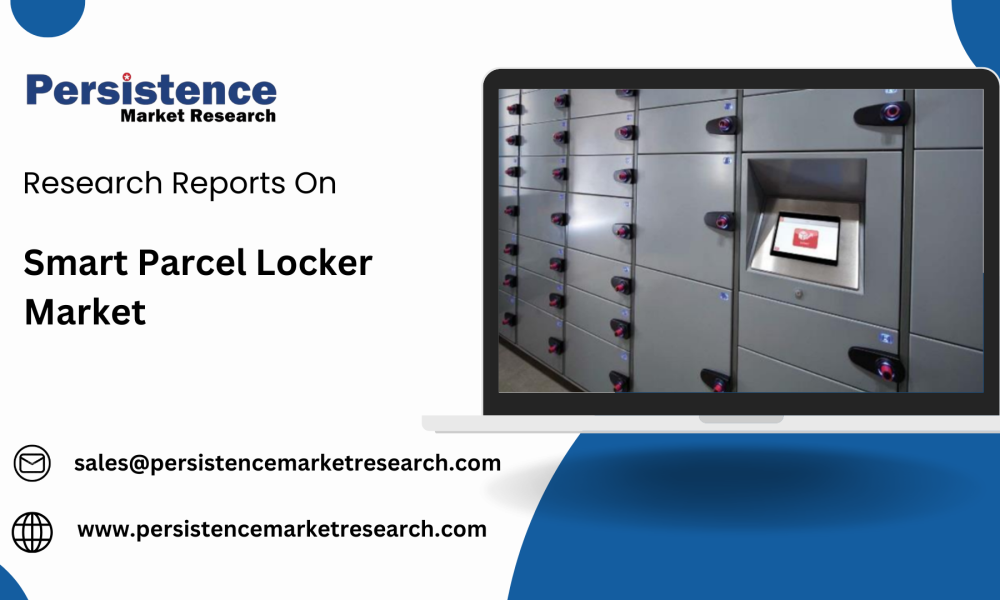
The global smart parcel locker market is on a rapid growth trajectory, projected to rise from US$ 751.2 million in 2025 to US$ 1,355.6 million by 2032, expanding at a CAGR of 8.8%. Once perceived as a niche convenience, these lockers have now emerged as a vital part of modern logistics, urban infrastructure, and sustainable delivery systems.
With e-commerce continuing to thrive, consumer expectations around delivery speed, convenience, and reliability are reshaping the way parcels are handled. Smart parcel lockers provide a solution that addresses multiple challenges at once—reducing failed deliveries, lowering logistics costs, supporting contactless delivery, and enabling sustainable urban ecosystems.
What Are Smart Parcel Lockers?
Smart parcel lockers are digitally enabled, secure storage units that allow recipients to collect parcels at their convenience. Typically installed in residential complexes, retail outlets, universities, transit hubs, and public spaces, these lockers integrate with delivery networks and e-commerce platforms to streamline last-mile logistics.
Customers receive a unique code or QR scan via SMS or app notification, enabling them to access their package 24/7. Delivery personnel deposit the parcel into the locker, reducing dependence on in-person handovers.
Their intelligent systems often feature:
- IoT connectivity for real-time monitoring.
- Cloud-based management for logistics providers.
- User-friendly interfaces such as mobile apps.
- Security features like video surveillance and one-time PINs.
Growth Drivers of the Smart Parcel Locker Market
- The E-commerce Boom
The exponential rise in online shopping has been the single largest driver of demand. With millions of parcels dispatched daily worldwide, the traditional home delivery model struggles to keep pace with consumer expectations. Smart lockers eliminate the “last-mile” inefficiencies, reducing the problem of missed deliveries and returns.
- Urbanization and Smart Cities
Major cities like San Francisco, Berlin, and Tokyo are embedding lockers into their urban infrastructure. As smart city initiatives grow, parcel lockers are being integrated with public transport hubs, shopping centers, and business districts to support sustainable and efficient logistics ecosystems.
- Rising Delivery Costs
Delivery failures, redelivery attempts, and fuel consumption make last-mile logistics the most expensive part of the delivery chain. According to industry estimates, last-mile costs account for over 50% of total shipping expenses. By centralizing parcel drop-offs, lockers cut costs significantly.
- Sustainability Push
The global focus on green logistics has further amplified adoption. Lockers reduce delivery vans’ repeated trips, thereby cutting carbon emissions. This aligns with corporate and governmental sustainability goals.
- Demand for Contactless Delivery
The COVID-19 pandemic accelerated the adoption of contactless solutions. Consumers have grown accustomed to touch-free, convenient, and safe deliveries—needs that lockers fulfill effectively.
Elevate your business strategy with comprehensive market data. Request a sample report now: https://www.persistencemarketresearch.com/samples/35387
Key Applications of Smart Parcel Lockers
Residential Complexes
Apartment buildings and gated communities are among the fastest-growing adopters. Smart lockers resolve issues around unattended deliveries, theft, and missed packages, while also adding convenience for residents.
Retail and Grocery Stores
Retailers use lockers for click-and-collect services, allowing customers to pick up online orders without waiting in queues. Supermarkets also deploy temperature-controlled lockers for fresh food and grocery deliveries.
Universities and Campuses
Universities manage thousands of parcel deliveries for students. Lockers reduce administrative burden, streamline package handling, and provide students with 24/7 access.
Transit Hubs and Public Spaces
Placing lockers in train stations, metro stops, and airports allows commuters to pick up parcels on the go, merging delivery logistics with daily travel routines.
Corporate Offices
Companies use parcel lockers to manage workplace deliveries efficiently, reducing disruptions and ensuring secure package handling.
Regional Insights
North America
The U.S. and Canada are leading markets, driven by strong e-commerce penetration and advanced logistics networks. Companies like Amazon Hub Locker have set benchmarks for convenience.
Europe
Countries such as Germany, France, and the UK are adopting lockers rapidly, fueled by sustainability policies and robust urban infrastructure. In Berlin, lockers are replacing traditional front desk deliveries.
Asia-Pacific
The fastest-growing region, led by China, Japan, and India. With massive urban populations and booming online shopping, APAC is expected to account for a large share of the future market. Japan, for example, integrates lockers seamlessly with its dense public transport system.
Middle East & Africa
The adoption is slower but gradually increasing, especially in the UAE and Saudi Arabia, where smart city projects and rising e-commerce trends are driving demand.
Technology Trends in Smart Parcel Lockers
- IoT Integration – Real-time tracking and predictive analytics help delivery companies optimize routes.
- AI-Powered Logistics – AI enhances locker utilization rates, predictive maintenance, and demand forecasting.
- Blockchain for Security – Blockchain-enabled authentication ensures tamper-proof access logs.
- Biometric Access – Fingerprint and facial recognition features are being integrated for added security.
- Temperature-Controlled Compartments – For food, grocery, and pharmaceutical deliveries, climate-controlled lockers are gaining traction.
- Mobile Payment Integration – Lockers now integrate with e-wallets and payment gateways for added convenience.
Competitive Landscape
The smart parcel locker market is fragmented, with global giants and regional startups competing for share. Key players include:
- Amazon Hub Locker (U.S.)
- Cleveron (Estonia)
- Quadient (Neopost Group) (France)
- TZ Limited (Australia)
- Smartbox Ecommerce Solutions Pvt. Ltd. (India)
- InPost (Poland)
These companies are innovating through technology upgrades, AI-driven locker management, and expansion into new geographies. Partnerships with retailers, real estate developers, and logistics firms are central to growth strategies.
Challenges in the Market
- High Initial Investment
Installing smart lockers involves significant upfront costs in terms of technology, hardware, and maintenance. - Space Constraints
In dense urban areas, finding suitable real estate for lockers can be challenging. - Security Concerns
Although advanced, lockers remain susceptible to hacking, vandalism, or theft if not properly managed. - User Awareness and Adoption
In emerging economies, consumers and businesses may still be unfamiliar with how lockers work, slowing adoption.
Future Outlook
By 2032, smart parcel lockers will not only be commonplace in urban centers but also extend their presence into rural and suburban regions, supporting delivery networks where traditional infrastructure is weak.
Looking ahead, we can expect:
- Greater integration with e-commerce platforms for seamless order-to-locker workflows.
- Expansion of refrigerated lockers for perishable goods.
- Integration with autonomous delivery systems such as drones and robots, which will use lockers as drop-off points.
- Government collaborations as part of smart city initiatives to reduce traffic congestion and emissions.
With a CAGR of 8.8%, the smart parcel locker industry will remain a pillar of future-ready logistics, supporting the twin goals of efficiency and sustainability.
Conclusion
The evolution of the smart parcel locker market reflects the changing dynamics of global logistics. What began as a small-scale convenience has transformed into a core element of e-commerce and last-mile delivery solutions.
By cutting costs, ensuring reliability, enhancing customer satisfaction, and reducing environmental impact, these lockers represent a forward-looking solution to one of the most pressing challenges of modern commerce: last-mile delivery.
As cities grow smarter, online shopping continues to dominate, and sustainability becomes non-negotiable, smart parcel lockers will play an indispensable role in shaping logistics ecosystems across the world.
Related Reports:




