
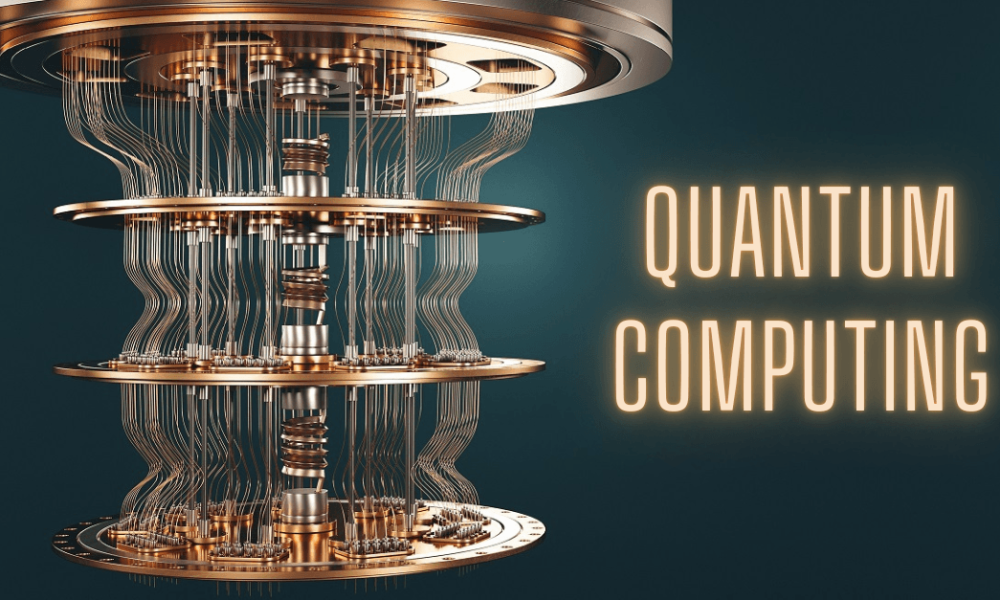
Quantum Computing Market Size
The Global Quantum Computing Market reached US$ 650.1 million in 2022 and is expected to reach US$ 8,788.8 million by 2031, growing with a CAGR of 38.9% during the forecast period 2024-2031.
Quantum computing is an advanced field of computing that leverages the principles of quantum mechanics to process information in ways classical computers can’t. Unlike traditional bits, quantum computers use qubits, which can exist in multiple states simultaneously, enabling them to solve complex problems at unprecedented speeds.
This technology is poised to revolutionize industries like cybersecurity, pharmaceuticals, and logistics by tackling challenges that are currently beyond the reach of traditional computers. With rapid advancements, quantum computing is on track to reshape how we approach computation.
Download Free Sample PDF: https://www.datamintelligence.com/download-sample/quantum-computing-market
Market Growth Drivers:
Rising Investment in Quantum Technology by the Government
The rising investment in quantum technology by governments globally helps to boost the market growth of the quantum computing market. Governments worldwide are significantly boosting the quantum computing market by increasing investments in quantum technology.
Recognizing its potential, governments are funding research, development, and commercialization efforts.
In 2023, global investments in quantum science and technology surpassed US$ 38.6 billion, with projections indicating the market could reach US$ 106 billion by 2040.
For example, Australia has allocated US$ 85.4 million in federal funding to advance quantum technologies. This growing investment is driving innovation and growth in the quantum technology sector. Governments worldwide are increasing funding to develop quantum computing, sensing, and encryption solutions. As a result, the quantum chip market is experiencing rapid expansion, attracting major industry players and research institutions.
Expanding Integration of Quantum Technology Across Industries
Quantum computing has the potential to revolutionize logistics and supply chain management by optimizing processes like inventory control, route planning, and distribution, resulting in more efficient and cost-effective operations. The public sector’s increasing investment in quantum technology further drives market growth from 2023 to 2030.
For example, the U.S. allocated $1.8 billion in funding in 2022, the European Union invested $1.2 billion, and China led with a significant $15.3 billion investment in quantum tech. These growing investments are expected to significantly boost market growth during this period.
Market Segments:
By Offering: Hardware, Software, Service
By Deployment Type: sub-segmented as On-premises, Cloud-based
By Technology: Quantum Dots, Trapped Ions, Quantum Annealing
By Application: Optimization, Simulation and Data Problems, Sampling, Machine Learning, Others
By End-User: Banking, Financial Services and Insurance, Aerospace & Defense, Manufacturing, Healthcare, IT & Telecom, Energy & Utilities, Others
By Region: North America, Latin America, Europe, Asia Pacific, Middle East and Africa
Competitive Landscape
- IBM Quantum
- Honeywell
- Rigetti Computing
- Telstra Corporation Limited
- IonQ Inc.
- Silicon Quantum Computing
- Huawei Technologies Co. Ltd.
- Alphabet Inc.
- Rigetti & Co Inc.
- Microsoft Corporation
- D-Wave Systems Inc.
- Zapata Computing Inc.
Customize Your Scope: https://www.datamintelligence.com/customize/quantum-computing-market
Regional Growth
The rapid industrial growth in North America is driving the expansion of the regional market.
North America holds the largest market share of 39.12% in the global quantum computing market, driven by rapid industrial growth. The region is home to major quantum computing companies and startups, including industry leaders like IBM, Google, Microsoft, and Rigetti Computing.
Government initiatives, private investments, and venture capital funding are driving the growth of quantum companies and research efforts. Key players in the region often pursue merger and acquisition strategies to expand their operations.
For example, on August 2, 2023, Airbus, BMW Group, and Quantinuum teamed up to develop a hybrid quantum-classical workflow aimed at accelerating future research by using quantum computers to simulate quantum systems.
Key Development
On August 15, 2023, StackPath, a leading quantum computing platform, launched its Edge Compute Virtual Machine and Container instances, offering higher virtual CPU (vCPU) core counts and enhanced RAM for improved performance.
On March 21, 2023, NVIDIA unveiled a new system designed to accelerate Quantum-Classical Computing. This system can create highly powerful applications that blend quantum and advanced classical computing, enabling better calibration, control, quantum error correction, and hybrid algorithms.




