
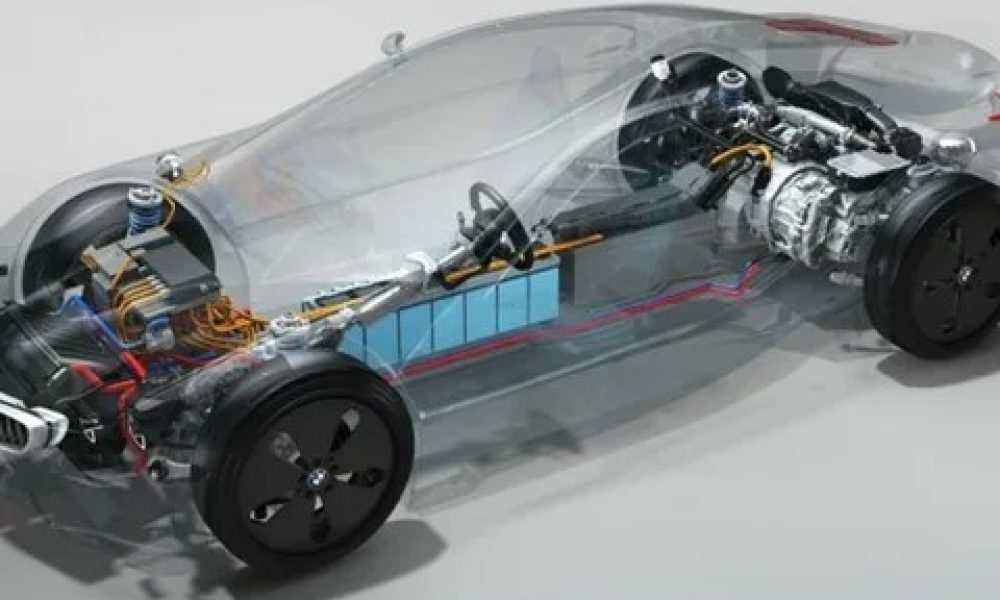
The global electric vehicle (EV) powertrain market is accelerating at an unprecedented pace, projected to grow from USD 20 billion in 2025 to approximately USD 159.8 billion by 2035, representing a robust compound annual growth rate (CAGR) of 23.1%. The surge is fueled by the automotive industry’s swift transition toward electrification, as manufacturers, governments, and consumers embrace greener mobility solutions.
EV powertrains-comprising electric motors, inverters, transmissions, and battery packs-are the heart of electric vehicles, directly impacting performance, efficiency, and driving dynamics. Rising consumer expectations for longer range, faster charging, and enhanced driving performance, coupled with advances in battery and motor technologies, are driving this transformative growth.
Get access to comprehensive data tables and detailed market insights – request your sample report today!
https://www.futuremarketinsights.com/reports/sample/rep-gb-16607
Key Market Dynamics
While growth is accelerating, the sector faces challenges. High costs of advanced powertrain components and reliance on critical raw materials like lithium, cobalt, and rare earth elements create supply chain vulnerabilities. Battery technology remains a focal point, as manufacturers strive to enhance energy density, charging times, and lifespan. Innovations in solid-state batteries, AI-powered energy management, and modular powertrain designs are poised to address these challenges by 2035, delivering lighter, more efficient, and cost-effective solutions.
Commercial EVs, including buses, delivery trucks, and fleet vehicles, are emerging as high-growth segments. Logistics providers and city transit operators are increasingly adopting high-performance powertrains, presenting significant opportunities for manufacturers specializing in durable and energy-efficient systems.
Regional Insights Driving Growth
North America: The United States is at the forefront of EV powertrain adoption. Government incentives, infrastructure investments, and initiatives like the Inflation Reduction Act are propelling EV production and adoption. The demand for range-extended passenger EVs and heavy-duty commercial trucks is driving the need for more efficient powertrains. Key players, including Tesla, GM, and Ford, are investing in high-performance motors, silicon carbide inverters, and next-generation battery management systems, positioning North America for an 8.7% CAGR through 2035.
Europe: European markets are witnessing robust EV adoption driven by strict emission regulations, aggressive electrification policies, and sustainability goals. Germany, France, the UK, and the Netherlands are investing heavily in battery and motor technology, vehicle-to-grid systems, and high-efficiency powertrains. The European Union’s carbon-neutral mandates are pushing automakers like Volkswagen, BMW, and Renault to adopt AI-optimized powertrain systems. The EU EV powertrain market is expected to grow at 8.4% CAGR from 2025 to 2035.
Asia Pacific: Asia-Pacific, led by China, Japan, and South Korea, is the fastest-growing EV powertrain market. China’s dominance in EV production, supported by incentives for battery manufacturing and infrastructure development, drives demand for advanced powertrains. Japan and South Korea focus on hybrid-electric technology, AI energy management, and next-gen motor innovation. The region is also expanding commercial EV fleets, further boosting market adoption. South Korea is projected to grow at 8.2% CAGR, while Japan follows at 7.8%.
Rest of the World (RoW): Emerging markets in Latin America, the Middle East, and Africa are gradually adopting EVs. Countries like Mexico, Brazil, UAE, and South Africa are investing in charging infrastructure and fleet electrification, creating new opportunities for EV powertrain suppliers and international stakeholders.
Technological Trends Shaping the Market
From 2020 to 2024, the EV powertrain industry advanced with high-energy lithium-ion batteries, 800V fast-charging systems, and power-efficient electric motors. Integration of regenerative braking, telematics, and LFP battery adoption addressed supply chain constraints and semiconductor shortages.
Looking ahead to 2025-2035, innovations such as solid-state batteries with ranges exceeding 600 miles, AI-optimized powertrains, wireless dynamic charging, and hydrogen fuel cells for heavy trucks will redefine performance benchmarks. Modular powertrains and rare-earth-free motors will improve manufacturing scalability while reducing environmental impact. Sustainability and recyclability will be paramount, ensuring the next generation of EVs meets efficiency, affordability, and eco-friendly standards.
Segment-Wise Growth Drivers
By Vehicle Type: Passenger EVs, including models from Tesla, BYD, BMW, and Audi, are adopting multi-motor and AI-driven torque management for superior driving dynamics. Electric buses and coaches, especially in Asia-Pacific and Europe, are integrating high-capacity battery packs and regenerative braking, led by manufacturers such as BYD, Proterra, and Volvo.
By Component Type: Electric motors, inverters, converters, and power electronics are critical to energy-efficient EV operation. Permanent magnet synchronous motors (PMSM) and silicon carbide (SiC)-based inverters are improving power density, thermal stability, and efficiency. Companies like Infineon, NXP, and STMicroelectronics are pioneering lightweight, high-performance inverter systems.
Why Choose FMI: Empowering Decisions that Drive Real-World Outcomes: https://www.futuremarketinsights.com/why-fmi
About Future Market Insights (FMI)
Future Market Insights, Inc. (FMI) is an ESOMAR-certified, ISO 9001:2015 market research and consulting organization, trusted by Fortune 500 clients and global enterprises. With operations in the U.S., UK, India, and Dubai, FMI provides data-backed insights and strategic intelligence across 30+ industries and 1200 markets worldwide.



