
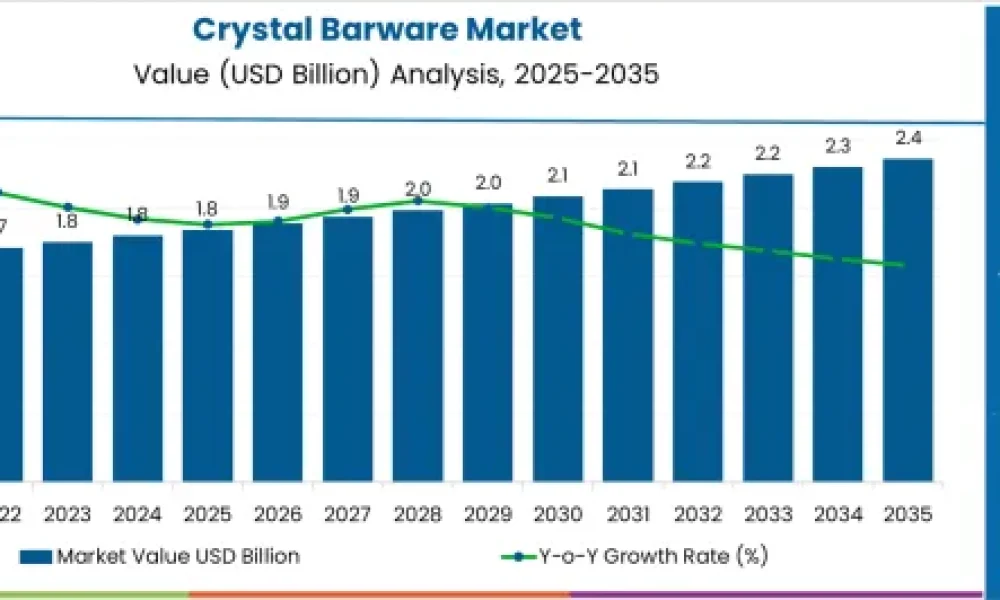
The global crystal barware market is projected to grow steadily from USD 1.8 billion in 2025 to USD 2.4 billion by 2035, exhibiting a compound annual growth rate (CAGR) of 2.5%. This growth reflects rising consumer demand for luxury home entertainment products and increasing adoption of premium barware in both residential and hospitality sectors.
Crystal Barware Market:
The crystal barware market encompasses a wide range of premium glassware products, including glasses, decanters, pitchers, shakers, and various bar accessories. Valued at USD 1.8 billion in 2025, the market is expected to reach USD 2.4 billion by 2035, driven by evolving lifestyle preferences, gifting trends, and growth in luxury hospitality.
The market spans key regions including North America, Europe, and Asia-Pacific, with notable growth in emerging markets such as China and India. Demand is primarily fueled by affluent consumers and luxury hospitality venues seeking to elevate dining and cocktail experiences through handcrafted, high-quality crystal products.
Explore complete datasets and in-depth market insights — Request Your Sample Report Today
Market Context and Key Insights
Growth Phases and Market Drivers
Between 2024 and 2029, the market is expected to increase from USD 1.6 billion to USD 1.8 billion. This period is marked by a strong emphasis on handcrafted crystal barware that resonates with cultural heritage, appealing to both Western and Asian luxury consumers.
From 2030 to 2034, the market will further grow by USD 0.3 billion, reaching USD 2.2 billion. This phase is characterized by the fusion of traditional artistry with contemporary aesthetics, attracting younger demographics who value sophistication combined with practicality. Collaborations between luxury brands and designers, as well as expanding online retail channels, facilitate wider accessibility to niche and heritage collections.
The final forecast window (2035–2039) anticipates stabilized growth at USD 2.4 billion, supported by mature economies’ steady consumption and emerging regions’ affluent households. The rise of mixology culture and at-home entertaining continue to sustain demand for specialized crystal barware.
Segment Analysis: Product Types, Materials, and Pricing
- Product Type: Glasses dominate the market, accounting for 36.2% of revenue in 2025. These products serve diverse beverage needs—from whiskey and cocktails to wine—and appeal both functionally and decoratively. The growth in at-home mixology significantly boosts this segment.
- Material: Lead crystal leads the market with 57.4% share due to its brilliance, weight, and ability to be intricately cut, symbolizing premium craftsmanship. Despite environmental concerns, lead crystal remains preferred for gifting and special occasions.
- Price: The high/luxury segment commands 42.8% of market revenue, driven by consumers willing to invest in exclusivity and quality. The segment benefits from gifting occasions such as weddings and anniversaries, alongside luxury home entertainment trends.
Drivers, Restraints, and Emerging Trends
Premium Dining and Social Entertaining
The increasing affinity for sophisticated dining and entertaining occasions elevates demand for crystal barware. Luxury restaurants, hotels, and affluent households seek items that enhance presentation, fostering brand desirability through design collaborations and limited editions.
Gifting and Collectible Appeal
Crystal barware’s timeless elegance and heirloom value make it a preferred choice for gifting. Seasonal spikes in weddings, festivals, and corporate gifting sustain niche market growth. Signature collections tailored for gifting strengthen distribution in luxury boutiques.
E-commerce Expansion
Digital retail platforms have revolutionized distribution by connecting brands with younger, convenience-oriented consumers. Curated online storefronts emphasize storytelling and craftsmanship, enhancing brand loyalty through interactive and immersive experiences.
Challenges in Production
Manufacturers face high production costs, complex craftsmanship requirements, and supply constraints. Energy-intensive processes and fragility during shipping elevate operational risks. Economic fluctuations also influence discretionary spending on luxury barware.
Regional Market Outlook
- China: Expected to lead with a CAGR of 3.4% driven by luxury consumption, gifting traditions, and expanding hospitality investments. Omni-channel distribution strategies target middle-class consumers increasingly exposed to Western dining aesthetics.
- India: Projected CAGR of 3.1% fueled by a growing middle class, luxury wedding gifting, and increased availability of international brands. Customized premium collections are gaining momentum among urban affluent households.
- France: Growth at 2.6% supported by a heritage of fine dining, luxury retail presence, and tourist-driven purchases. French brands leverage craftsmanship and online retail to engage younger demographics.
- United Kingdom: CAGR of 2.4%, aligned with global trends. Growth fueled by artisanal brand presence, e-commerce expansion, and increasing demand for collectible and statement barware in hospitality sectors.
- United States: Expected CAGR of 2.6% with steady demand from luxury retail, experiential dining, and online gifting. Collaborations with lifestyle influencers enhance market visibility.
Competitive Landscape
The crystal barware market is shaped by a balance between heritage luxury brands and volume-driven producers:
- Heritage Luxury Players: Waterford, Baccarat, Saint-Louis, Lalique, Lladro, and Swarovski capitalize on artisanal mastery, bespoke collections, and global brand recognition.
- Functional and Performance Focused: Riedel, Schott Zwiesel, and Ravenscroft Crystal specialize in sommelier-grade glassware with an emphasis on design and utility.
- Volume and Affordability Leaders: Bormioli Rocco, Dartington Crystal, and Anchor Hocking target broader consumer segments with high production capacities and retail partnerships.
Regional champions such as Crystal Bohemia and Lucaris leverage manufacturing expertise to reinforce export competitiveness. Strategic priorities include luxury collaborations, e-commerce growth, artisan heritage, and innovation to maintain brand equity and market differentiation.
Conclusion
The global crystal barware market exhibits steady and measured growth through 2035, driven by increasing consumer interest in premium lifestyle products, evolving gifting cultures, and the integration of traditional craftsmanship with modern design sensibilities. Despite challenges in production and cost pressures, the market’s resilience is underpinned by its strong cultural cachet and expanding presence across residential, hospitality, and commercial sectors worldwide.
Have a specific Requirements and Need Assistant on Report Pricing or Limited Budget please contact us – [email protected]
About Future Market Insights (FMI)
Future Market Insights, Inc. (FMI) is an ESOMAR-certified, ISO 9001:2015 market research and consulting organization, trusted by Fortune 500 clients and global enterprises. With operations in the U.S., UK, India, and Dubai, FMI provides data-backed insights and strategic intelligence across 30+ industries and 1200 markets worldwide
Why Choose FMI: https://www.futuremarketinsights.com/why-fmi



