
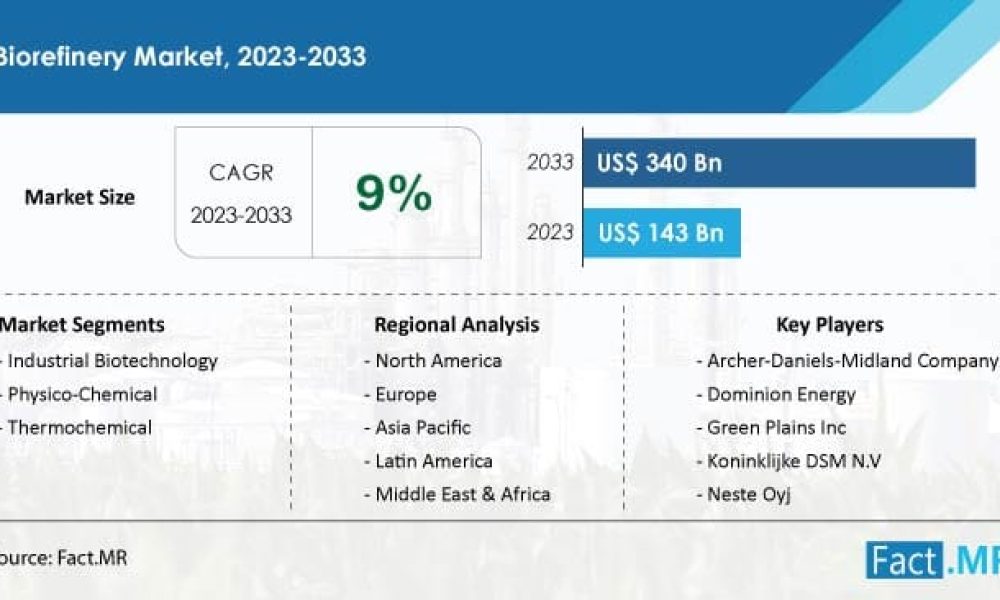
The global biorefinery market is expected to generate US$ 340 billion in revenue by 2033, growing at a significant CAGR of 9% from 2023 to 2033 (forecast period). It is currently valued at US$ 143 billion. The conversion of biomass into energy, heat, chemicals, fuels, and a range of other useful byproducts takes place in biorefineries. Similar to conventional petroleum refineries, biorefineries use crude oil as a feedstock to create a range of fuels and other valuable products.
A variety of biomass, including crops, wood, leftovers, weeds, sea, forest, algae, and biological detritus, is used in biorefineries. Several processes, including fermentation, esterification, pyrolysis, gasification acid hydrolysis, and fractionation, are used to transform biomass into useable products including energy, chemicals, and materials. The diminishment of fossil fuel reserves is a major concern worldwide. Though fossil fuels are derived from decomposing animals and plants, they are found in the earth’s crust and include carbon and hydrogen that can be burned to generate energy.
Download a Sample Copy of This Report: –https://www.factmr.com/connectus/sample?flag=S&rep_id=8181?PJ
Key Factors Impacting the Market:
- Growing Demand for Biofuels: The push to reduce greenhouse gas emissions and reliance on fossil fuels has led to an increased demand for biofuels like bioethanol, biodiesel, and advanced biofuels.
- Rising Interest in Renewable Chemicals: Biorefineries produce a variety of bio-based chemicals, which are increasingly sought after as replacements for petroleum-based chemicals in various industries, including packaging, textiles, and plastics.
- Circular Economy Initiatives: Biorefineries contribute to the circular economy by converting waste and byproducts into valuable products, minimizing waste and environmental impact.
- Government Policies and Regulations: Supportive policies and regulations aimed at promoting renewable energy, reducing carbon emissions, and encouraging bio-based products can significantly impact the growth of the biorefinery market.
- Advancements in Technology: Technological advancements in bioprocessing, biomass conversion, and fermentation techniques have improved the efficiency and cost-effectiveness of biorefinery operations.
- Research and Development: Ongoing research efforts to discover new feedstocks, optimize processes, and develop innovative biorefinery technologies drive market expansion.
Market Players: –
- Archer-Daniels-Midland Company
- Renewable Energy Group Dominion Energy
- Koninklijke DSM N.V
- Green Plains Inc
- Neste Oyj
Competitive Landscape
Key players in the biorefinery market are pursuing marketing methods such as partnerships, acquisitions, R&D activities, technological advancements, and investments to maintain and improve their market position. Moreover, several startups are working on technologically advanced solutions to gain footing in the worldwide market.
- PyroGenesys, a British startup, is working on integrated energy from waste technology. Pyrochemy, its pyrolysis technology, converts agricultural waste into electricity and biofuels using high heat. This minimizes agricultural greenhouse gas (GHG) emissions while also providing a solution for small-scale energy generation. The startup’s solution is simple to use and offers off-grid energy to the Sub-Saharan region.
- NextFuel, a Swedish startup, offers biomass torrefaction technology. The startup’s solution uses fast-growing, carbon-rich grass to make briquettes, which are a cleaner alternative to fossil fuels. Other biomass sources include bagasse, a byproduct of sugarcane juice production, and wood. The torrefaction method used by NextFuel includes built-in heat exchange, which enhances conversion efficiency and, consequently, scalability.
- Neste collaborated with TOOL-FUEL Services GmbH and EDi Energie-Direkt Hohenlohe GmbH to market Neste MY Renewable Diesel in Germany in October 2022, helping to reduce greenhouse gas emissions in the transportation sector. The selling of renewable fuels is governed by German law. 100% renewable diesel fuels, such as Neste MY Renewable Diesel, are already available for use in urban public transportation, waste collection for package and mail delivery services, and off-road applications such as trains, farming machinery, or equipment.
- Bunker Holding and Renewable Energy Group established a strategic alliance to increase biodiesel use in marine markets in the European Union and the United States in February 2022. Bunker Holding’s physical bunker subsidiary, Bunker One, piloted the M/T Amak Swan on a test run with a B30 biofuel blend that includes second-generation bio feedstock. It enables enterprises to play an important role in transitioning the shipping industry to new, more eco-friendly energy sources.
Key Products from Biorefineries:
- Biofuels: Biorefineries produce various biofuels, including bioethanol, biodiesel, and renewable diesel, which can be used as alternatives to conventional fossil fuels.
- Bio-Based Chemicals: Biorefineries generate a range of bio-based chemicals, such as platform chemicals, specialty chemicals, and bioplastics.
- Bioproducts: Biorefineries can produce a variety of bioproducts, including enzymes, biopolymers, bioadhesives, and bio-based solvents.
- Biogas and Biomethane: Anaerobic digestion of organic waste in biorefineries can produce biogas, which is primarily composed of methane and can be used for energy generation.
Key Segments Covered in Biorefinery Industry Research
- By Technology:
- Industrial Biotechnology
- Physico-Chemical
- Thermochemical
- By Region:
- North America
- Latin America
- Europe
- APAC
- MEA
Customize this report for your specific research solution:https://www.factmr.com/connectus/sample?flag=RC&rep_id=8181?PJ
Challenges:
- Feedstock Availability: Securing a consistent and reliable supply of biomass feedstock at an affordable cost is crucial for biorefinery operations.
- Economic Viability: The economic feasibility of biorefineries depends on factors such as feedstock prices, product prices, and competition with conventional products.
- Scale-Up Challenges: Transitioning from pilot-scale to commercial-scale biorefineries can pose technical and financial challenges.
- Technological Complexity: Biorefineries involve complex processes, and selecting the right technology mix can impact efficiency and product yield.
Contact:
US Sales Office:
11140 Rockville Pike
Suite 400
Rockville, MD 20852
United States
Tel: +1 (628) 251-1583
E-Mail : [email protected]




