
Summary: Global functional frozen meals market is set to reach USD 6.5 billion by 2036, driven by demand for convenient, protein-rich meals, measurable nutrition benefits, and portion-controlled food formats.
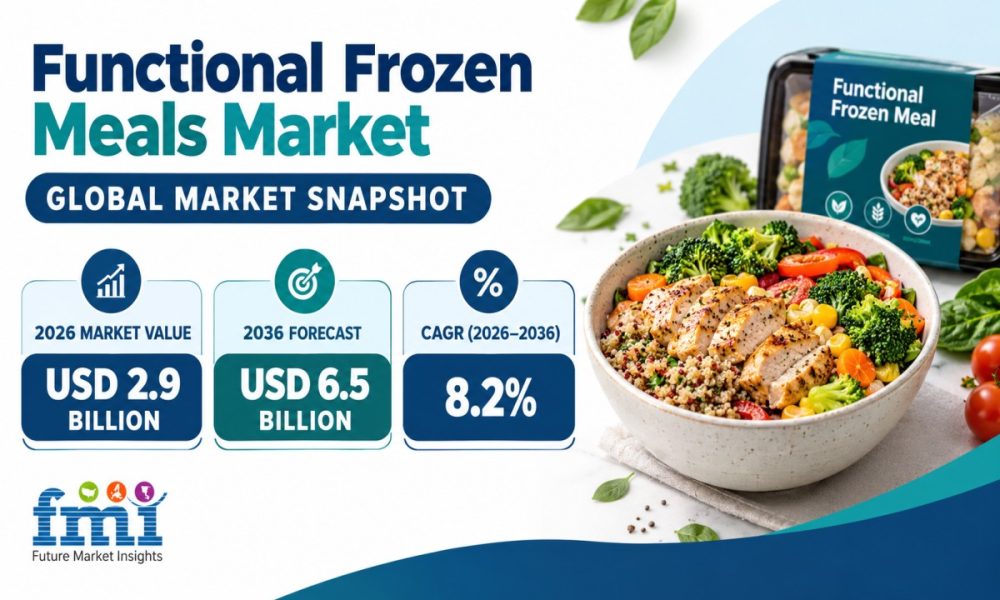
The global functional frozen meals market is expanding as consumers seek convenient prepared meals that combine nutritional value with simple preparation and familiar flavors. The market is projected to grow from USD 2.9 billion in 2026 to USD 6.5 billion by 2036, registering an 8.2% CAGR during the forecast period, according to the latest insights by Future Market Insights (FMI).
Global Functional Frozen Meals Market Snapshot
· 2026 market value: USD 2.9 billion
· 2036 forecast: USD 6.5 billion
· CAGR, 2026–2036: 8.2%
· Leading product type: Frozen bowls
· Frozen bowls share, 2026: 25.3%
· Leading function claim: High-protein
· High-protein share, 2026: 30.1%
· Leading protein base: Poultry
· Poultry share, 2026: 31.4%
Get detailed market forecasts, competitive benchmarking, and pricing trends:
https://www.futuremarketinsights.com/reports/sample/rep-gb-34782
Why Is the Functional Frozen Meals Market Growing?
Demand is increasing as consumers look for prepared meals that combine convenience with clear nutritional benefits. Protein content, portion size, sodium levels, and ingredient quality are becoming important considerations during food purchasing.
The U.S. Food and Drug Administration updated its voluntary “healthy” nutrient content claim in December 2024, while the 2025–2030 Dietary Guidelines for Americans emphasize nutrient-dense foods and protein. These developments increase the importance of credible nutrition positioning, although manufacturers must still deliver acceptable taste, portion satisfaction, and value.
Frozen Bowls Lead the Product Type Category
Frozen bowls are projected to account for 25.3% of product type demand in 2026, making them the leading category.
Their popularity is supported by single-portion convenience, microwave preparation, and flexibility in combining protein, vegetables, grains, and sauces. The format also makes portion size and meal composition easier for consumers to assess.
Nestlé introduced 14 Vital Pursuit frozen meals nationally in September 2024, including bowl formats with products offering at least 20 grams of protein. In June 2025, Conagra Brands introduced more than 50 frozen products, including single-serve meals and plant-based options, demonstrating continued innovation across established freezer formats.
Why Does High-Protein Lead Function Claims?
High-protein meals are estimated to represent 30.1% of function claim demand in 2026.
Protein is a measurable nutritional attribute that consumers can evaluate through nutrition labels. It also supports multiple meal occasions, including active lifestyles, weight management, and everyday meal planning.
Conagra Brands announced in December 2024 that its “On Track” badge would appear on 26 selected Healthy Choice products from January 2025, identifying items with specified protein, calorie, and fiber attributes. Such approaches demonstrate how visible nutrition information can support product differentiation.
Poultry Leads the Protein Base Category
Poultry is forecast to account for 31.4% of protein base demand in 2026.
Its leading position reflects familiar taste, recipe flexibility, and practical protein density across single-serve meals. Poultry can be incorporated into bowls, pasta dishes, grain-based meals, and vegetable-forward recipes.
However, manufacturers must balance protein content with sodium, saturated fat, cost, and texture after reheating. Saffron Road announced in August 2025 that its renovated chicken and lamb entrees would contain materially more meat while retaining frozen convenience and globally inspired recipes.
Trays and Mainstream Retail Support Commercial Adoption
Trays are estimated to represent 32.7% of packaging demand in 2026, supported by portion stability, predictable heating, and compatibility with entree-style meals. Packaging decisions must also account for label visibility, material use, and retailer expectations.
Nutrition Claims and Formulation Requirements Create Challenges
Manufacturers must substantiate nutrition claims while maintaining taste, texture, and reheating quality. Sodium limits, added sugars, saturated fat, and other nutritional requirements can constrain formulation choices across markets.
European Union rules require nutrition and health claims to satisfy defined conditions, while Japan and South Korea maintain their own labeling frameworks. These differences can complicate product launches and require brands to adapt formulations and communication strategies to local regulations.
South Korea Leads the Profiled Country Growth
South Korea is projected to register an 8.4% CAGR through 2036, supported by the growing importance of nutrition information and clear product labeling. Its 2026 nutrition-labeling changes increase the relevance of transparent pack communication.
The UK follows with a 7.8% CAGR, supported by established grocery distribution and increasing attention to nutrition and food advertising requirements. Brands must balance compliant communication with taste, price, and preparation convenience.
The USA is projected to grow at 7.5% CAGR, supported by established frozen-meal brands and product development focused on protein, portion control, and nutritional attributes. The commercial priority remains repeat purchases at mainstream grocery price points.
Germany is forecast to register a 6.7% CAGR, with established frozen-food channels providing opportunities for convenient, nutritionally balanced products. Plant-forward positioning must be supported by credible nutritional composition and localized product development.
Japan is projected to record a 6.4% CAGR through 2036. Its Foods with Function Claims framework makes evidence and notification requirements important when manufacturers move beyond conventional nutrition communication.
Competitive Landscape: Conagra Brands, Nestlé and Specialized Frozen Meal Producers
The competitive environment includes established frozen-meal manufacturers and specialists offering protein-focused, plant-forward, and dietary-specific products.
Conagra Brands, Nestlé and The Kraft Heinz Company benefit from established retail distribution and broad frozen-food portfolios. Daily Harvest, Amy’s Kitchen, Mosaic Foods, Sweet Earth Foods and Tattooed Chef offer plant-forward recipes or differentiated meal formats.
Kevin’s Natural Foods and Saffron Road emphasize protein, ingredient standards, and convenient preparation. Saffron Road’s Crossroads line, launched in February 2026, features frozen entrees containing at least 24 grams of protein per serving.
What Does the Market Mean for Industry Decision-Makers?
The 8.2% CAGR indicates growing opportunities for frozen meals that deliver measurable nutrition without sacrificing convenience or familiarity.
For manufacturers, the priority is to balance protein density, portion satisfaction, ingredient quality, and reheating performance. For retailers, clear nutrition information and competitive pricing can help functional frozen meals stand out in crowded freezer aisles.
The strongest opportunities are likely to emerge where nutritional credibility, familiar meal formats, and convenient preparation combine to support repeat purchasing.
Get the Complete Story—Read More About Our Latest Report:
https://www.futuremarketinsights.com/reports/functional-frozen-meals-market
Related Food & Beverages Industry Reports
For companies tracking convenient nutrition and prepared-food innovation, relevant FMI research areas include:
· Frozen Food Market
· Ready Meals Market
· Plant-Based Protein Market
· High Protein Food Market
· Functional Food Market
About Future Market Insights (FMI)
Future Market Insights, Inc. is an ESOMAR-certified, ISO 9001:2015 market research and consulting organization trusted by Fortune 500 companies. With a global presence across the U.S., UK, India and Dubai, FMI delivers data-driven insights across 30+ industries and 1,200 markets worldwide.



