
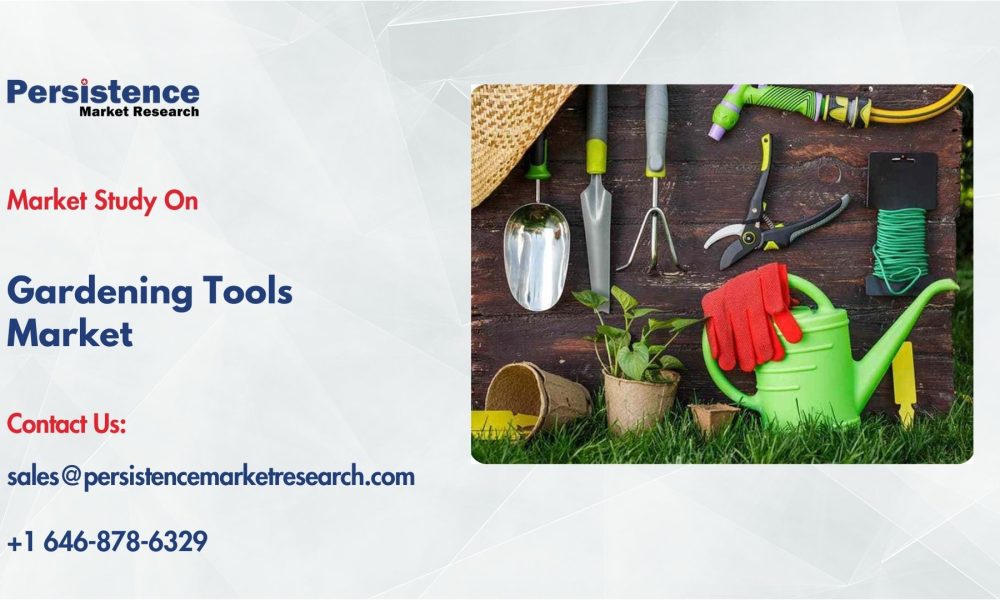
The global gardening tools market, valued at USD 9.1 billion in 2025, is poised for steady growth over the forecast period, expanding at a compound annual growth rate (CAGR) of 4.4% to reach an estimated USD 13.4 billion by 2032. This expansion is driven by a combination of factors including the increasing interest in home gardening, rising awareness regarding sustainable practices, and growing investments in landscaping and horticulture activities across residential and commercial segments. Urbanization trends, coupled with the rising popularity of DIY gardening among consumers, have further fueled demand for modern, ergonomic, and technologically advanced gardening tools.
The market growth is also being supported by innovations that enhance user efficiency and comfort, such as lightweight materials, battery-operated power tools, and multi-functional equipment. The increasing penetration of online retail platforms has made a wide variety of gardening tools accessible to a larger consumer base, further contributing to market expansion. Environmental consciousness and a shift toward sustainable landscaping practices are also encouraging the adoption of electric and manual gardening tools over conventional fuel-powered equipment.
What is driving the surge in demand for gardening tools globally?
The demand for gardening tools is primarily driven by the rising trend of home gardening and landscaping among urban populations. Additionally, increased awareness regarding sustainable gardening practices, the convenience of battery-operated and ergonomic tools, and the growing penetration of e-commerce channels have significantly contributed to the market’s growth. Consumers are increasingly seeking tools that offer efficiency, durability, and ease of use, which has led manufacturers to innovate and expand their product portfolios accordingly. The integration of smart technologies, including IoT-enabled tools and automation, has further enhanced consumer engagement and product adoption in the market.
Receive Sample of Research Report @ https://www.persistencemarketresearch.com/samples/17011
Segmentation Analysis
The global gardening tools market can be segmented on the basis of type, product, and technology. By type, key segments include hand tools, power tools, and garden machinery. Among these, hand tools continue to dominate the market due to their affordability, simplicity, and wide range of applications for home gardening. Power tools, on the other hand, are witnessing the fastest growth, propelled by advancements in battery technologies, cordless solutions, and ergonomic designs that cater to both professional landscapers and hobbyist gardeners.
By product type, popular categories include shovels, rakes, pruners, lawnmowers, hedge trimmers, and soil cultivators. Lawn care and pruning equipment are increasingly in demand, reflecting consumers’ focus on both aesthetic landscaping and functional garden maintenance. Adoption factors for these products include ease of operation, durability, and energy efficiency. Innovations in lightweight materials and multi-functional tools have further boosted the acceptance of power and hand tools among urban consumers.
Technological segmentation, though still emerging, is becoming increasingly relevant with the introduction of smart gardening solutions. Battery-powered and electric tools are witnessing strong adoption due to environmental concerns and operational efficiency. Integration of AI, IoT, and sensor-based systems in some advanced tools allows users to monitor soil conditions, optimize irrigation, and automate certain gardening processes, thereby enhancing precision and reducing labor-intensive work.
Regional Insights
North America currently leads the global gardening tools market, driven by high consumer awareness, established distribution networks, and a strong preference for home gardening among residential and commercial users. The region benefits from a mature retail ecosystem that supports both online and offline sales channels. Europe follows closely, with significant demand for sustainable gardening solutions and regulations favoring eco-friendly equipment.
The Asia-Pacific region is projected to be the fastest-growing market during the forecast period, supported by rapid urbanization, rising disposable incomes, and an expanding middle-class population. Increasing government initiatives promoting green spaces, landscaping, and sustainable urban planning have fueled the demand for gardening tools across residential and commercial projects. Additionally, the rise of DIY gardening culture in countries such as China, India, and Japan is contributing to the accelerated adoption of both manual and powered gardening solutions.
Do You Have Any Query or Specific Requirement? Request Customization of Report: https://www.persistencemarketresearch.com/request-customization/17011
Unique Features and Innovations in the Market
Modern gardening tools are differentiated by features that enhance convenience, durability, and operational efficiency. The adoption of lightweight, rust-resistant materials such as aluminum and high-grade plastics has improved user ergonomics, reducing fatigue during extended use. Battery-operated tools are increasingly preferred due to their portability, reduced noise levels, and lower environmental impact compared to fuel-powered alternatives.
Technologies like AI, IoT, and smart sensors are beginning to redefine gardening practices. For instance, IoT-enabled garden equipment can communicate with irrigation systems, track soil health, and automate trimming or mowing schedules. These innovations allow for precision gardening, optimized resource utilization, and better maintenance of gardens and landscapes, driving market differentiation. Manufacturers focusing on smart and connected solutions are gaining a competitive advantage by addressing both consumer convenience and sustainability concerns.
Market Highlights
The adoption of advanced gardening tools is influenced by factors such as efficiency, sustainability, and compliance with environmental regulations. Businesses and residential users increasingly prioritize cost-effective solutions that minimize energy consumption while delivering superior performance. Furthermore, regulations promoting eco-friendly equipment, particularly in Europe and North America, have accelerated the adoption of battery-powered and electric tools over conventional gas-powered options. Sustainability initiatives, including the use of recycled materials and reduced carbon emissions, further enhance the appeal of modern gardening tools.
Key Players and Competitive Landscape
The global gardening tools market features a competitive landscape dominated by key players including Bosch, Fiskars, Husqvarna, Black & Decker, and STIHL. Bosch continues to focus on technological innovation and the integration of smart solutions in its power tools portfolio. Fiskars leverages product diversification and ergonomic design to enhance its hand tools segment, targeting both professional landscapers and home gardeners. Husqvarna maintains a strong presence in robotic and battery-operated garden equipment, capitalizing on automation trends. Black & Decker emphasizes online distribution and consumer engagement through e-commerce channels, while STIHL focuses on expanding its regional footprint and investing in high-performance, eco-friendly products. Collectively, these players are driving innovation, expanding product portfolios, and adopting strategic partnerships to strengthen their positions in key markets.
Outlook
The global gardening tools market is expected to continue its growth trajectory through 2032, with opportunities emerging in both mature and developing regions. Technological advancements, such as AI-enabled and IoT-connected tools, will play a pivotal role in shaping future product offerings and consumer expectations. Additionally, evolving regulations focused on environmental sustainability and energy efficiency will drive innovation and adoption of eco-friendly solutions. The growing DIY culture, urban gardening trends, and increased investments in commercial landscaping projects present significant opportunities for manufacturers and distributors to expand their market presence.
Explore the Latest Trending Research Reports:




