
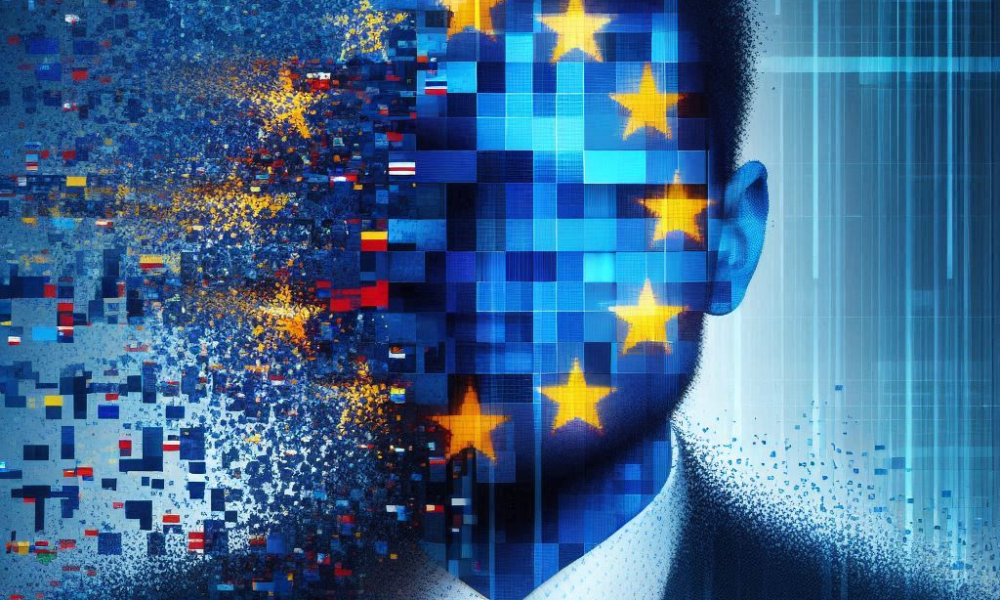
How the Shift from Simple Travel Documents to AI Surveillance is Ending Traditional Privacy Rights
VANCOUVER, Canada — July 18, 2025 — International travel has transformed dramatically in just a few decades. What once required little more than a handwritten name and a stamped booklet now involves advanced biometrics, facial recognition, and artificial intelligence (AI) powered risk scoring. For privacy advocates and identity change specialists, the evolution from paper passports to digital biometrics signals not just technological progress, but also the systematic erosion of anonymous travel. Amicus International Consulting, a global authority on lawful identity transitions, examines how modern security infrastructures are challenging legal anonymity and explores the options available to those seeking privacy in the age of surveillance.
The Era of Paper Passports: When Travel Was Easy and Anonymous
In the early 20th century, a traveller could cross borders with minimal documentation. A handwritten passport, sometimes without a photograph, was sufficient for international travel. The global passport system, formalized after World War II, remained remarkably relaxed for decades. Nationality was important, but identity verification was rudimentary.
An employee at Amicus International Consulting explains, “Before biometric controls, international travel relied on trust and physical paper. Border guards could be flexible, and people could reinvent themselves without the scrutiny we see today.”
Throughout the 1960s and 1970s, it was common for travellers to change their names legally, obtain alternative travel documents, or use second passports issued by small island nations—practices not associated with criminality, but instead with convenience and freedom of movement.
Post-War Borders and the Rise of Document Controls
After the Second World War, with heightened concerns about espionage and national security, countries began implementing stricter border controls. The introduction of machine-readable passports in the 1980s marked the first step in digitizing identity documents. These documents included basic security features, such as barcodes and lamination, but were still relatively easy to obtain and use under new identities, especially through legitimate legal name changes or the acquisition of second citizenships.
“Even with stricter document controls, there remained a wide legal pathway for people to change identity and travel without public exposure,” Amicus observes. “Anonymous travel remained lawful for those who followed the right legal processes.”
Case Study 1: Anonymous Business Travel in the 1970s
In the 1970s, a German entrepreneur pursued a legal name change in Latin America to distance himself from a collapsing business empire in Europe. Utilizing legitimate citizenship-by-investment programs in Paraguay, he acquired a second passport and travelled freely throughout South America, later relocating to a Caribbean island where he rebuilt his life. His travel was entirely legal, facilitated by the paper-based documentation systems of the time.
“This example highlights how anonymity was accessible without fraud or illegal border crossing,” Amicus states. “The legal systems of multiple countries supported individual reinvention.”
The Security Age: 9/11 and the Global Shift to Biometric Travel
Everything changed after September 11, 2001. In response to terrorist threats, the United States and many of its allied nations began enforcing electronic travel authorization systems, biometric passports, and real-time identity verification. Governments introduced stringent visa processes, background checks, and established global databases to monitor cross-border movement.
“The post-9/11 era marks the beginning of anonymity’s decline in global travel,” an Amicus consultant explains. “Suddenly, changing your name wasn’t enough. Your fingerprints, facial features, and travel history followed you.”
By the late 2010s, more than 150 countries had implemented biometric passports, making identity shifts legally possible but practically traceable.
AI, E-Gates, and Facial Recognition: The Modern End of Anonymous Movement
The 2020s have brought a technological revolution in border surveillance. AI-driven facial recognition systems automatically scan travellers in airports. AI algorithms detect travel patterns and flag “unusual behaviour.” E-gates replace human interactions, and databases such as INTERPOL’s SLTD (Stolen and Lost Travel Documents) make it nearly impossible to use unauthorized documentation.
“Today, surveillance is proactive,” Amicus warns. “You are analyzed before you even book a flight. Border authorities often receive advance passenger information and can deny boarding before departure.”
Facial recognition errors, data sharing between countries, and AI misclassification have also raised concerns about fairness and accuracy, further complicating the lives of privacy-conscious travellers.
Case Study 2: The Last Generations of Anonymous Travel in Eastern Europe
In 2004, an Eastern European technology executive legally changed his identity after political turmoil in his home country. He obtained a legitimate new passport through an expedited program in the Caribbean and spent over a decade living anonymously between Eastern Europe, the Middle East, and Southeast Asia.
By 2020, his anonymous travel days were over. Attempts to cross Schengen borders triggered AI red flags due to inconsistent travel histories and biometric data mismatches. He now resides legally in the Caribbean under a new, lawful identity, but avoids high-surveillance jurisdictions.
“This story shows the closing of the anonymous travel window,” Amicus explains. “Legal identity change is still possible, but anonymous travel through modern surveillance corridors is rapidly disappearing.”
Legal Loopholes and Structured Anonymity: The Remaining Options
While global surveillance tightens, structured legal anonymity remains possible through:
Government-approved second citizenships primarily through Investment
Legal name changes in countries with sealed court records
Travel through low-surveillance jurisdictions
Private aviation bypassing commercial biometric chokepoints
Residency in countries with minimal data-sharing obligations
“Total anonymity through random document changes is over, but structured, legal anonymity through legitimate programs persists,” Amicus clarifies. “Compliance is essential, but privacy remains legally achievable.”
Expert Interview: Amicus International Consulting on Navigating the New Reality
Q: Has anonymous travel completely disappeared in 2025?
A: It has disappeared in unauthorized forms. The days of forging documents or vanishing without a trace are over. However, lawful identity change through name changes, second citizenships, and private aviation remains a viable option.
Q: Who benefits from legal anonymous travel today?
A: Abuse survivors, political dissidents, corporate whistleblowers, and high-net-worth individuals protecting personal safety or dignity. Lawful anonymity helps vulnerable people, not criminals.
Q: Is it riskier now to seek anonymity?
A: Only if done illegally. Legal pathways are respected worldwide. The danger lies in using fraudulent channels, which almost always fail under modern AI scrutiny.
Case Study 3: How Private Aviation and Legal Identity Change Remain Viable
In 2022, a European executive sought to exit a high-profile corporate lawsuit that threatened his family’s safety. Amicus facilitated a legal name change in South America and the acquisition of Dominica citizenship. Through corporate-controlled private aviation, he relocated to Southeast Asia, lawfully entering jurisdictions that did not share biometric data.
“By structuring everything legally, he avoided high-profile exposure while adhering to all laws,” Amicus reports. “Anonymous travel still exists—if it’s structured properly.”
The Future: Is Legal Anonymity Gone Forever?
The future of travel is poised toward full digital identity integration, AI-driven risk scoring, and blockchain-based travel records. Many experts predict the near-total elimination of spontaneous anonymous travel by 2030, especially in high-surveillance regions such as North America, Europe, and parts of the Asia-Pacific.
Yet Amicus International Consulting sees an enduring role for legal privacy channels.
“Private citizenship programs will continue, especially in smaller jurisdictions seeking foreign Investment,” Amicus predicts. “Certain Caribbean, South American, and Pacific countries will maintain independent documentation systems. Private aviation will remain a viable option for those with resources.”
Lawful Strategies to Regain Privacy Without Breaking Rules
Amicus International Consulting recommends lawful privacy seekers:
Pursue second citizenship through government-endorsed Investment programs
Secure legal name changes in privacy-protecting countries
Use private aviation for sensitive relocations
Choose low-surveillance jurisdictions for residency
Avoid using forged documents or false identities under any circumstances
“The legal path is slower but sustainable,” Amicus concludes. “Fraud is quickly detected in modern systems. But lawful identity change is globally respected.”
Conclusion
The shift from paper passports to digital biometrics represents one of the most profound transformations in global mobility. Anonymous travel, once accessible through legal name changes and paper documents, is now under siege from AI, facial recognition, and global data-sharing agreements.
Still, legal anonymity remains a viable option. Structured identity change, lawfully obtained second citizenship, and the strategic use of private aviation enable individuals to protect their privacy, dignity, and security in an increasingly transparent world.
Amicus International Consulting continues to lead in lawful identity change services, offering legitimate solutions for individuals who require privacy without breaking the law. In a world of expanding surveillance, the right to privacy remains, not as a loophole, but as a lawful human right.
Contact Information
Phone: +1 (604) 200-5402
Email: [email protected]




