
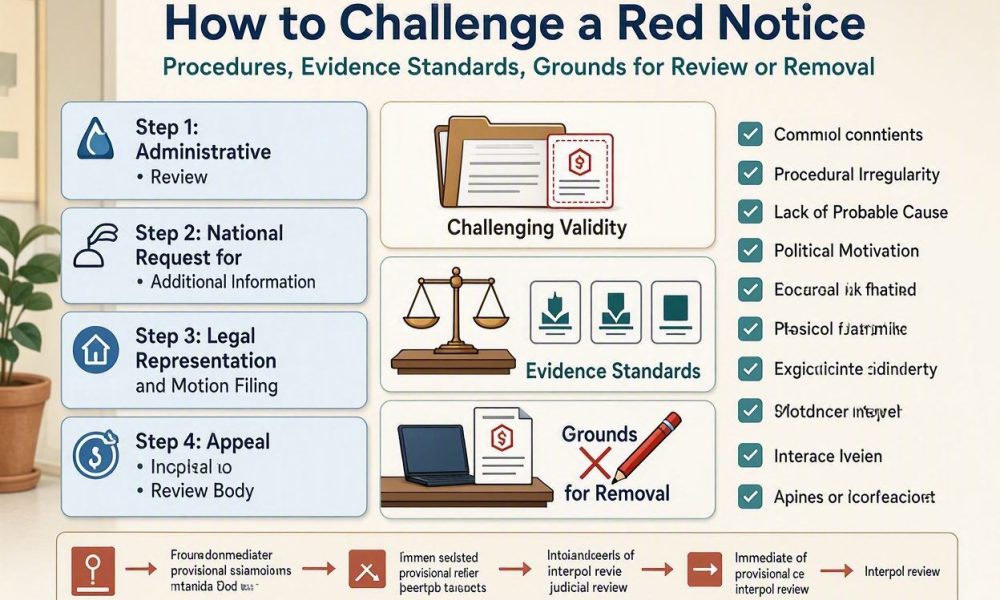
Explaining what “return to the United States” generally means in cross-border criminal cases, why the available procedure varies by country, and how authorities assess the legality of arrest and transfer.
WASHINGTON — When authorities announce that a person has been “returned to the United States” after international action, the phrase can describe several legally distinct routes whose safeguards, decision-makers, and consequences differ substantially.
The person may have been extradited under a treaty, deported for an immigration violation, expelled through executive authority, transferred after completing a foreign sentence, or voluntarily surrendered after waiving available challenges.
An INTERPOL Red Notice may help locate the person or initiate contact with foreign authorities, but the notice does not select the legal route, authorize every arrest, or decide whether a transfer to American custody is lawful.
Those questions are answered through the domestic law of the country where the person is found, the terms of any extradition treaty, the underlying American warrant, applicable human-rights protections, and decisions by courts and executive officials.
The movement from an overseas encounter to an American courtroom is therefore better understood as a series of legal handoffs than as a single enforcement action controlled by INTERPOL or the United States.
“Return” Is an Outcome, Not a Legal Procedure
Government announcements often use “returned,” “transferred,” “removed,” and “extradited” as though the terms were interchangeable, particularly when the purpose of the release is to confirm that a wanted person is now in United States custody.
That shorthand may be understandable for public communication, but it can conceal whether the person received an extradition hearing, consented to surrender, exhausted appeals, lost immigration status, or was expelled without a treaty proceeding.
The distinction matters because each route is governed by different statutes, remedies, deadlines, review standards, and international obligations, even when the physical outcome is the same flight to the United States.
Extradition is a formal criminal-law process through which one country asks another to surrender someone wanted for prosecution or to serve a sentence, ordinarily under a treaty or recognized domestic surrender framework.
Deportation and immigration removal concern the person’s legal right to enter or remain in the sending country, while expulsion may arise from broader executive, public-order, or national-security authority under national law.
Voluntary surrender occurs when the person agrees to return or declines to contest transfer, although meaningful consent requires access to legal advice and an understanding of the rights and consequences being waived.
Reporting that identifies the actual mechanism allows the public to understand what was reviewed and prevents the mistaken conclusion that every return following a Red Notice was a completed extradition case.
The Red Notice Usually Sits Behind a National Warrant
A United States-requested Red Notice ordinarily begins with an American arrest warrant or judicial order arising from an indictment, criminal complaint, conviction, or sentence that remains enforceable within the issuing jurisdiction.
Federal, state, or local authorities may conclude that the wanted person is abroad and work through designated United States channels to circulate identifying information and the request for location and provisional arrest.
The notice can include names, aliases, birth details, photographs, fingerprints, physical characteristics, passport information, the underlying warrant, alleged offenses, and a concise factual description of the relevant conduct.
It does not reproduce the full evidentiary record or assess guilt because its principal function is to make the national wanted status visible to authorized law-enforcement agencies internationally.
INTERPOL reviews requests under its Constitution and data-processing rules, but publication does not transform the American warrant into an international warrant or require another country to treat the United States court order as directly enforceable.
The foreign country remains responsible for deciding whether the information supports surveillance, additional inquiries, a domestic warrant, provisional arrest, immigration action, or no coercive response under its law.
The First Encounter Can Happen in Many Places
A Red Notice match may occur at an airport, seaport, land border, police checkpoint, immigration office, visa interview, residency application, hotel-registration system, traffic stop, or unrelated criminal investigation.
The person may also be located through an active fugitive investigation involving lawful cooperation among American agencies, foreign police, immigration authorities, prosecutors, and the National Central Bureaus that connect countries with INTERPOL.
Most notices are restricted to law-enforcement use, so the absence of a person’s name from INTERPOL’s public website does not demonstrate that no notice, diffusion, or other international alert exists.
Once a possible match appears, officers must verify that the person encountered is the individual described, especially when names are common, birth records conflict, photographs are old, or the subject is alleged to have used aliases.
Identity verification may involve fingerprints, facial comparison, travel records, scars, tattoos, biographical history, or communication with the country that supplied the original data, subject to domestic privacy and evidence rules.
An inaccurate match can lead to wrongful detention and urgent legal proceedings, making identity confirmation a substantive safeguard rather than a minor administrative step before any transfer.
Local Authorities Decide Whether to Arrest
The operational value of a Red Notice depends heavily on the country where the encounter occurs because different national systems assign materially different legal weight to INTERPOL information.
Some jurisdictions permit provisional arrest on the strength of a valid notice and treaty relationship, while others require a local judge to issue a warrant or demand additional authenticated information from the United States.
Police may temporarily delay the person while consulting prosecutors, but continued custody ordinarily requires a national legal basis, compliance with arrest procedures, and access to the judicial review guaranteed by local law.
The person should be informed of the reason for detention, receive interpretation when necessary, gain access to qualified counsel, and be brought before a competent authority within the period required by the arresting country.
At the first hearing, the court may consider identity, the existence of the foreign warrant, treaty authority, procedural compliance, health requirements, flight risk, and whether extradition detention permits release on bail.
The United States may urgently provide preliminary information, but American prosecutors and agents cannot direct a foreign judge or independently exercise coercive police powers inside another sovereign state.
This division of responsibility is why the same American notice can produce immediate detention in one country, delayed action in another, and no arrest in a jurisdiction demanding a complete diplomatic package first.
Provisional Arrest Starts a Deadline
Provisional arrest is commonly used when authorities locate a person before the United States completes the formal extradition request, allowing temporary detention while authenticated documents are assembled and transmitted.
The measure preserves the opportunity for extradition when authorities believe delay could allow further travel or disappearance, but it does not establish that the person is extraditable or guilty of the American charges.
Most applicable treaties impose a deadline for delivery of the formal request after provisional arrest, and the permissible period can vary significantly from one bilateral relationship to another.
The United States may need to provide certified charging documents, the arrest warrant, statutory provisions, identity evidence, factual affidavits, limitation information, penalty descriptions, and translations meeting the requested country’s formal requirements.
The Justice Department’s Office of International Affairs coordinates the preparation with prosecutors and investigative agencies, while the State Department generally transmits the completed formal request through diplomatic channels.
The Justice Department’s extradition overview describes international extradition as the process through which one country seeks another country’s surrender of a person wanted for prosecution or to serve a sentence.
If the United States misses the applicable deadline, the foreign court may release the person, although that outcome does not necessarily cancel the warrant or prevent a later proceeding when the complete documents arrive.
The Formal Request Must Satisfy the Treaty
An extradition treaty defines the obligations accepted by the United States and the requested country, including eligible offenses, document requirements, evidentiary standards, provisional-arrest procedures, exclusions, deadlines, and rules governing surrender.
Some treaties list extraditable crimes, while modern agreements more commonly rely on dual criminality and a minimum level of potential punishment to determine whether the alleged conduct qualifies.
Dual criminality asks whether the underlying conduct would be criminal in both countries, generally focusing on its essential character rather than requiring identical offense titles or perfectly matching statutory elements.
The requested country may require evidence establishing probable cause, information sufficient to justify trial, or another treaty-specific threshold, while some relationships accept certified case descriptions under streamlined standards.
Treaties can exclude political or military offenses, protect against repeated prosecution, address limitation periods, restrict extradition of nationals, and require assurances when capital punishment is possible in the United States.
The formal package must therefore be tailored to the particular country rather than assembled from a universal template, because evidence acceptable in one jurisdiction may be incomplete or improperly authenticated in another.
Nationality Can Determine Whether Transfer Is Possible
Some countries permit extradition of citizens under ordinary treaty rules, others restrict it to specified offenses, and several maintain constitutional or statutory prohibitions that require domestic prosecution instead of surrender abroad.
Nationality restrictions clearly show how the country of arrest can fundamentally alter the legal result even when the American warrant, alleged conduct, and Red Notice remain otherwise unchanged.
A government that refuses to extradite its citizen may consider prosecuting the alleged conduct locally under laws allowing jurisdiction over nationals, provided the United States supplies admissible evidence and cooperation.
Legal reform can also change the available pathway, as demonstrated when countries amend their constitutions or statutes to permit extradition for serious offenses previously shielded by nationality rules.
In March 2026, Costa Rica transferred two of its nationals to the United States after a constitutional change permitted extradition of citizens in specified drug-trafficking and terrorism cases.
Reuters reported that former Supreme Court judge and security minister Celso Gamboa and another defendant became the first Costa Rican nationals extradited to the United States under the reformed legal framework.
The reporting also noted sentencing conditions connected to the reform, illustrating how surrendering countries can authorize transfer while limiting the punishment that may follow in the United States.
The case shows that “cooperation” is not a permanent yes-or-no characteristic of a country because constitutional amendments, legislation, court decisions, and treaty changes can reshape the available process.
The Extradition Court Tests Legality, Not Ultimate Guilt
After receiving the formal request, the foreign court determines whether national law and the treaty permit surrender, but it generally does not conduct the full American trial or decide every contested fact.
The judge may examine identity, treaty validity, dual criminality, evidentiary sufficiency, authentication, limitation periods, protected status, prior proceedings, jurisdiction, and any relevant exclusions applying to the charged conduct.
Defense lawyers may argue that the request names the wrong person, relies on unreliable evidence, omits required certifications, seeks a non-extraditable offense, or was submitted after the treaty deadline.
They may also contend that the prosecution is politically motivated, discriminatory, retaliatory, or otherwise inconsistent with INTERPOL’s neutrality requirements and the requested country’s applicable constitutional and human-rights protections.
The United States can respond with the treaty record, additional evidence, detailed legal submissions, identity materials, diplomatic explanations, or formal assurances addressing a specific human-rights concern.
A finding that the person is extraditable means the legal conditions for possible transfer have been met; it is not a criminal conviction and does not remove the prosecution’s burden after arrival.
Conversely, an extradition refusal may rest on a procedural or jurisdiction-specific ground without conclusively establishing factual innocence or invalidating the underlying American warrant in every other country worldwide.
Human-Rights Review Can Prevent Surrender
Extradition operates within broader national and international legal obligations prohibiting torture, persecution, prohibited capital punishment, arbitrary detention, and transfers creating a real risk of fundamentally unfair judicial treatment.
Courts or ministers may examine likely prison conditions, access to medical care, trial guarantees, discrimination, sentence exposure, and whether the United States has provided credible assurances that address the identified risk.
Death-penalty cases frequently require an assurance that capital punishment will not be sought, imposed, or carried out, depending on the treaty and the requested country’s constitutional and international commitments.
An asylum or refugee claim can create a parallel proceeding because the individual may argue that return would amount to persecution or prohibited refoulement, even while the United States characterizes the matter as an ordinary criminal prosecution.
Protected status does not automatically delete a Red Notice or defeat every extradition request, but it can materially change the assessment and require officials to reconcile criminal cooperation with refugee law.
The requested country must carefully evaluate the actual evidence rather than simply assume that either the American allegation or the person’s political claim conclusively determines the lawful result.
Bail and Detention Rules Vary Widely
Some legal systems presume continued detention during extradition litigation because international flight is central to the proceeding, while others require prosecutors to demonstrate why less restrictive conditions would be inadequate.
Courts may consider established residence, family connections, financial resources, citizenship, prior travel, alleged aliases, seriousness of the charge, medical circumstances, and documented history of compliance with judicial orders.
Possible release conditions can include surrendering passports, travel restrictions, periodic reporting, financial security, residential requirements, electronic monitoring, or continued judicial supervision by a designated person or agency.
Detention can become a separate human-rights issue when proceedings last for years, especially if appellate delays make custody disproportionate to the likely sentence or the seriousness of the extraditable allegations.
Release on bail does not terminate extradition, remove the Red Notice, or permit unrestricted travel because the person remains subject to the foreign court’s jurisdiction and any enforceable conditions.
Likewise, continued detention does not establish guilt, since its stated legal purpose is usually to secure attendance and preserve the practical possibility of a lawful future surrender decision.
Consent Can Shorten the Process
A person may consent to extradition or waive formal proceedings when local law permits, potentially reducing detention and eliminating many months of otherwise available court challenges before transfer.
Consent must be informed and voluntary, with advice about the American charges, likely detention after arrival, unresolved foreign matters, special protection, immigration consequences, and any rights lost through waiver.
The court may question the person directly, confirm legal representation, document the waiver, and determine whether the surrender can proceed without the evidentiary and appellate stages otherwise required.
Agreement to return is not necessarily an admission of guilt because a defendant may choose to contest the criminal case in the United States rather than remain detained during prolonged extradition litigation.
The sending government may still need to formally approve surrender, settle pending local charges, verify travel documents, and coordinate final custody arrangements even after the person has consented.
Consent therefore accelerates the legal pathway but does not make the Red Notice itself the authority for transfer or remove the continuing need for an authorized official custody handoff.
Appeals May Last Months or Years
Where the person contests extradition, national law may provide appeals, constitutional applications, habeas proceedings, administrative judicial review, or petitions to regional human-rights courts before the surrender decision becomes final.
Appeals can address treaty interpretation, evidence, identity, political motivation, medical risk, prosecutorial conduct, diplomatic assurances, or whether the challenged executive decision complied with applicable statutory and constitutional duties.
The United States may also support an appeal when a lower court refuses extradition, provided the requested country’s procedure allows prosecutors or the requesting state to challenge that decision.
During extended extradition litigation, the Red Notice may remain active, but custody continues under enforceable local court orders rather than under any continuing international command issued by INTERPOL.
A final judicial ruling may still leave an executive decision outstanding, particularly in systems where courts certify eligibility and a justice minister separately determines whether to surrender.
This multilayered legal structure explains why an arrest announced as a major enforcement success can be followed by several years without a physical transfer to the United States.
The Executive Decision Can Add Conditions
In countries dividing judicial and executive authority, a court may find extradition legally permissible while a responsible minister retains statutory discretion to refuse, postpone, or condition the ultimate surrender.
The minister may consider humanitarian circumstances, foreign policy, competing requests, domestic prosecutions, sentence completion, nationality, asylum claims, documented health concerns, or assurances formally offered by the United States.
When another country also seeks the person, officials may weigh where the alleged offenses occurred, which victims were affected, request chronology, citizenship, comparative seriousness, and whether later extradition remains possible.
The final surrender order can limit transfer to particular charges or require specific treatment, and American prosecutors must fully understand and accept those binding conditions before taking custody.
Executive approval is therefore not merely a ceremonial signature, because it can ultimately determine whether a judicially eligible person is transferred, retained for further local proceedings, or released.
Extradition Is Different From Deportation
Immigration authorities may remove a person who lacks lawful status, used invalid travel documents, violated visa conditions, or became subject to another statutory ground of exclusion or deportation.
A Red Notice can prompt scrutiny of immigration status, but removal based on it relies on immigration authority rather than the extradition treaty and may offer different hearings, appeals, and protections.
Some countries choose deportation because it is faster or because no extradition treaty exists, while others prohibit immigration removal when a criminal request should proceed through the more protective extradition process.
Human-rights and non-refoulement obligations continue to apply, preventing officials from using an immigration label to accomplish a transfer that would expose the person to torture, persecution, or another prohibited consequence.
The receiving country may also control the destination, and removal to the United States can depend on nationality, admissibility, travel documentation, transit arrangements, and acceptance by American authorities.
Calling every immigration return an extradition obscures whether a foreign court independently evaluated dual criminality, evidence, specialty, or available treaty defenses before the person entered United States custody.
Expulsion and Informal Removal Require Close Scrutiny
Expulsion may occur through national-security, public-order, immigration, or executive powers that allow a government to direct a noncitizen’s departure entirely outside the country’s ordinary formal criminal surrender proceedings.
The exact safeguards depend on the country, but legality can involve notice, reasons, access to counsel, judicial review, asylum screening, destination restrictions, and compliance with international human-rights obligations.
An expulsion coordinated with American officials can produce a rapid custody handoff, yet operational speed does not eliminate the requirement that both countries act within their established lawful authority.
Courts may closely scrutinize whether officials used immigration or executive powers as a pretext to bypass treaty protections, particularly when the United States supplied the original criminal request.
For accurate public understanding, the critical question is not simply whether the individual eventually landed in America, but which legal authority permitted departure from the foreign country and transfer.
The Physical Transfer Is a Custody Operation
After surrender becomes final, authorities agree on the date, location, escort team, travel route, custody documentation, property handling, medical needs, security measures, and the appropriate receiving American court.
Foreign officers may deliver the person to the United States Marshals Service, FBI, DEA, or another authorized agency at an airport, detention facility, land crossing, or designated transfer point.
The person’s custody during the international journey rests on the foreign surrender authorization and American warrant, not simply on the continuing formal existence of the underlying Red Notice.
Transit through a third country may require additional permission, particularly when the escort carries restraints, medication, sensitive documents, or a person whose legal status could trigger another border alert.
Operational planning must also account for health, disability, language, security classification, airline policies, weather, court scheduling, and any diplomatic assurances or binding conditions imposed by the sending country.
Once the authorized handoff occurs, foreign detention ends, and American custodial responsibility begins, creating a documented custody chain that should clearly identify the legal basis for every operational stage.
Arrival in America Begins the Criminal Case, Not the Punishment
After entering the United States, the receiving agency processes the returned person and brings them before the appropriate federal or state court, often promptly under the governing procedural rules.
The initial court appearance commonly addresses identity, the charges, legal representation, detention, release conditions, scheduling, and transfer to the appropriate judicial district where the criminal case is pending.
Prosecutors must still disclose evidence, respond to motions, prove the charges, and comply with constitutional requirements, while the defendant retains the presumption of innocence unless already convicted before leaving the country.
Extradition may limit the prosecution through the rule of specialty, which generally prevents proceedings on offenses outside the approved surrender unless an exception applies or the sending country later consents.
Defense lawyers should review the treaty, foreign judgments, ministerial order, waiver, and diplomatic assurances because those controlling records may affect charges, detention, sentencing, prison placement, or later transfer.
Time spent in foreign custody may also raise sentence-credit questions, although the applicable treatment depends on American law, the reason for detention, the sentencing court, and any assurances given abroad.
A Red Notice May Continue After Release or Refusal
If a foreign court releases the person or rejects extradition, the underlying American warrant and INTERPOL information may remain active unless the responsible authorities withdraw, cancel, or successfully challenge them.
Refusal based on nationality, treaty absence, a missed deadline, or inadequate assurances may bind only the country deciding the case and leave another jurisdiction free to conduct its own analysis.
The United States may appeal, supplement the record, provide new assurances, submit a renewed request where permitted, or seek an alternative domestic prosecution by the country that refuses surrender.
Individuals should not interpret one national release order as universal permission to travel because later international encounters can occur under materially different treaties, arrest laws, and human-rights standards.
A challenge before INTERPOL’s Commission for the Control of Files is separate from the national extradition case, and deletion of the notice would not automatically invalidate the American warrant.
Similarly, dismissal of the American case or withdrawal of the warrant should be communicated through the appropriate channels so obsolete international data do not continue producing border consequences.
Immediate Steps for Affected Families
Families learning of an overseas arrest should confirm the person’s location, detention authority, next hearing, access to counsel, interpretation needs, medical condition, consular options, and the deadline for the United States request.
Qualified lawyers may be required in both countries because local counsel handles detention and extradition, while American counsel addresses the warrant, charges, evidence, potential sentence, and consequences of specialty or waiver.
Relevant records can include identity documents, charging papers, prior court decisions, immigration status, citizenship evidence, asylum findings, medical reports, travel history, and communications bearing on the case’s chronology or motivation.
Approach public statements carefully because inaccurate claims can conflict with court filings, expose defense strategy, affect witnesses, or create expectations unsupported by the treaty and procedural record.
Amicus International Consulting provides public information about international legal exposure, while its extradition and Red Notice services address documentation, case assessment, cross-border coordination, and access to suitable legal professionals.
No general guide can replace advice from licensed counsel with access to confidential case materials, particularly when short provisional-arrest periods and immigration deadlines require immediate, jurisdiction-specific legal action.
Legality Is Assessed at Every Handoff
The pathway from an overseas Red Notice encounter to the United States does not depend on a single legality decision, because police, prosecutors, courts, ministers, immigration authorities, and escorting agencies each exercise distinct powers.
Lawful foreign arrest does not guarantee extradition, judicial approval does not always guarantee executive surrender, and physical transfer to American custody does not establish guilt in the underlying criminal case.
Country differences involving nationality, evidence, bail, appeals, human rights, treaty coverage, and constitutional structure can produce dramatically different timelines and outcomes even when the United States submits comparable requests.
The phrase “returned to the United States” therefore describes the end of an international custody journey without revealing which route was taken or which protections shaped the result.
A Red Notice can help start that journey by making a national warrant visible across borders, but national law and accountable judicial or executive decisions determine whether it lawfully ends in America.




