
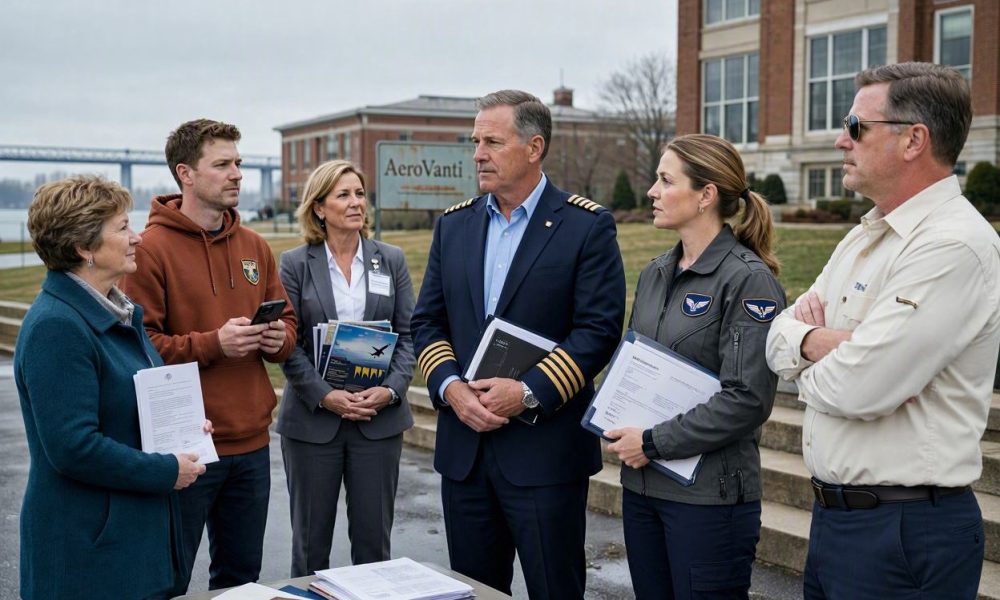
The private-air company’s crash left behind disputes involving customers, pilots, other workers, aircraft owners, vendors, and major marketing allies, while founder Patrick Britton-Harr’s Baltimore wire-fraud conviction supplied a criminal judgment addressing only one important part of the wider financial wreckage
ANNAPOLIS, Maryland, August 24, 2026 — AeroVanti’s collapse continues to reverberate through customer claims, employee wage litigation, aircraft disputes, sponsorship lawsuits, and federal proceedings, leaving former clients, pilots, vendors, and commercial partners pursuing different remedies after the once-prominent private-flight company stopped delivering its heavily promoted services.
The fallout stretches from Annapolis and Baltimore into Florida, Illinois, and other jurisdictions because AeroVanti combined a Maryland business identity with nationwide customers, Sarasota-based flight operations, leased aircraft, professional sports sponsorships, and affiliated entities handling different portions of the company’s rapidly expanding aviation program.
Founder Patrick Britton-Harr’s conviction on six federal wire-fraud counts resolved whether prosecutors proved an intentional $15 million Top Gun scheme beyond a reasonable doubt, but the verdict did not automatically determine separate wage, lease, sponsorship, refund, or contract claims involving other stakeholders.
Those parallel disputes illustrate why a corporate collapse rarely ends with one judgment, especially when a heavily promoted startup has collected advance payments, employed specialized workers, leased expensive equipment, purchased national marketing exposure, and accumulated obligations through numerous related business entities.
Top Gun Customers Pursued the Largest Membership Losses
AeroVanti’s most financially exposed customers joined its Top Gun program, which required selected members to contribute $150,000 upfront toward aircraft acquisitions while receiving blocks of discounted future flight time and promises that their money would receive meaningful asset-based protection.
Five groups of about twenty members each supplied close to $3 million for each proposed airplane, bringing the total collected toward five acquisitions to roughly $15 million and leaving every participant’s financial position behind AeroVanti’s representations about title, escrow, security, and operational readiness.
Members were told aircraft titles would be delivered into escrow and that they would receive secured interests and contractual assurances that could persuade customers to view their contributions as protected acquisition capital rather than unsecured money available for unrestricted corporate spending.
When aircraft were repossessed, unavailable, grounded, or never purchased through the represented structure, customers began filing civil claims seeking refunds, damages, enforcement of agreements, or access to assets and records that might explain where their money had gone.
The Justice Department’s account of Britton-Harr’s criminal conviction states that the Top Gun money instead financed yachts, jewelry, living expenses, and a $10,000 monthly Tampa-area residence while the five promised aircraft remained unpurchased as represented.
Federal prosecutors also proved that Britton-Harr obtained a later $1.5 million loan to acquire one aircraft he had already claimed was purchased with member funds, while withholding material information from the lender involved in the subsequent transaction.
Ordinary Members Faced Different Service Disputes
Not every AeroVanti customer participated in Top Gun because the company also sold individual, family, and corporate memberships carrying recurring fees, while ordinary members generally expected to pay for flights when booked rather than finance an entire aircraft acquisition.
These customers reported cancellations, limited availability, communication failures, and difficulties obtaining the services expected through their memberships, harms that could involve smaller individual amounts than Top Gun losses while still disrupting expensive and time-sensitive personal or professional travel.
One customer group alleged that it paid $300,000 before being told AeroVanti would not provide requested travel to a western destination despite broader service representations, illustrating how geographic availability could become another disputed element after substantial membership payments had already been collected.
Private-flight customers often purchase access because missed connections or commercial-airline schedules carry unusually high opportunity costs, meaning a canceled AeroVanti trip could affect business negotiations, family obligations, medical appointments, events, and replacement charter expenses beyond the original membership fee.
Different membership contracts may include distinct refund provisions, jurisdiction clauses, availability disclaimers, liability limitations, and dispute procedures, requiring former clients to review their individual documents rather than assume the Top Gun verdict automatically applies to every ordinary service claim.
The collapse consequently produced several categories of customer loss, ranging from six-figure aircraft-backed contributions to recurring dues and unused flight access, while litigation outcomes depend upon each agreement, payment history, representation, and defendant entity involved.
Pilots Said They Were Left Without Pay
A group of AeroVanti pilots filed a federal class-action lawsuit alleging that the company failed to pay wages while expecting pilots and other employees to remain available for possible assignments, creating a labor dispute separate from the customer-fraud prosecution considered in Maryland.
The named pilots sought unpaid minimum and overtime wages, liquidated damages, prejudgment interest, legal fees, and costs, and attempted to include other workers who faced similar compensation problems as the private-air company’s financial condition deteriorated.
According to Business Observer’s reporting on the pilots’ wage lawsuit, the workers alleged that they remained on standby and prepared to fly despite not receiving compensation beginning around June 2023, when AeroVanti’s operational crisis became publicly visible.
The complaint also alleged that pilots regularly worked beyond forty hours without receiving required overtime beginning earlier in 2023, claims that would be evaluated under federal labor law and applicable state principles rather than the wire-fraud statutes underlying Britton-Harr’s conviction.
Pilots occupy a particularly vulnerable position during an aviation shutdown because their credentials, currency requirements, medical qualifications, recurrent training, and career continuity can depend upon remaining active, even while unpaid wages force them to seek work elsewhere quickly.
The pilots’ claims also broadened public understanding of AeroVanti’s collapse by showing that financial pressure affected specialized employees responsible for safe operations, not only affluent travelers, aircraft owners, celebrity partners, or executives featured in the company’s luxury marketing.
Other Employees Faced Payroll and Tax Concerns
Reports from the 2023 grounding indicated that AeroVanti employees experienced missed pay periods and uncertainty surrounding payroll-related deductions, while internal communications attributed delays to temporary capital problems and encouraged workers to believe anticipated financing could restore normal operations.
An operations executive reportedly compared AeroVanti’s difficulties with early challenges faced by major technology companies, asking employees to remain committed through the downturn while acknowledging that workers needed to make responsible decisions for their families and immediate financial obligations.
Such motivational comparisons can preserve morale during an ordinary startup setback, but they become damaging when capital does not arrive, payroll remains outstanding, and employees conclude that optimistic communications prevented them from pursuing other work or protecting household finances sooner.
Unpaid workers may pursue wage claims, statutory penalties, interest, benefits, tax corrections, and legal costs, although practical recovery depends upon identifying the responsible employer, establishing records, obtaining judgments, and locating assets after secured creditors and other claimants assert competing interests.
The employee fallout also creates secondary regional harm because workers who expected stable aviation careers must replace income, maintain professional qualifications, address interrupted benefits, and explain abrupt employment changes while the former company remains entangled in litigation.
For Maryland and Florida business communities, those consequences demonstrate that startup collapses reach beyond founders and investors, affecting households, training providers, airports, maintenance facilities, recruiters, insurers, and local services that depend upon a functioning aviation employer.
Aircraft Owners and Lessors Sought Payment or Repossession
AeroVanti’s business depended on access to specialized Piaggio P.180 aircraft, some of which were controlled through leases or arrangements with outside owners rather than held outright in a stable, company-owned fleet.
When payments stopped, or contractual defaults arose, aircraft owners and lessors pursued remedies that reportedly included repossession, leaving AeroVanti with even less capacity to fly members and deepening the cash-flow crisis created by cancellations, refunds, lawsuits, and disappearing customer confidence.
Lessors may seek unpaid rent, maintenance expenses, repositioning costs, return-condition damages, legal fees, and enforcement of guarantees, while the aircraft themselves can deteriorate or lose commercial value if records, inspections, components, and required maintenance are incomplete.
Repossessing an aircraft protects an owner’s asset but can intensify losses elsewhere because members lose promised access, pilots lose assignments, maintenance vendors lose work, and the operating company becomes even less capable of earning revenue needed to satisfy remaining obligations.
The aircraft disputes also exposed an important distinction between marketing and ownership because customers viewing AeroVanti-branded airplanes might reasonably assume the company controlled a stable fleet, even though outside owners could lease, encumber, withhold, or recover particular aircraft.
For future purchasers, verifying registration, title, liens, lease duration, maintenance status, operating authority, and owner termination rights remains essential before committing large membership payments whose value depends upon continued access to a particular fleet.
Vendors Became Another Class of Creditor
Private aviation relies upon maintenance shops, fuel providers, airport facilities, caterers, ground handlers, software companies, insurers, professional advisers, and component suppliers, creating a wide vendor network that can accumulate substantial receivables when a membership company experiences severe liquidity problems.
Industry reports during AeroVanti’s grounding described vendor invoices ranging from tens of thousands to more than $100,000, amounts capable of harming smaller suppliers whose payroll, inventory, and credit facilities depend upon receiving prompt payment from commercial aviation clients.
Vendors may respond by withholding services, asserting liens, demanding deposits, terminating contracts, or filing lawsuits, each rational step for the individual supplier but another operational constraint upon a company attempting to restore flights without sufficient working capital.
Once those remedies accumulate, a restart becomes increasingly difficult because AeroVanti would need aircraft, qualified crews, maintenance releases, insurance, fuel, airport access, customer support, and vendor confidence simultaneously rather than repairing one isolated portion of the operating network.
Trade creditors also face difficult decisions about litigation costs because obtaining a judgment may be straightforward when invoices are documented, yet collecting from an insolvent or fragmented corporate structure can consume additional money without producing a meaningful recovery.
Sports Partners Pursued Contract Claims
AeroVanti used professional sports relationships to build visibility and credibility, associating its private-air and yacht brands with organizations including the Chicago Cubs, Tampa Bay Buccaneers, Tampa Bay Rays, motorsports, and other prominent marketing platforms.
Those partnerships provided hospitality, naming, signage, logo, promotional, fan-engagement, and sweepstakes opportunities that made AeroVanti appear nationally established, while the sports organizations expected substantial payments and complete contractual performance under valuable multiyear commercial agreements.
After the aviation company deteriorated, the Chicago Cubs pursued a contract action alleging AeroVanti failed to satisfy obligations under a marketing agreement, while litigation involving Tampa Bay sports organizations raised additional claims concerning sponsorship and licensing payments.
The Tampa Bay Rays’ related entity sought more than $880,000 in alleged unpaid sponsorship and licensing fees, while reports later described a multimillion-dollar judgment connected to AeroVanti’s failed agreement with the Buccaneers.
These sports cases were commercial contract disputes rather than counts within Britton-Harr’s Top Gun prosecution, so the teams’ rights and damages depended upon their individual agreements, services delivered, unpaid amounts, termination provisions, and litigation outcomes.
The partnerships nevertheless influenced the wider fallout because prestigious sports associations had helped AeroVanti attract attention, making their later lawsuits visible evidence that the company’s unpaid obligations extended beyond members, pilots, lessors, and ordinary trade vendors.
Marketing Allies Faced Reputational Questions
Major partners generally enter sponsorships to receive payment and strengthen fan engagement, not to guarantee a sponsor’s solvency, yet customers may still interpret recognizable logos and stadium exposure as informal confirmation that a young company has passed meaningful institutional scrutiny.
When AeroVanti collapsed, sports and lifestyle allies faced questions about whether their visibility made the company seem safer or better financed, even though those partners may have become unpaid creditors after providing the contracted promotional benefits.
Organizations can reduce future exposure by conducting financial reviews before signing, monitoring litigation and service complaints throughout the relationship, requiring security for major obligations, and preserving rapid termination rights when a partner’s operational condition changes materially.
They should also prepare communications explaining the limited nature of sponsorship relationships, because customers may incorrectly assume that a professional team endorses a company’s financial products, membership contracts, management practices, or aircraft ownership claims.
Once litigation begins, marketing partners must balance legal confidentiality with fan and customer trust, avoiding statements that prejudice pending claims while making clear that they do not control the sponsor’s finances, operations, or representations to private clients.
Maryland Advisers and Business Networks Absorbed the Shock
AeroVanti’s Annapolis identity and Baltimore-area publicity connected the company with a regional ecosystem of lawyers, accountants, investors, media organizations, economic-development groups, recruiters, and professional service firms attracted by its rapid growth and national ambitions.
When the company failed, those networks faced reputational and financial questions about the depth of prior due diligence, the gap between announced financing and received capital, and the adequacy of governance around customer money described as protected for aircraft acquisitions.
Regional advisers are not automatically responsible for a client’s misconduct, but the AeroVanti experience illustrates why professionals should define their roles carefully, document information received, investigate unusual claims, and withdraw when management refuses to provide reliable records or correct material public statements.
Local business media also confront a difficult balance between celebrating entrepreneurship and independently testing extraordinary financing, growth, valuation, and fleet claims, particularly when a startup sells expensive memberships using prestige created partly through favorable regional coverage.
The constructive response is not to distrust every Maryland founder, but to strengthen verification around asset ownership, customer-fund segregation, board independence, related-party transactions, realistic pricing, payroll compliance, and the difference between promotional commitments and available cash.
The Criminal Verdict Addresses Only Part of the Wreckage
Britton-Harr was convicted after a Maryland federal trial from May 18 through June 3, 2026, with jurors finding him guilty on six wire-fraud counts tied to Top Gun payments and false representations about aircraft purchases and financial protection.
Each count carries a maximum twenty-year prison term, although no sentence has been imposed because United States District Judge Adam B. Abelson postponed the original August 26 sentencing date while considering Britton-Harr’s motion seeking a new trial.
The defense alleges improper interactions involving jurors and a former deputy courtroom clerk, while the August 26 hearing will determine whether those reported incidents justify disturbing the verdict before sentencing and any later appellate proceedings continue.
Britton-Harr also faces separate health care fraud and money-laundering charges tied to respiratory testing billed to Medicare, but he remains presumed innocent of those unresolved allegations unless federal prosecutors prove every required element beyond a reasonable doubt.
Neither the aviation conviction nor the pending health care case automatically resolves customer contracts, pilot wages, aircraft leases, vendor invoices, or sports sponsorships, because those stakeholders must pursue remedies through the legal procedures and defendant entities applicable to their individual claims.
Rebuilding Trust Requires More Than Litigation
Court judgments can determine liability and award money, but they cannot fully restore missed wages, disrupted careers, canceled travel, lost business opportunities, broken partnerships, or the confidence stakeholders once placed in AeroVanti’s rapid expansion and Maryland business identity.
Amicus International Consulting’s framework for corporate crisis public-relations management emphasizes coordinated fact-finding, defined responsibility, rapid and accurate stakeholder communication, and contingency planning, measures that can reduce confusion when operational and financial problems first emerge.
For individuals or organizations damaged through association with a failed company, Amicus International Consulting’s approach to public-image and reputation reconstruction focuses upon rebuilding credibility through consistent conduct, transparent correction, and sustained positive evidence rather than concealing legitimate public records.
Former employees and partners should preserve contracts, emails, payroll records, invoices, flight logs, title information, and marketing approvals, since those documents may become essential when distinguishing their limited roles from management decisions challenged through lawsuits or criminal proceedings.
Customers should similarly maintain payment confirmations, membership agreements, booking records, cancellation notices, escrow instructions, refund requests, and representations concerning aircraft ownership, allowing lawyers and courts to evaluate individual losses without relying entirely upon generalized descriptions of AeroVanti’s collapse.
The Fallout Will Continue Beyond Baltimore
The AeroVanti collapse created a complicated hierarchy of stakeholders whose interests sometimes conflict, because members, workers, vendors, lessors, lenders, and commercial partners may pursue the same limited assets while asserting different contractual rights and legal priorities.
Former clients seek compensation for money and travel never delivered, pilots and workers pursue compensation for labor already performed, aircraft owners protect valuable equipment, vendors seek unpaid invoices, and sports organizations enforce agreements that once helped AeroVanti project national success.
Maryland’s federal verdict provides an important measure of accountability for the Top Gun conduct, but the wider commercial wreckage remains distributed across courts, contracts, creditor negotiations, and personal financial consequences that cannot be compressed into six criminal counts.
For Annapolis and Baltimore business circles, the continuing disputes show why rapid-growth companies need independent boards, segregated customer funds, verified asset records, realistic operating prices, payroll reserves, and crisis plans that protect stakeholders before financial pressure becomes irreversible.
The company’s final legacy may therefore be defined not only by Britton-Harr’s criminal case, but by the long pursuit of recovery undertaken by customers, pilots, employees, aircraft partners, vendors, and marketing allies left behind when AeroVanti’s high-flying promises stopped producing actual flights.




