
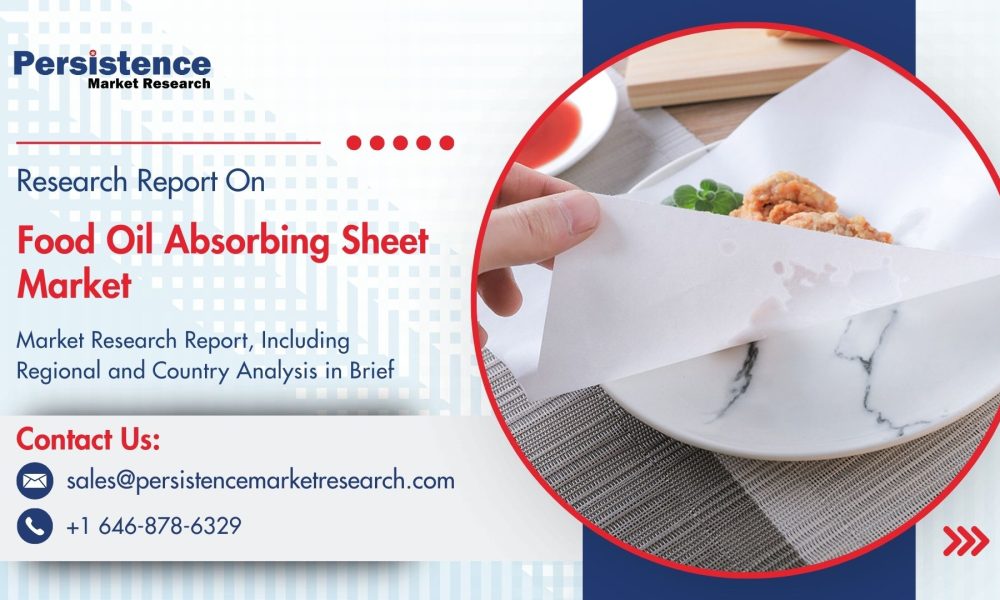
Food Oil Absorbing Sheet Market — Shaking Up Health-Focused Kitchens and Packaging
In recent years, consumer preferences have shifted dramatically toward healthier eating patterns, convenience, and innovative food preparation solutions. One such innovation gaining traction — particularly in households and commercial kitchens — is the food oil absorbing sheet, a simple but effective product designed to soak up excess oil and grease from fried or oily foods. While it may seem niche at first glance, this market is rapidly evolving as health consciousness, quick-service restaurant expansions, and sustainability trends continue to reshape global food habits.
According to a Persistence Market Research analysis, the global food oil absorbing sheet market is poised for steady growth through 2033, driven by rising consumer demand, expanding food-service sectors, and increasing emphasis on dietary health.
What Are Food Oil Absorbing Sheets?
Food oil absorbing sheets are specialized paper or cellulose-based products used during cooking, serving, or packaging to remove excess oil from food. They are widely applied in home kitchens, quick-service restaurants (QSRs), catering services, and food packaging to enhance food quality, reduce greasiness, and support healthier consumption practices.
These sheets come in multiple material types such as reed oil absorbing paper — which dominates market share due to its excellent absorption and cost efficiency — and other cellulose-based varieties designed for specific culinary applications.
Get Your FREE Sample Report Instantly – Click Now: https://www.persistencemarketresearch.com/samples/36141
Market Size and Forecast
The Persistence Market Research report highlights that the global food oil absorbing sheet market is expected to expand from an estimated US$195.7 million in 2026 to about US$261.0 million by 2033, registering a compound annual growth rate (CAGR) of around 4.2% during this period.
This growth underscores a broader trend: as people become more aware of the health impacts of excessive dietary oil and as fast food and takeaway dining continue their global rise, demand for tools that offer cleaner consumption experiences is growing.
Other industry estimates corroborate this momentum, forecasting that globally, similar markets — especially when broadened to encompass all oil-absorbing paper used in food sectors — could reach significantly larger valuations by the end of the decade.
Key Drivers Behind Market Growth
- Rising Health Consciousness and Changing Diet Patterns
Consumers across demographic groups increasingly prioritize lower-fat food choices, driving demand for products that help reduce visual and actual oil content in meals. Food oil absorbing sheets offer an easy, non-invasive way to decrease visible oil from fried foods, aligning with current health and wellness trends.
Moreover, culinary trends — from home cooking to professional kitchens — reflect a renewed focus on texture and presentation without compromising taste, making oil absorption a practical solution for many chefs and consumers.
- Growth of Quick-Service Restaurants (QSRs) and Food Delivery
The global expansion of QSRs and take-out cultures has significantly boosted the use of oil absorbing sheets. Restaurants, especially fast food and chain outlets, increasingly incorporate these sheets in food packaging and serving to ensure better food quality during delivery and consumption.
This demand extends to food delivery platforms and third-party aggregators, where maintaining food texture and reducing sogginess are key to customer satisfaction.
- Convenience and Household Cooking Trends
The rise of convenient cooking solutions — including air fryers, pre-prepared meals, and busy lifestyles — has increased home use of oil absorbing sheets. As more people experiment with frying and high-heat cooking at home, the need for simple products that help manage oil spillage and excess grease rises.
Smaller pack sizes, user-friendly formats, and wide availability through supermarkets and online platforms have further boosted household penetration.
- Sustainability and Eco-Friendly Materials
Environmental concerns are transforming consumer expectations beyond performance. Manufacturers are responding by developing sheets made from biodegradable, compostable, and recycled materials, reducing environmental footprint and appealing to eco-aware buyers. Some offer plant-based alternatives (e.g., bamboo or hemp fibers) to traditional paper, aligning with broader sustainability trends in food packaging.
As sustainability becomes a purchasing priority, eco-friendly oil absorbing sheets could unlock new growth avenues in developed and emerging markets alike.
Get a Customized Market View in One Click: https://www.persistencemarketresearch.com/request-customization/36141
Market Segmentation: Insights and Trends
Material Type
Reed oil-absorbing paper remains the leading material segment, capturing the largest share of market value due to its superior oil-absorption properties and cost efficiency.
However, biodegradable and specialty materials are gaining traction as consumer preference shifts toward products with lower environmental impact.
Product Format
Sheets are commonly produced in standard sizes, which dominate due to versatility and ease of use. However, customized sizes — including square, round, and specialty formats — are emerging to cater to diverse market needs, particularly in the hospitality and food manufacturing segments.
Distribution Channels
Supermarkets, hypermarkets, and retail chains remain primary distribution channels due to wide reach and product accessibility. However, e-commerce platforms are rapidly expanding, offering direct-to-consumer options, bulk packages, subscription models, and new product formats. This digital shift enhances convenience and broadens the market footprint.
Regional Market Landscape
North America
North America accounts for a significant share of the global food oil absorbing sheet market, supported by high QSR density, well-developed supermarket networks, and growing health awareness among consumers.
Asia Pacific
Asia Pacific is expected to be the fastest-growing regional market through 2033, driven by rapid urbanization, rising disposable incomes, and increasing Western and fast food consumption in countries such as China, India, and Japan. The region’s growing middle class and evolving food packaging standards further contribute to strong growth prospects.
Other Regions
Europe and Latin America also present consistent growth opportunities, driven by consumer preferences for healthier cooking practices and expanding packaged food sectors.
Competitive Landscape and Innovation
The food oil absorbing sheet market is moderately competitive, with both established players and regional producers participating. Companies differentiate based on absorption performance, material sustainability, size variations, and price points.
Innovation trends include:
- Development of multi-functional sheets capable of absorbing not just oil but sauces and liquids.
- Introduction of antimicrobial properties to enhance hygiene performance.
- Expanded use of eco-certified and biodegradable materials.
- Partnerships with food manufacturers and foodservice chains to integrate oil absorbing sheets into product packaging or serving systems.
Challenges and Restraints
Despite promising growth, the market faces some challenges:
Competition from Alternatives
Products such as paper towels, reusable cloths, and oil filtration systems offer cheaper or reusable options, limiting market share for disposable sheets.
Price Sensitivity
In price-sensitive regions, especially parts of Asia and Africa, the cost of oil absorbing sheets versus traditional alternatives can affect adoption rates.
Environmental Concerns
Although biodegradable options are emerging, consumers and regulators continue to scrutinize single-use products, pushing manufacturers to invest in truly sustainable solutions.
For In-Depth Competitive Analysis, Buy Now: https://www.persistencemarketresearch.com/checkout/36141
Future Outlook
The food oil absorbing sheet market is poised to grow steadily through the next decade as health awareness, convenience demands, and sustainability trends strengthen globally. Continued innovations in material science, product format diversity, and digital distribution channels will play a crucial role in shaping the next phase of growth.
With rising middle-class spending on food and dining experiences, expanding QSR networks, and heightened consumer emphasis on healthier eating, food oil absorbing sheets are increasingly becoming an integral piece of modern food preparation and packaging solutions — not just for households, but across the global food industry.
About Persistence Market Research:
Persistence Market Research delivers strategic research solutions that drive business growth. Founded in 2012 and registered in England and Wales in 2023 as Persistence Research & Consultancy Services Ltd., we have completed 3,600+ custom and syndicated studies and supported 2,700+ projects for leading research firms. Combining traditional methodologies with modern tools, we provide actionable insights to multinational corporations, consultants, investors, and government bodies, earning strong trust through long-term client relationships.
Contact Us:
Persistence Market Research
Second Floor, 150 Fleet Street,
London, EC4A 2DQ, United Kingdom
USA Phone: +1 646-878-6329
UK Phone: +44 203-837-5656
Email: [email protected]
Web: https://www.persistencemarketresearch.com




