
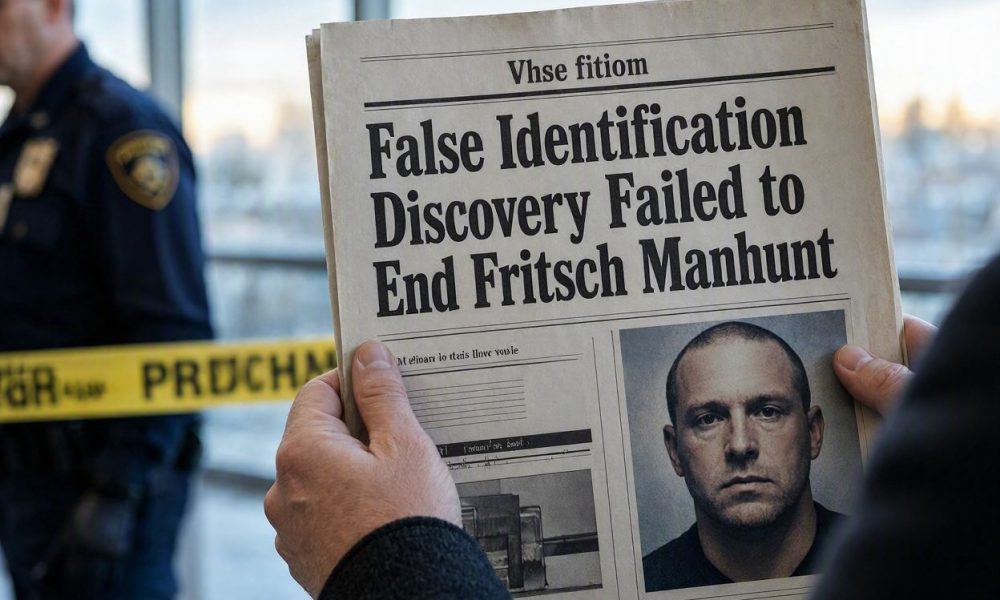
The discovery of false identification led to Fritsch’s detention in Mexico. Yet, he never entered American custody and departed for Munich after being released under immigration conditions requiring him to report every two weeks.
WASHINGTON, DC, September 7, 2026
Mexican authorities discovered Bernhard Eugen Fritsch carrying false identification during September 2025. Still, the encounter failed to return the convicted StarClub founder to the United States or stop his onward journey to Germany weeks later.
The document discovery placed Fritsch inside Mexican immigration custody. It appeared to create a breakthrough, because American authorities had pursued him since he crossed the southern border by car after avoiding a post-conviction bond hearing.
However, Mexican officials released him under conditions requiring an appearance before an immigration court every two weeks, exchanging physical detention for periodic supervision despite an outstanding federal warrant and his demonstrated history of nonappearance.
Fritsch subsequently departed for Munich, where powerful German citizenship protections complicated the American effort to enforce a fifteen-year prison sentence, a $35,000 fine, and more than $26.8 million in court-ordered restitution.
The Public Record Identifies No Specific Document
The FBI describes the material discovered in Mexico only as false identification, without publicly stating whether officers recovered a forged passport, altered identity card, borrowed document, fabricated credential, or genuine paper obtained through fraudulent representations.
That omission prevents responsible reporting from assigning a specific document type, issuing country, alias, production method, or intended use, because each additional detail would exceed what authorities have established in publicly accessible materials.
Different identification problems can produce substantially different legal consequences, since alteration, counterfeiting, impersonation, false application statements, unlawful possession, and use of another person’s genuine papers may involve separate evidentiary elements and domestic offenses.
The limited official description nevertheless confirms that Mexican authorities considered the identification inconsistent with immigration law and possessed sufficient grounds to detain Fritsch while examining his presence, status, documents, and relationship to the American fugitive case.
False Papers Can Reveal More Than a Name
Identification documents typically link a person to biographical information, nationality, travel authority, government records, photographs, signatures, and sometimes biometric identifiers, making their examination central whenever officers suspect a traveler is concealing an identity.
A discrepancy can trigger comparisons involving facial appearance, fingerprints, dates of birth, issuing records, document security features, travel history, immigration files, and international police information. However, authorities have not disclosed which methods confirmed Fritsch’s identity.
Investigators may also examine where questionable identification was obtained, who supplied it, how it was paid for, whether it crossed borders, and which earlier transactions or movements depended upon the same document or identity presentation.
None of those potential inquiries changes the narrow confirmed fact in Fritsch’s case, which remains that Mexican law enforcement found false identification, detained him under immigration authority, and later released him with recurring reporting obligations.
Identity Confirmation Did Not Create American Custody
The FBI’s official account confirms the false-identification discovery, immigration detention, conditional release, and October 6 flight to Munich. Still, it does not state that Fritsch ever entered formal Extradition custody while in Mexico.
That distinction is decisive because recognizing a fugitive and temporarily holding him for a domestic immigration violation are different from completing the judicial, diplomatic, and executive steps necessary to surrender someone to another government.
An American arrest warrant supports international cooperation, but it does not grant federal agents police authority inside Mexico, where detention and transfer must rest upon Mexican law, valid requests, appropriate documentation, and decisions by competent Mexican institutions.
Consequently, the discovery answered one important question about identity while leaving completely unresolved the separate questions of continuing detention, provisional arrest, Extradition eligibility, immigration removal, destination control, and secure handover to American officers.
Immigration Proceedings Follow Their Own Rules
Immigration authorities ordinarily examine whether a foreign national entered lawfully, possesses valid documents, complied with authorized status, committed a local immigration violation, or should remain, depart voluntarily, or face removal under domestic procedures.
Extradition instead concerns whether a person should be delivered to a requesting country for prosecution or enforcement of punishment, requiring attention to treaty provisions, offense coverage, identity evidence, procedural safeguards, and any recognized grounds for refusal.
Deportation can sometimes produce an indirect return when immigration officials remove someone toward a country seeking custody. Still, deportation and Extradition remain legally distinct and cannot be assumed to produce the same destination or timetable.
Fritsch’s release suggests that the immediate Mexican process did not maintain continuous custody long enough to achieve an American transfer. However, the public record does not fully explain which procedural or evidentiary factors controlled that result.
The Two-Week Condition Created a Window
Mexican authorities required Fritsch to report to the immigration court every two weeks, establishing a recurring legal obligation intended to preserve contact while allowing him to remain outside a secure detention facility during the unresolved process.
Conditional release operates through expected compliance rather than physical restraint, making it vulnerable when a person has already violated supervision, has international resources, receives outside assistance, and believes another jurisdiction will offer stronger protection.
Fritsch had failed to attend the California hearing that triggered the federal warrant, providing a recent and highly relevant indication that a judicial reporting obligation might not persuade him to remain available for future proceedings.
The two-week interval also provided substantial practical time to obtain accommodation, communicate with supporters, research travel to Germany, arrange payment, reach Mexico City, secure an airline reservation, and leave before another compulsory appearance.
The Release Decision Remains Poorly Explained
Publicly available American sources do not include the Mexican release order, hearing transcript, case file, custody assessment, or a complete account of communications between United States officials and the Mexican authorities responsible for Fritsch.
Without those documents, it would be speculative to declare that the release resulted from corruption, negligence, insufficient paperwork, detention limits, legal error, diplomatic delay, evidentiary uncertainty, or a considered application of ordinary immigration rules.
The outcome nevertheless represents an undeniable practical failure for the search, because authorities positively identified and detained a convicted fugitive. Yet, no mechanism prevented him from leaving Mexico and entering a legally more protective destination.
Later litigation, disclosure, official review, or investigative reporting may clarify precise institutional responsibility. Still, the current evidence permits a firm description of what happened without inventing why each authority acted as it did.
The Manhunt Began With a June Car Crossing
Fritsch entered Mexico on June 2, 2025, by car instead of appearing at a federal hearing scheduled to consider whether he should be remanded into custody after his April wire-fraud conviction.
The post-conviction hearing was distinct from sentencing, but it could have ended his freedom immediately and ensured his presence when the court later determined the prison term, fine, restitution, and other consequences arising from the verdict.
The United States District Court in Los Angeles issued an arrest warrant on June 3 after his nonappearance, formally adding failure to appear to the completed trial record and beginning the international phase of the investigation.
Reports that his electronic ankle monitor stopped functioning around the time of his departure emphasized the deliberate nature of the escape while showing that location monitoring provides alerts and evidence rather than an impenetrable physical barrier against border movement.
StarClub Supplied the Underlying Conviction
Fritsch founded and led StarClub Incorporated, a Santa Monica company promoting technology intended to help celebrities and social-media influencers monetize endorsements through advertising distributed alongside their online posts and shared revenue from resulting engagement.
Between January 2014 and August 2017, the company raised approximately $35 million, according to the FBI, while federal prosecutors ultimately attributed roughly $26.8 million in losses to the fraudulent investment conduct established through trial.
The federal government showed that Fritsch repeatedly misrepresented StarClub’s financial performance, revenues, institutional investors, media relationships, and prospects for significant commercial agreements, investments, or acquisition offers from recognized entertainment and financial organizations.
One victim invested more than $20 million over approximately two years and introduced other participants who supplied additional millions, showing how trust can multiply through private networks before key corporate claims receive independent documentary verification.
Luxury Expenditures Became Central Evidence
Federal prosecutors said at least $7.3 million in investment funds supported Fritsch’s personal expenses, including mortgage and residential costs, rather than being used entirely for the channels, software, marketing, and ordinary corporate purposes described to investors.
The personal spending included a McLaren, a Rolls-Royce, renovations to a Malibu mansion near Carbon Beach, and improvements to a yacht, giving jurors concrete examples of how investor capital moved after each solicitation.
The FBI seized the vehicles and yacht, demonstrating how financial investigations can progress through parallel efforts involving criminal liability, bank-record analysis, asset tracing, forfeiture proceedings, property preservation, and eventual restitution enforcement for victims.
After a nine-day trial, the federal jury convicted Fritsch on one wire-fraud count and acquitted him on another, establishing criminal responsibility while preserving the defense victory on the charge prosecutors failed to prove beyond a reasonable doubt.
Mexican Life Produced a Financial Trail
From June through September 2025, Fritsch’s girlfriend, Lucinda Jane Weist Manera, made at least ten payments totaling approximately $7,475 to a third party while knowing Fritsch was staying at that person’s Mexican residence.
Manera also authorized a $534 hotel charge for Fritsch, linking an American financial account to accommodation used during his escape and creating a documentary marker investigators could compare against communications, locations, and later travel.
Financial records can expose a fugitive even when questionable identification conceals a familiar name, because ordinary payments reveal recipients, intermediaries, dates, merchants, devices, accounts, and relationships that remain traceable through lawful legal process.
The supporting transactions consequently created evidence independent of whatever document Fritsch carried, allowing investigators to reconstruct his Mexican presence through ordinary commercial activity and the financial behavior of people remaining within American jurisdiction.
September Research Pointed Toward Germany
In September 2025, Manera searched online on Fritsch’s behalf for information about his departure from Mexico and travel to his native Germany, according to prosecutors, revealing an interest in a destination with strong nationality-based Extradition protection.
Germany generally prohibits extraditing its citizens to countries outside the European Union, subject to constitutional qualifications, meaning arrival there could have blocked the direct American surrender route that might have remained available while Fritsch was in Mexico.
The timing directly connects the German research with the period surrounding the Mexican detention, conditional immigration release, supporting payments, Mexico City hotel accommodation, and eventual commercial flight into Munich during early October.
An isolated internet search might support several explanations. Still, digital research combined with payments, communications, and completed travel becomes more probative when prosecutors seek to demonstrate knowledge, assistance, purpose, and the intended endpoint of an escape.
Commercial Air Travel Completed the Transition
Fritsch departed Mexico for Germany in early October and reached Munich on October 6, according to federal authorities, moving from a country where he was detained as a foreign national to the country of his own citizenship.
Los Angeles Times reporting described how the Mexican release permitted Fritsch to continue traveling toward Germany, where federal officials now believe he remains while avoiding the fifteen-year sentence imposed after his departure.
His ability to board an international flight despite the previous false-identification discovery raises legitimate questions about what travel document he presented. Still, authorities have not publicly supplied enough evidence to answer that question accurately.
The case therefore should not be described as proof that Fritsch used the same false identification for air travel, because the official record confirms its discovery during detention without explaining which document supported his Germany-bound reservation and boarding.
Modern Identification Systems Are Not Universal Barriers
Border agencies and airlines may examine passports, passenger information, photographs, visas, watch lists, document security features, and biometric data, but system coverage, legal access, matching practices, and operational responses differ across countries and transportation environments.
Amicus International Consulting’s overview of biometric exit and wanted-person identification explains how identity technology can support enforcement without guaranteeing that every traveler, land crossing, airline record, and foreign jurisdiction participates through one seamless global system.
A name-based check can also produce different results from a biometric comparison, particularly when aliases, transliteration, spelling variants, incomplete records, multiple nationalities, or document inconsistencies complicate the connection between a traveler and an outstanding foreign warrant.
Fritsch’s case shows the continuing importance of human Judgment and legal authority, because technological recognition alone cannot determine detention length, Extradition eligibility, release conditions, destination, or the constitutional rights available in the country controlling custody.
Munich Created the Strongest Legal Obstacle
Arrival in Germany transformed Fritsch’s situation because the German Basic Law generally protects German citizens from Extradition to non-European Union countries, creating a constitutional obstacle unavailable to him. At the same time, he remained a foreign national in Mexico.
Amicus International Consulting’s explanation of Extradition and INTERPOL notices describes why international police cooperation may help identify and locate a person without compelling a sovereign country to surrender its citizen contrary to its domestic law.
The German protection does not erase Fritsch’s conviction, invalidate the federal warrant, eliminate restitution, cancel the fine, or shield him during international travel through countries willing to recognize an American provisional-arrest or Extradition request.
It does, however, explain why the Mexican release became the decisive missed opportunity, because the same wanted individual moved from conditional immigration supervision into a jurisdiction where nationality changed the available American enforcement options.
Sentencing Occurred After the Escape Was Complete
On October 20, 2025, two weeks after Fritsch reportedly reached Munich, a federal judge sentenced him in absentia to fifteen years in prison and imposed a $35,000 fine for the wire-fraud conviction.
The court later ordered exactly $26,806,901 in restitution, giving victims a formal financial Judgment while leaving collection dependent on recoverable assets, ownership evidence, forfeiture outcomes, and cooperation wherever relevant property or accounts might exist.
Sentencing without Fritsch prevented him from escaping indefinitely suspended punishment. Still, the Judgment could not produce immediate incarceration because a prison term becomes operational only when competent authorities place the defendant inside lawful custody.
The search therefore seeks to convert an existing legal result into physical enforcement, rather than retrying the completed StarClub case or relitigating the wire-fraud count on which the jury already returned a guilty verdict.
Flight Damaged Fritsch’s Appellate Position
The Ninth Circuit Court of Appeals dismissed Fritsch’s appeal in April 2026 because of his fugitive status, applying the principle that a defendant who evades judicial authority generally cannot simultaneously demand its protection and review.
He could request reinstatement by surrendering before August 21, 2026, but he did not surrender before the deadline, leaving his conviction and sentence in place without appellate consideration of the disputed merits.
That result illustrates another consequence of flight, because evasion may sacrifice legal remedies and procedural opportunities instead of merely postponing incarceration, particularly when courts decline to hear claims from someone refusing to appear.
The false identification therefore belongs within a larger sequence of decisions that produced immigration violations, reporting failures, international flight, associate prosecution, a dismissed appeal, and continuing exposure under a highly publicized federal warrant.
The Support Network Faced Criminal Consequences
Manera pleaded guilty in June 2026 to being an accessory after the fact, acknowledging assistance intended to hinder and prevent Fritsch’s apprehension and punishment after she knew that the federal jury had convicted him.
Her admitted conduct included misleading investigators, financing Mexican accommodation, supporting a third-party residence, and researching the Germany route, providing evidence connecting people, money, digital activity, and travel during Fritsch’s detention.
The prosecution demonstrates that a false identity cannot isolate a fugitive from every trace, because supporters may expose locations and intentions through their own bank records, devices, communications, statements, accounts, and dealings with commercial businesses.
It also warns that knowingly helping someone remain beyond custody can create independent federal liability even when the supporter had no involvement in the original investment fraud that produced the conviction and sentence.
The FBI Now Seeks Public Identification Assistance
The bureau has added Fritsch to its Most Wanted Fraudsters list and offered up to $150,000 for information leading to his arrest and conviction, dramatically broadening recognition beyond investigators already familiar with the file.
Multiple photographs, known aliases, detailed physical characteristics, citizenship information, and the suspected Munich location allow acquaintances, businesses, travelers, and members of the German public to compare current observations against a carefully assembled official profile.
Public tips still require careful verification because online images, distant sightings, name similarities, and assumptions about relationships can lead to mistakes, especially when a subject is associated with questionable identification and several publicly listed aliases.
Members of the public should exclusively use official FBI, embassy, or consular reporting channels and avoid personal confrontation, surveillance, trespass, hacking, or attempted detention that could endanger participants and compromise a coordinated investigation.
The Document Discovery Was a Breakthrough, Not a Conclusion
Finding false identification helped Mexican authorities recognize an immigration violation and temporarily control Fritsch. Still, the discovery represented only one stage in a longer process requiring sustained custody, legal coordination, and an enforceable transfer mechanism.
Identity evidence alone cannot determine whether a person remains detained, receives bail or conditional release, faces domestic charges, is deported, becomes provisionally arrested, or meets every requirement for Extradition to a requesting country.
The Mexican encounter therefore exposed both the power and limitation of identity enforcement, because suspicious documentation brought the fugitive before authorities. At the same time, procedural developments later returned him to conditions he was willing to violate.
By leaving for Munich, Fritsch converted that temporary release into a lasting international complication, demonstrating how quickly a document case can intersect with citizenship rights, Extradition law, airline travel, and enforcement across multiple sovereign systems.
The Most Important Details Remain Unknown
Authorities have not publicly identified the false document, explained its origin, disclosed the name it displayed, described the supporting records, or stated whether anyone else has been charged with creating or supplying it.
They also have not released the complete Mexican immigration decision, clarified whether officials retained any passports, or described which American documents and diplomatic requests were available before Fritsch boarded his flight toward Germany.
Those omissions prevent a full assessment of why detention failed. Still, they do not undermine the confirmed sequence involving discovery, custody, conditional release, noncompliance, travel to Mexico City, a commercial flight, and arrival in Munich.
Future court filings, official statements, investigative disclosures, or proceedings against additional associates could answer some of those questions and reveal whether the false identification played a broader role throughout Fritsch’s time in Mexico.
The Failed Identification Breakthrough Shapes the Manhunt
Fritsch remains believed to reside in or near Munich, where his citizenship complicates direct American Extradition but cannot guarantee protection if he travels into another jurisdiction applying different surrender laws and treaty obligations.
The FBI reward now seeks precisely the kind of reliable identity and location information that Mexican authorities briefly possessed, with investigators hoping a future encounter will progress beyond recognition and temporary custody into an enforceable arrest outcome.
For victims, the document discovery is a frustrating reminder that authorities came close to controlling the defendant before sentencing, only to watch conditional release provide the opening through which he reached a more protective jurisdiction.
For international law enforcement, the case shows that successful identification must be matched by immediate legal coordination, adequate supporting materials, carefully designed release conditions, and rapid notification capable of preventing another international departure.
The discovery of false identification did not end the Bernhard Fritsch search because recognizing the wanted man proved easier than maintaining lawful custody, completing a transfer, and preventing him from reaching the constitutional protection available in Germany.




