
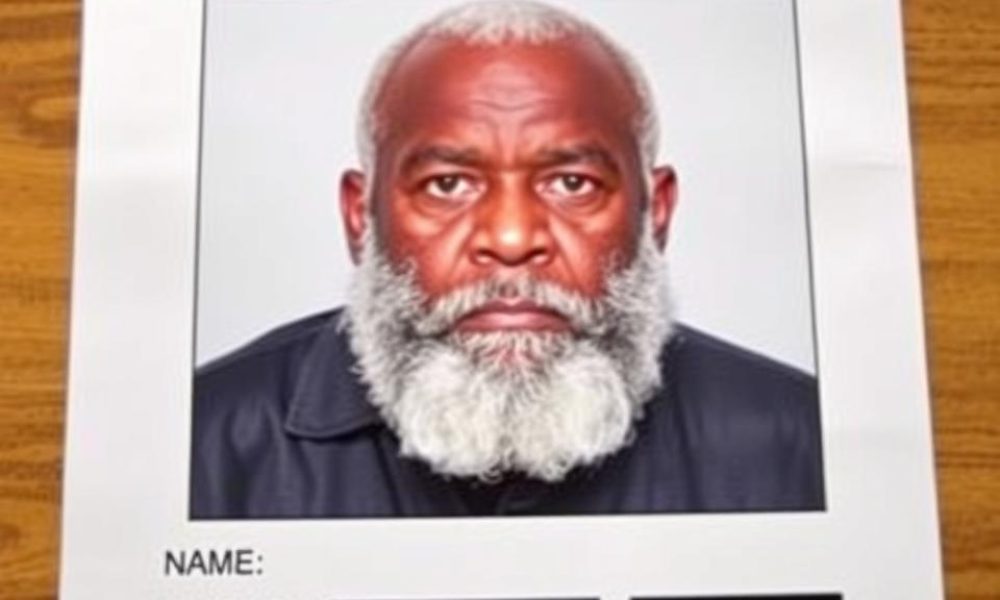
Part 5: The Telemedicine Loophole
Herb Kimble’s operation routed victims to unscrupulous telemedicine companies that fabricated fraudulent prescriptions without ever verifying medical necessity, turning virtual care into a mass-production engine for Medicare billing.
VANCOUVER, BC, June 28, 2026. Telemedicine was supposed to expand access to care for patients who could not easily reach a clinic, but Herbert “Herb” Kimble’s Medicare brace scheme showed how that promise could be twisted into a billion-dollar fraud machine.
The fraud did not succeed merely because call centers found elderly Medicare beneficiaries; the operation also required medical paperwork, physician signatures, prescription forms, and a billing narrative that made unnecessary braces appear legitimate within Medicare’s claims system.
According to the U.S. Department of Health and Human Services Office of Inspector General profile on Herbert “Herb” Kimble, Kimble’s offshore call center contacted telemedicine companies whose physicians often issued prescriptions without regard to medical necessity.
That sentence explains the core loophole, because the scam needed a doctor’s name to turn a sales call into a Medicare claim, even when no meaningful examination, patient relationship, or legitimate treatment plan existed.
Telemedicine became the paperwork factory.
The corrupt power of the scheme came from turning telemedicine into a remote-signature pipeline, where a beneficiary’s information could move from advertising to call center to prescription order to DME supplier without the safeguards of ordinary medical care.
In a legitimate telemedicine visit, a clinician evaluates a patient, reviews symptoms, considers history, documents findings, discusses treatment, and orders equipment only when the medical facts support the decision.
In Kimble’s alleged prescription chain, that medical judgment was replaced by volume, speed, scripts, lead generation, and financial incentives that rewarded the creation of billable brace orders.
The call center did not need to heal the patient, because it needed enough information to convince a telemedicine partner that a prescription could be generated and sold downstream.
That is why the telemedicine layer was so dangerous: it gave the scheme a medical veneer while stripping away the professional judgment that gives prescriptions their legal meaning.
The patient relationship was almost nonexistent.
Federal investigators described a system in which doctors allegedly prescribed durable medical equipment without any patient interaction or with only a brief telephonic conversation with people they had never met or physically examined.
That detail matters because braces are not harmless promotional items, and Medicare coverage depends on medical necessity rather than a beneficiary’s willingness to accept something advertised as free or low cost.
A back brace, shoulder brace, wrist brace, or knee brace may be appropriate when ordered by a treating clinician after a real assessment, but it becomes fraudulent when the prescription is generated to support a claim rather than a patient’s need.
The scheme exploited the difference between a document that looked medically official and a medical decision that was actually supported by facts.
Patients were treated as data points in a billing sequence, while the doctor’s signature served as the trigger for Medicare reimbursement.
The doctors gave the scam its legitimacy.
The call center could find beneficiaries, the DME companies could ship braces, and the marketers could create demand, but the doctors and telemedicine companies provided the crucial bridge into Medicare’s payment system.
That bridge mattered because Medicare does not pay for orthopedic braces simply because a patient asks for one or because a marketer convinces someone that a brace might be useful.
A physician’s order is meant to reflect professional judgment, and that judgment should be tied to diagnosis, necessity, documentation, and a real clinical relationship.
When doctors sign orders without meaningful review, they are not merely cutting corners, because they are converting their medical license into a billing instrument for someone else’s financial scheme.
Kimble’s operation depended on that transformation, because the prescription was the product that the call center could sell to DME companies.
The scam exploited the trust built into telehealth.
Telemedicine works because the system trusts licensed clinicians to use remote technology responsibly, especially when patients are elderly, disabled, rural, homebound, or unable to access care easily.
The brace scheme abused that trust by using remote access not to improve care, but to avoid the friction that a real clinic visit might create.
A real physician encounter might reveal that the patient did not need multiple braces, did not request them, did not understand the offer, or already had appropriate medical support.
A fraudulent telemedicine encounter could avoid those facts by keeping the interaction brief, scripted, incomplete, or nonexistent.
That is how a technology built for convenience became a loophole: the same remote structure that helps legitimate patients can be abused when medical judgment is replaced by billing demands.
The call center controlled the patient pipeline.
Kimble’s offshore call center was not merely forwarding names, because it was screening Medicare beneficiaries, persuading them that braces were needed, and often upselling them into additional equipment categories.
Once beneficiaries were captured through television or internet advertisements, the call center could create a pipeline of people whose Medicare information became valuable to telemedicine companies and DME suppliers.
The operation, therefore, reversed the ordinary medical process because patients were not seeking care from a doctor who would then make a treatment decision.
Instead, marketers created demand, telemedicine companies generated prescriptions, DME companies purchased orders, and Medicare received claims built from a chain of financially motivated intermediaries.
The patient’s body became secondary, while the patient’s Medicare number became the real asset.
The prescription became the commodity.
In ordinary medicine, a prescription is a clinical instruction, but inside the brace scheme, the prescription became a tradable commodity that could be bought, sold, packaged, and converted into federal reimbursement.
HHS-OIG said dozens of DME companies entered agreements with Kimble’s offshore call center to purchase prescriptions before billing Medicare for the orthotic braces.
That structure reveals why the scam was so scalable, because once prescriptions could be manufactured in volume, DME suppliers could use them as inventory for claims.
The invoices allegedly disguised what was actually being purchased, concealing that prescriptions were the valuable items moving through the network.
The brace might have been shipped to the patient, but the prescription was the document that unlocked the money.
Operation Brace Yourself exposed the model.
The Department of Justice’s Operation Brace Yourself announcement described charges against telemedicine executives, DME company owners, and medical professionals connected to more than $1.2 billion in alleged losses.
Federal authorities said the scheme involved illegal kickbacks and bribes paid by DME companies for Medicare beneficiary referrals, with medical professionals working through fraudulent telemedicine companies to generate orders for medically unnecessary braces.
The announcement also described an international telemarketing network that lured elderly and disabled patients into a cross-border scheme involving call centers in the Philippines and Latin America.
The scale was extraordinary because the enforcement action targeted 24 defendants, including executives connected to telemedicine companies, owners of DME companies, and licensed medical professionals.
That breadth showed the fraud did not belong to a single corrupt doctor or a single bad supplier, but rather to a multilayered ecosystem built around prescriptions.
The medical necessity standard was the obstacle.
The fraudsters had to overcome the requirement of medical necessity because Medicare reimbursement depends on whether the equipment is actually needed for the beneficiary’s medical condition.
Medical necessity is not a bureaucratic formality because it protects taxpayers, patients, legitimate doctors, and the integrity of federal health programs.
When the standard works, unnecessary equipment is not covered, patients are not burdened with unwanted devices, and Medicare funds remain available for genuine care.
When the standard is faked through mass-produced telemedicine orders, the claims system sees what appears to be a valid physician instruction, even though the clinical foundation may be missing.
The scam’s brilliance and danger lay in forging the appearance of necessity without delivering the medical evaluation that necessity requires.
The doctors did not need to ship anything.
One reason the telemedicine loophole was so profitable is that a doctor or telemedicine company did not need to warehouse braces, operate call centers, or submit every Medicare claim directly.
Their role could be narrower and still essential, because they supplied the physician orders that allowed marketers and DME companies to keep the billing chain moving.
That narrowness may have made the conduct seem less visible, but it did not make it less important.
Without medical signatures, the call center’s leads were incomplete, and the DME companies lacked the documentation needed to support claims.
The doctors behind the orders were therefore not peripheral, because their signatures created the illusion that the entire chain began with medicine rather than marketing.
Telemedicine companies became accelerators.
A sham telemedicine company could scale fraud faster than a physical clinic because remote work allowed a small number of clinicians to process large volumes of patient files, brace requests, or scripted encounters.
A traditional clinic has natural limitations, including appointment capacity, examination rooms, staff time, patient travel, medical records, and ongoing relationships.
A corrupt telemedicine structure can strip away those limitations while keeping the outer shell of medical legitimacy.
That made the model attractive to marketers because every additional beneficiary could be converted into a potential claim without building a real care network.
The result was industrialized prescribing, in which speed replaced care, and the doctor’s signature became part of a production line.
The harm reached patients as well as taxpayers.
Medicare was the direct payer, but patients also suffered because unwanted or unnecessary braces could create confusion, waste, future coverage problems, and loss of control over personal medical information.
HHS-OIG warned in its nationwide brace scam alert that beneficiaries who receive unwanted or unneeded braces billed to Medicare may later be denied coverage for a brace they genuinely need.
That warning shows that the harm was not abstract, because a fraudulent claim can occupy a patient’s benefit history and interfere with future care.
Patients may also feel violated when they realize their Medicare information was used to bill for products they did not need, did not understand, or did not request through a trusted physician.
The fraud, therefore, attacked both the public treasury and the dignity of beneficiaries whose medical identities were turned into billing tools.
Legitimate telemedicine was also damaged.
The scandal was especially harmful because telemedicine itself is a valuable tool when used properly, particularly for rural patients, homebound seniors, mobility-limited beneficiaries, and people who need access to specialists.
Fraudulent brace prescriptions risked making regulators, insurers, and the public more suspicious of remote care, even when legitimate telehealth providers follow proper clinical standards.
A KFF Health News report on telemedicine and medical equipment scams described how scammers used sham telemedicine structures to scale operations quickly and cheaply by having doctors write large numbers of prescriptions.
That kind of reporting matters because it separates telemedicine from telemedicine abuse.
The technology was not the villain, because the villain was the business model that used remote medicine to disguise a kickback-driven claims machine.
The DME companies monetized the prescriptions.
Durable medical equipment companies turned the orders into claims by billing Medicare for braces generated through the telemarketing and telemedicine pipeline.
Those companies were essential because Medicare payments flowed through suppliers that presented claims as if they reflected legitimate beneficiary needs.
The DME layer converted paperwork into revenue, serving as the scheme’s financial endpoint.
If the claim was approved, federal funds were disbursed, while the patient often remained confused about why the braces arrived, how many were ordered, or whether the equipment was medically necessary.
The prescription may have been created upstream, but the DME claim was where the scheme touched Medicare’s payment system.
Kickbacks corrupted every layer.
The DOJ described illegal kickbacks and bribes as central to the model because DME companies allegedly paid for referrals and prescriptions that allowed them to bill Medicare.
Kickbacks are dangerous in health care because they distort medical decision-making, turning patient care into a marketplace for compensated referrals.
When doctors, marketers, telemedicine companies, and suppliers are paid according to volume rather than necessity, the patient’s best interest disappears behind the economics of the transaction.
That is why health care fraud laws treat kickbacks so seriously, because they poison the relationship between clinical judgment and financial reward.
Kimble’s operation showed what happens when the payment system rewards prescriptions before it verifies real care.
The brief phone call became a shield.
Some schemes relied on no meaningful patient contact, while others allegedly used brief phone conversations that could be presented as telemedicine encounters.
That distinction matters because a short call can create the appearance of patient interaction without producing the substance of medical care.
A real telemedicine visit requires more than a voice-only interaction because the clinician must gather relevant information, evaluate symptoms, review medical history, document the necessity, and make an independent treatment decision.
A scripted call designed to justify braces reverses that process, because the desired billing outcome exists before the medical evaluation begins.
The brief phone call, therefore, became a shield, giving fraudulent orders the appearance of contact while avoiding genuine clinical scrutiny.
The scam was efficient because it was modular.
Each participant controlled one piece of the machine, which made the overall conspiracy harder to see from any single point.
Marketers generated leads, call centers screened beneficiaries, telemedicine companies arranged prescriptions, doctors signed orders, DME companies billed Medicare, and shell structures helped move proceeds.
That modular design allowed participants to claim distance from the rest of the scheme while still benefiting from the same pipeline.
A doctor might say the supplier handled billing, a supplier might say the doctor ordered the brace, and a call center might say the patient requested help.
Investigators had to connect all those pieces to show that the paperwork was not independent medicine but rather one coordinated fraud scheme.
The Philippines link gave the model scale.
Kimble’s offshore call center structure helped the operation reach large numbers of Medicare beneficiaries while keeping key marketing activity outside the ordinary local medical environment.
Offshore staffing gave the scheme scale, cost efficiency, and distance, while U.S. telemedicine partners and DME suppliers provided the domestic medical and billing interfaces needed to reach Medicare.
That cross-border design made the operation more complex because the patient might be in one state, the call center abroad, the doctor elsewhere, and the supplier in another jurisdiction.
Complexity itself became a defensive advantage, because the more fragmented the chain appeared, the harder it was for patients, insurers, and regulators to understand the full picture.
The fraud moved internationally, but the money came from a U.S. health program supported by American taxpayers.
Doctors became gatekeepers who failed.
Medical professionals serve a gatekeeping role because federal programs rely on their judgment to distinguish legitimate treatment from fraudulent claims.
When doctors sign high-volume DME orders without proper patient evaluation, they are not just making administrative mistakes; they are opening the door to improper billing.
The legal and ethical harm is serious because Medicare cannot place a federal investigator beside every patient, every call center, every telemedicine platform, and every supplier.
The system relies on licensed professionals to act as a first line of defense.
In the brace scam, those gatekeepers were allegedly turned into production workers for a fraud pipeline.
The enforcement response was broad for a reason.
Federal authorities did not focus solely on a single doctor or DME company because the scam required a network to function.
Operation Brace Yourself involved the FBI, HHS-OIG, IRS Criminal Investigation, CMS program integrity officials, multiple U.S. Attorney’s Offices, and the Medicare Fraud Strike Force.
CMS also took administrative action against 130 DME companies that submitted more than $1.7 billion in claims and were paid more than $900 million.
That administrative action mattered because criminal charges alone could not stop every supplier from continuing to bill Medicare.
The enforcement response had to attack the network from multiple directions, including arrests, search warrants, payment suspensions, asset seizures, and public fraud alerts.
The case remains a warning after Kimble’s capture.
Kimble pleaded guilty in 2019, later failed to appear for sentencing in 2024, and was publicly listed by HHS-OIG before being marked captured.
His fugitive chapter attracted attention, but the telemedicine lesson is larger than his personal story.
The real warning is that health care systems built for speed, remote access, and administrative efficiency can be exploited when controls fail at the points where marketing becomes medicine.
Every remote prescription must be supported by a real clinical basis, especially when federal payment depends on the document.
The Kimble case remains relevant because fraudsters continue to search for the weakest seam between patient access and claims reimbursement.
Compliance must follow the prescription trail.
A serious anti-fraud program must examine how a prescription was generated, not only whether a prescription exists.
That means asking whether the physician had a real patient relationship, whether the patient was examined or meaningfully evaluated, whether the brace was medically necessary, whether the order came through a marketing funnel, and whether anyone paid for referrals.
It also means reviewing call scripts, patient consent, telemedicine notes, supplier invoices, referral agreements, kickback indicators, and repeated high-volume ordering patterns.
The lesson is simple because a prescription cannot be treated as clean merely because it carries a doctor’s name.
In fraud investigations, the context around the signature is often where the truth appears.
The privacy boundary is equally important.
The brace scam also shows why lawful privacy must never be conflated with concealment, as legitimate records protect patients, whereas hidden referral networks and disguised invoices enable fraud.
For lawful clients seeking protection from exposure, harassment, or personal security threats, anonymous living strategies should remain grounded in compliance, accurate record-keeping, secure communications, and truthful dealings with institutions that have a lawful right to ask questions.
Health care fraud operates in the opposite direction, using secrecy to distort records, hide incentives, and divert funds from legitimate care.
Privacy protects lawful people from unnecessary exposure, while concealment protects fraudulent actors from accountability.
Kimble’s telemedicine pipeline demonstrates that the difference between the two can amount to billions of dollars.
Identity integrity matters in medical systems.
Telemedicine fraud also underscores the importance of identity integrity, because beneficiary information, physician credentials, supplier enrollment, call-center scripts, and prescription records all become points at which the truth can be preserved or manipulated.
For legitimate clients seeking continuity of compliant documentation, New Legal Identity planning must remain government-recognized, truthful, and consistent with lawful obligations.
The health care system depends on accurate identities because false or misused identities can lead to fraudulent billing, inaccurate medical histories, denied future care, and regulatory confusion.
A lawful identity framework strengthens trust, while fraudulent documentation turns identity into an instrument for theft.
The brace scam shows that when identity, medicine, and billing are corrupted together, the damage spreads far beyond one claim.
The final lesson is that the loophole was trust.
The telemedicine loophole in Herb Kimble’s $1.2 billion brace scam was not a flaw in video visits or remote health care itself, but a failure of trust at the point where a doctor’s signature became a billing weapon.
The operation used advertisements and offshore call centers to locate Medicare beneficiaries, telemedicine companies to manufacture prescriptions, physicians to create the appearance of medical necessity, and DME companies to bill Medicare for braces.
Patients were not placed at the center of care because their Medicare numbers and alleged symptoms were used to feed a claims pipeline that rewarded volume over medical truth.
The doctors and telemedicine executives who joined that pipeline did more than bend paperwork, because they helped convert remote medicine into a machine for extracting public funds.
In 2026, the Kimble case stands as a warning that health care technology can expand access when used honestly, but when corrupt actors remove medical judgment from telemedicine, the same technology can become the perfect engine for billion-dollar fraud.




