
The global equine veterinary therapeutics market is witnessing significant growth, driven by increasing awareness of equine health and the expanding equestrian industry. Equine veterinary therapeutics encompass a wide spectrum of medical services and products designed to maintain horse health, prevent diseases, and treat injuries or chronic conditions. These include immunizations, dental care, respiratory care, lameness assessment, colic therapy, gynecological care, and advanced interventions such as regenerative medicine. As horses play pivotal roles in sports, recreation, therapy, and companionship, the demand for high-quality veterinary care has surged. Preventive and therapeutic interventions not only enhance horse performance but also extend their lifespan, positioning equine veterinary therapeutics as an essential segment within the broader animal health industry.
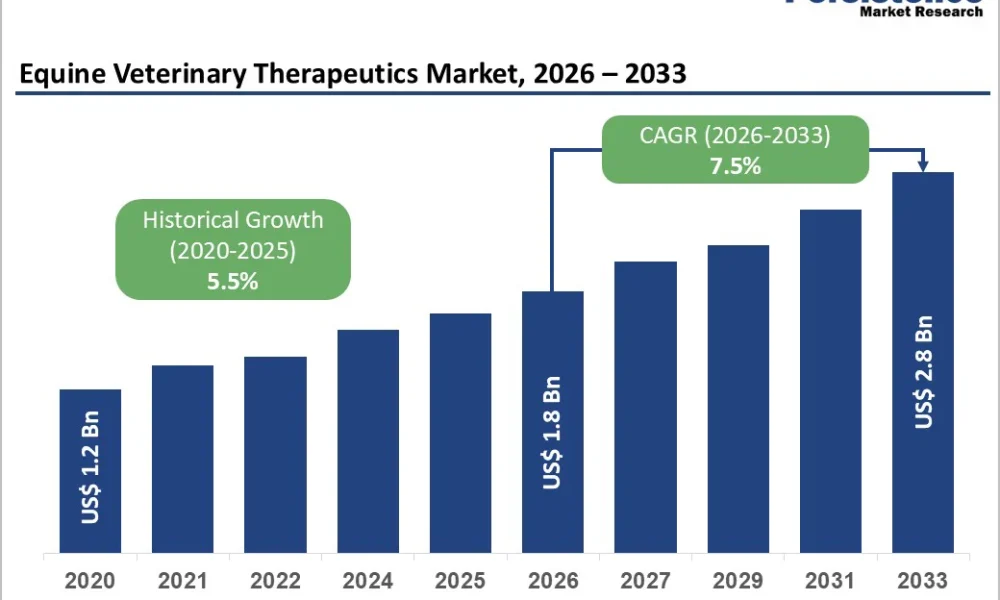
From a market statistics perspective, the global equine veterinary therapeutics market is projected to grow from an estimated US$1.8 billion in 2026 to US$2.8 billion by 2033, registering a robust CAGR of 7.5% during the forecast period. Historically, the market recorded a CAGR of 5.5% from 2020 to 2024, indicating a steady upward trajectory. The anti-inflammatory drugs segment, including NSAIDs and corticosteroids, leads the market due to their widespread use in managing lameness, musculoskeletal injuries, and post-surgical pain. Geographically, North America holds the dominant position, largely driven by its substantial horse population, thriving equestrian sports culture, and high expenditure on animal health. The United States, in particular, supports a dense network of racetracks, equine hospitals, and veterinary facilities, making it a critical hub for market growth.
Download Your Free Sample & Explore Key Insights: https://www.persistencemarketresearch.com/samples/33965
Key Highlights from the Report
• The global equine veterinary therapeutics market is projected to reach US$2.8 billion by 2033.
• Anti-inflammatory drugs hold the largest market share among therapeutics.
• North America leads the market due to a strong equestrian sports ecosystem and high horse population.
• Veterinary hospitals dominate as the primary end-users for equine therapeutics.
• Rising horse ownership for sport, recreation, and companionship drives demand for veterinary care.
• Advances in regenerative medicine, including stem cell and platelet-rich plasma therapy, are creating new growth opportunities.
Market Segmentation
The equine veterinary therapeutics market is primarily segmented based on product type, end-user, and treatment purpose. By product type, the market comprises anti-inflammatory drugs, parasiticides, vaccines, visco supplements, and other therapeutic formulations. Anti-inflammatory drugs dominate due to their extensive application in treating orthopedic, musculoskeletal, and post-operative conditions, while parasiticides play a critical role in controlling common equine infections. Vaccines covering equine influenza, tetanus, EHV, strangles, and West Nile virus are gaining traction as preventive measures. Visco supplements, designed to improve joint health and mobility, are expected to witness rapid growth over the forecast period, reflecting the adoption of preventive care practices.
By end-user, veterinary hospitals represent the leading segment. These facilities provide comprehensive equine healthcare services, including advanced diagnostics, surgical interventions, emergency care, and access to prescription-only therapeutics. Horse owners prefer hospitals for their specialized equipment, expert veterinarians, and in-house pharmacies, which ensure uninterrupted treatment continuity. Clinics and mobile veterinary services complement this ecosystem by catering to routine check-ups, preventive care, and vaccinations, particularly in rural or equestrian-rich regions. Overall, the segmentation reflects a balanced mix of preventive and therapeutic interventions, tailored to meet diverse equine healthcare needs.
Regional Insights
North America is the largest market for equine veterinary therapeutics, driven by a substantial horse population and well-established equestrian activities. According to FAO data, the United States alone housed over 10.5 million horses in 2021, with approximately 300 racetracks conducting over 33,500 races annually. The high prevalence of performance-related injuries, especially in jump racing, creates a strong demand for advanced therapeutics and preventive care. High import volumes, widespread horse farms, and owner willingness to invest in animal health further reinforce the region’s dominance.
The Asia Pacific market is rapidly emerging as a lucrative growth region. Countries such as China, India, and Australia are witnessing increased horse ownership and participation in equestrian sports, driving demand for veterinary services and therapeutics. Government initiatives promoting equine welfare, coupled with rising disposable income, are encouraging adoption of vaccines, anti-infectives, and regenerative treatments. Latin America and the Middle East also represent potential growth areas due to expanding equestrian sports culture and investments in horse breeding and healthcare infrastructure.
Get Custom Insights Designed for Your Business: https://www.persistencemarketresearch.com/request-customization/33965
Market Drivers
The primary drivers of market growth include rising awareness of equine health, increased human affinity for horses, and the rapid expansion of equestrian sports. Owners are increasingly focused on preventive care, timely immunization, and early intervention for injuries and chronic conditions. Veterinary manufacturers’ investment in research and development—accounting for roughly 8.5% of sales—further supports innovation in therapeutic solutions. Moreover, the equestrian sports industry, encompassing racing, show jumping, and dressage, demands optimal horse fitness, creating consistent demand for diagnostics, therapeutics, and rehabilitative care. The growing focus on equine wellness and longevity directly translates to increased adoption of veterinary therapeutics.
Market Restraints
Despite its growth potential, the equine veterinary therapeutics market faces notable restraints. High costs associated with advanced treatments and specialized medicines often limit accessibility, especially for individual horse owners or smaller stables. Furthermore, the sector requires highly skilled veterinarians familiar with equine anatomy, physiology, and disease management. The scarcity of trained professionals restricts the availability of effective care, creating challenges for consistent service delivery. Geographic disparities in expertise and infrastructure can further exacerbate these constraints, particularly in emerging markets with limited veterinary resources.
Market Opportunities
Emerging technologies and regenerative medicine represent significant opportunities for market expansion. Telemedicine platforms and wearable monitoring devices enable remote consultations, real-time health tracking, and early detection of diseases, making equine care more efficient and accessible. Regenerative therapies, including stem cell therapy and platelet-rich plasma treatments, show promising outcomes for musculoskeletal injuries and chronic orthopedic conditions. Additionally, growing interest in equestrian sports and horse ownership in Asia Pacific and Latin America presents new avenues for investment in veterinary facilities, therapeutics, and preventive care programs, signaling untapped growth potential in these regions.
Checkout Now & Download Complete Market Report: https://www.persistencemarketresearch.com/checkout/33965
Company Insights
Key players operating in the equine veterinary therapeutics market include:
• Merck Animal Health
• Affymetrix
• Elanco Animal Health
• Zoetis (Pfizer Animal Health)
• Equine Health UK
• PetVivo Holdings, Inc.
Market Segmentation
By Drugs
- Anti-Inflammatory
- Anti-Infective
- Parasiticides
- Others
By Route of Administration
- Oral
- Parental
- Topical
By Services
- Diagnostic Tests and Imaging
- Physical Health Monitoring
- Surgery
- Vaccination
- Others
By Distribution Channel
- Veterinary Hospital
- Veterinary Clinics
- Pharmacies and drug stores
- E-commerce
- Other
By Region
- North America
- Europe
- East Asia
- South Asia and Oceania
- Latin America
- Middle East and Africa
Recent Developments:
In October 2025, PetVivo Animal Health, Inc. entered into a Vendor Partner Agreement with Veterinary Growth Partners (VGP) to enhance veterinary practice efficiency, management, and marketing support.
Zoetis recently expanded its equine biologics portfolio, introducing advanced anti-inflammatory and regenerative products tailored for sports and performance horses.
Conclusion
The equine veterinary therapeutics market is poised for robust growth over the next decade, driven by increasing horse ownership, the expansion of equestrian sports, and heightened awareness of equine health. Anti-inflammatory drugs remain the leading product segment, while veterinary hospitals dominate as the primary service providers due to their comprehensive care capabilities. North America currently leads the market due to its established equestrian ecosystem, but Asia Pacific and Latin America are emerging as key growth regions with increasing adoption of preventive care, regenerative therapies, and advanced veterinary technologies. Despite challenges such as high treatment costs and limited skilled professionals, opportunities in telemedicine, wearable monitoring devices, and regenerative medicine indicate a dynamic and evolving market. Strategic initiatives by key players, including product innovation, partnerships, and investments in research, will continue to shape the market landscape, ensuring that equine veterinary therapeutics remain central to maintaining horse health, performance, and overall welfare.




