
Overview
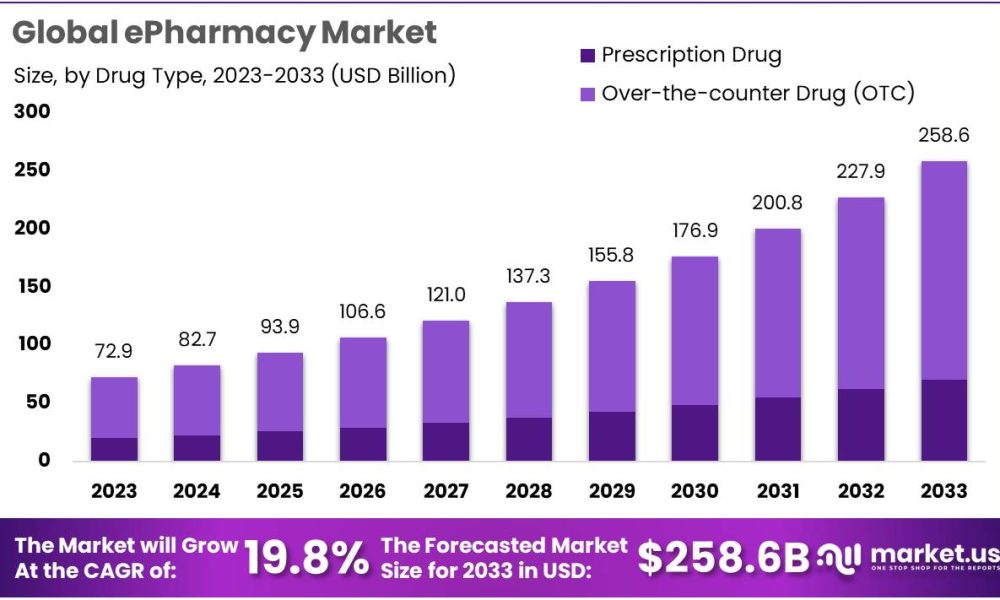
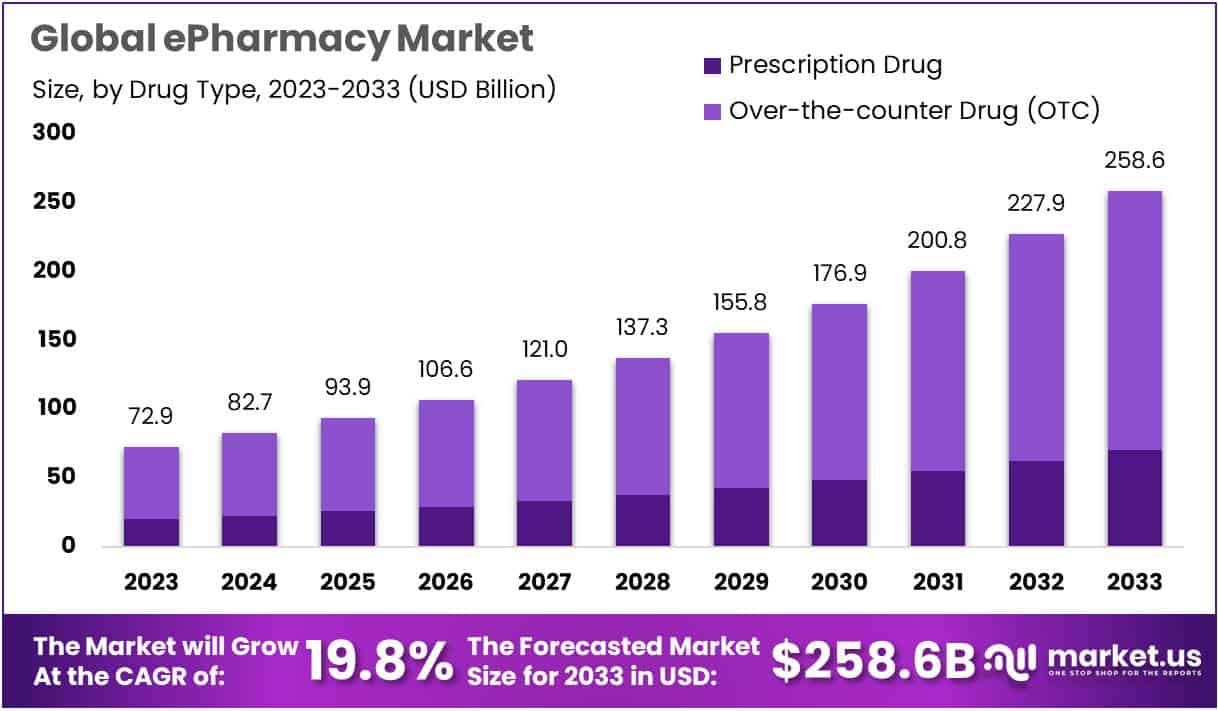
The Global ePharmacy Market is projected to reach approximately USD 258.6 billion by 2033, rising from USD 72.9 billion in 2023. This reflects a robust CAGR of 19.8% during the forecast period from 2024 to 2033. ePharmacy refers to the online platforms that enable customers to purchase medicines and healthcare products through digital channels. These platforms offer consumers a convenient alternative to traditional pharmacies. With just a few clicks, users can explore wide product categories, add items to their digital carts, and complete purchases from home.
Market growth is driven by improved internet access and changing consumer behavior. The rise in smartphone usage and digital literacy has made it easier for individuals to use online pharmacy services. Customers are drawn to ePharmacies because of their accessibility, time-saving nature, and user-friendly interfaces. Additionally, the ability to compare prices and access discounts further encourages online purchases. As these platforms expand their offerings to include over-the-counter drugs and wellness products, their appeal continues to widen across demographics.
Technological advancements have played a crucial role in transforming the ePharmacy landscape. Tools such as mobile health applications, artificial intelligence, and teleconsultation services enhance the user experience. AI-powered prescription systems and data analytics support personalized medication recommendations. These tools also help streamline prescription verification, dosage reminders, and medicine tracking. Such digital solutions improve customer satisfaction and promote long-term engagement with online pharmacy platforms.
The COVID-19 pandemic significantly accelerated the adoption of ePharmacy services. Lockdowns, social distancing, and the demand for contactless healthcare access fueled market expansion. Patients turned to online channels to avoid in-person visits to pharmacies. This behavior shift increased awareness of the benefits of ePharmacies, which now offer scheduled deliveries, subscription models, and virtual consultations. The pandemic’s impact is expected to create a lasting preference for digital healthcare alternatives.
Despite the strong outlook, challenges remain for the ePharmacy industry. Regulatory compliance, data privacy, and the threat of counterfeit drugs require continuous attention. To tackle these concerns, many platforms are investing in blockchain technology for transparent and secure supply chain management. Additionally, governments and regulatory bodies are introducing frameworks to ensure patient safety. As ePharmacies expand their services to include diagnostic tools and wellness products, their integration into the digital health ecosystem will require a balance between innovation and stringent regulation.
Key Takeaways
- The global ePharmacy market is forecasted to reach USD 258.6 billion by 2033, growing at a robust CAGR of 19.8% from 2024.
- Growth is mainly driven by broader internet accessibility and rising chronic disease cases, with COVID-19 emphasizing the value of digital healthcare infrastructure.
- Regulatory hurdles and concerns about counterfeit medications and data security present significant barriers to the sector’s continued global expansion.
- Over-the-counter products dominate the market with a 72.7% share, reflecting strong global demand for non-prescription pharmaceutical access.
- North America leads the global ePharmacy sector, accounting for 41.3% share—valued at USD 30.10 billion—due to supportive regulations and widespread internet access.
- There is substantial opportunity for global expansion, especially through personalized medicine offerings and integration with telehealth services.
- Subscription-based medication refills and virtual consultations are gaining traction, offering enhanced convenience and user retention on ePharmacy platforms.
- Blockchain is being adopted to ensure drug authenticity, improve supply chain transparency, and combat the spread of counterfeit pharmaceuticals.
- Rising global internet penetration continues to boost demand for ePharmacies by delivering convenient and on-demand healthcare solutions to consumers.
- Digital innovations like mobile apps, AI-powered prescription systems, and telemedicine are increasing ePharmacy efficiency and improving patient interaction.
Get Sample: https://market.us/report/epharmacy-market/request-sample/
Regional Analysis
In 2023, North America accounted for more than 41.3% of the global ePharmacy market, reaching a value of USD 30.10 billion. This leadership is driven by high internet penetration and widespread use of digital technologies. Consumers in the region increasingly prefer online platforms for purchasing medications due to their convenience and accessibility. A strong digital infrastructure supports this shift, allowing ePharmacies to integrate easily into everyday healthcare routines. The growing reliance on digital solutions has firmly positioned North America as a leading force in the global ePharmacy sector.
The region’s regulatory environment plays a crucial role in shaping market dynamics. Well-defined and supportive regulatory frameworks ensure that ePharmacy services comply with healthcare standards, enhancing consumer trust. This legal clarity encourages investment and fosters technological innovation within the sector. Moreover, the high burden of chronic diseases in North America has increased demand for accessible medication options. ePharmacies provide efficient services with prompt delivery, making them a preferred choice among patients managing long-term health conditions.
Competition among established ePharmacy platforms further stimulates market growth. Key players are investing heavily in technology, logistics, and marketing to expand their reach. This competitive landscape drives innovation and improves service quality for end-users. The COVID-19 pandemic also played a critical role by accelerating the adoption of contactless healthcare solutions. During lockdowns, ePharmacy services gained prominence as consumers shifted to online channels. This behavioral change, coupled with favorable market conditions, has reinforced North America’s dominant position in the global ePharmacy market.
Segmentation Analysis
In 2023, the ePharmacy market was strongly led by the Over-The-Counter (OTC) Drug segment, which captured 72.7% of the total market share. This highlights a clear consumer preference for easily accessible medications that do not require a prescription. OTC drugs such as pain relievers, cold and flu treatments, and allergy remedies are widely sought after. Their availability on online platforms has significantly boosted sales. The convenience of selecting and ordering these medications from home has positioned OTC drugs as a dominant force in the ePharmacy sector.
The strong performance of the OTC segment is driven by the increasing trend of self-medication and greater public awareness of health management. Consumers now prefer healthcare options that are quick, easy to access, and require minimal intervention. ePharmacies support this behavior by offering intuitive browsing and secure purchasing. This aligns with modern demands for simplified and independent healthcare choices. The shift toward non-prescription drug use suggests continued growth potential in the OTC category within the digital pharmaceutical landscape.
Key Players Analysis
The ePharmacy market features several prominent players that drive digital transformation in pharmaceutical retail. The Kroger Co. leverages its wide physical store network to enhance online access and customer trust. Walgreen Co. emphasizes digital innovation and convenience, using its established brand to grow online. Giant Eagle Inc. employs regional strategies to meet localized demands and build loyalty. Walmart Inc., with its vast logistics capabilities, offers a broad online pharmaceutical range. These firms are reshaping the ePharmacy landscape through accessibility, scale, and strategic integration.
Other major contributors to this dynamic market include Express Scripts Holding Company, CVS Health, and Optum Rx Inc., each bringing strong infrastructure and healthcare partnerships. Rowlands Pharmacy and Cigna Corporation also play significant roles through insurance-linked distribution and pharmacy services. Amazon.com Inc. continues to disrupt with fast delivery and digital engagement. Meanwhile, emerging entities such as Axelia Solutions (Pharmeasy) and Apex Healthcare Berhad (Apex Pharmacy) offer tech-driven, customer-centric services. Their collective efforts are fostering innovation and ensuring sustained market growth.
Conclusion
In conclusion, the ePharmacy market is experiencing strong and steady growth as more people turn to digital platforms for healthcare needs. Increased internet access, mobile use, and changes in consumer habits are driving this shift. ePharmacies offer convenience, time savings, and better access to medicines, making them a popular choice for many users. Technological advancements like AI and teleconsultation continue to enhance service quality. Although challenges such as data privacy and regulation exist, ongoing efforts in security and government support are helping address them. With rising global interest in digital health, ePharmacies are well-positioned to become a key part of future healthcare delivery systems.
Get in Touch with Us:
Market.us (Powered By Prudour Pvt. Ltd.)
Address: 420 Lexington Avenue, Suite 300, New York City, NY 10170, United States.
Contact No: +1 718 874 1545 (International), +91 78878 22626 (Asia).
Email: [email protected]
View More
Healthcare Business Intelligence Market
Healthcare Cybersecurity Market



