
Introduction
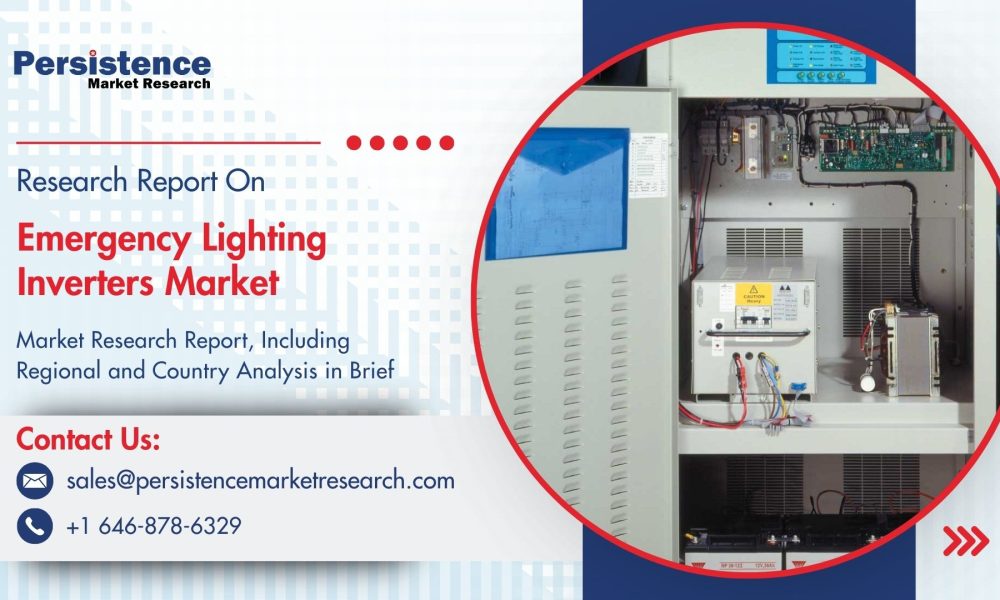
The emergency lighting inverters market is gaining significant traction as industries and governments increasingly prioritize safety and compliance standards. Emergency lighting inverters play a critical role in ensuring uninterrupted power supply to emergency lights during blackouts, grid failures, or other unexpected outages. These systems convert DC power from batteries into AC power to keep lighting operational, safeguarding human lives and property in critical situations.
With the rise in urbanization, stringent building safety codes, and the growing emphasis on disaster preparedness, demand for reliable emergency power systems is steadily increasing. From commercial buildings and industrial facilities to hospitals and educational institutions, emergency lighting inverters have become an essential component of modern infrastructure.
This report provides a comprehensive analysis of the emergency lighting inverters market, covering its key growth drivers, challenges, technological advancements, industry trends, and regional dynamics.
Market Projections and Forecast
According to Persistence Market Research’s projections, the global emergency lighting inverters market is set for consistent growth. The market is likely to be valued at US$1.5 billion in 2025 and is projected to reach US$2.5 billion by 2032, expanding at a CAGR of 7.8% during the forecast period from 2025 to 2032.
The growth is driven by factors such as increasing adoption of safety codes, rising power reliability concerns, and the growing construction of commercial and residential complexes. North America is expected to dominate the market owing to advanced safety regulations, while Asia-Pacific is likely to witness the fastest growth due to rapid urbanization and industrialization.
Get a Sample PDF Brochure of the Report (Use Corporate Email ID for a Quick Response): https://www.persistencemarketresearch.com/samples/32595
Market Dynamics
Drivers of Market Growth
- Stringent Safety Regulations and Standards:
Government regulations mandating the use of emergency lighting systems in commercial, residential, and industrial buildings are a key driver of the market. Compliance with safety standards such as NFPA (National Fire Protection Association) and OSHA (Occupational Safety and Health Administration) in the U.S. is compelling businesses to adopt advanced emergency lighting inverters. - Increasing Demand for Reliable Backup Power:
With the rising frequency of power outages and natural disasters, organizations are investing in reliable emergency systems. Emergency lighting inverters provide immediate illumination during crises, ensuring safe evacuation and reducing risks. - Growth in Construction and Infrastructure Development:
Expanding construction of smart buildings, high-rise complexes, airports, and hospitals is fueling the adoption of emergency lighting solutions. Modern infrastructure projects increasingly integrate inverter-based emergency lighting to enhance safety and reliability. - Integration of Advanced Technologies:
The integration of smart monitoring systems, IoT, and energy-efficient designs is making emergency lighting inverters more appealing. Real-time monitoring and predictive maintenance capabilities are reducing downtime and improving system efficiency.
Challenges in the Market
Despite its growth potential, the emergency lighting inverters market faces some challenges:
- High Initial Investment:
Advanced emergency lighting inverters come with significant upfront installation costs, which can discourage adoption, particularly among small-scale enterprises and in developing markets. - Maintenance and Reliability Concerns:
Regular testing, battery replacements, and system maintenance are essential to ensure inverter reliability. However, the associated operational costs can act as a barrier. - Low Awareness in Emerging Markets:
While developed regions enforce strict safety regulations, many developing economies still lack widespread awareness about the importance of emergency lighting systems, limiting adoption rates.
Market Trends and Technological Innovations
- Smart Emergency Lighting Systems:
Smart inverters with IoT-enabled features are emerging as a key trend. These systems allow for remote monitoring, automated testing, and predictive maintenance, ensuring higher efficiency and reliability. - Energy-Efficient and Eco-Friendly Designs:
Manufacturers are focusing on energy-efficient inverters that minimize power consumption and use eco-friendly batteries, such as lithium-ion, reducing environmental impact. - Modular and Scalable Solutions:
Modular emergency lighting inverters that can be scaled up as per facility requirements are gaining traction, particularly in commercial and industrial sectors. - Integration with Building Automation Systems:
Inverters integrated with smart building management systems are helping organizations centralize control of emergency lighting, optimizing energy use while ensuring compliance with safety standards.
Emergency Lighting Inverters Industry Segmentation
By Power Rating:
- Less than 1 kVA
- 1–10 kVA
- 10–50 kVA
- Above 50 kVA
By Application:
- Commercial Buildings
- Industrial Facilities
- Healthcare Institutions
- Educational Institutions
- Residential Complexes
- Others (airports, data centers, government buildings)
By Type:
- Centralized Inverters
- Decentralized Inverters
By Region:
- North America
- Europe
- Asia-Pacific
- Latin America
- Middle East & Africa
Regional Analysis
North America
North America is projected to dominate the emergency lighting inverters market due to stringent building codes and safety regulations. The U.S. and Canada are leading adopters, driven by a mature construction sector, frequent infrastructure upgrades, and the presence of key market players. High investments in smart buildings and public safety further support growth.
Europe
Europe is another key market, with countries like Germany, the U.K., and France emphasizing safety compliance in residential and commercial buildings. The European Union’s focus on energy efficiency and green building initiatives is also accelerating adoption of energy-efficient emergency inverters.
Asia-Pacific
Asia-Pacific is expected to witness the fastest growth during the forecast period, fueled by rapid urbanization, infrastructure development, and rising investments in commercial real estate. Countries such as China, India, and Japan are major contributors due to their expanding construction activities and growing awareness of safety standards.
Latin America and Middle East & Africa (MEA)
These regions are gradually adopting emergency lighting inverters, driven by growing urban development and increased government focus on disaster preparedness. While market penetration is currently lower compared to other regions, rising infrastructure investments are expected to boost growth.
Key Companies Profiled in the Report
- Eaton Corporation
- Schneider Electric
- ABB Group
- Vertiv Holdings Co.
- Myers Emergency Power Systems
- Philips Lighting (Signify)
- Acuity Brands, Inc.
- Mitsubishi Electric Corporation
- Legrand S.A.
- Toshiba Corporation
Future Outlook
The future of the emergency lighting inverters market looks promising, with strong growth expected across all major regions. The integration of smart technologies, IoT, and energy-efficient designs will shape the next generation of inverters, ensuring higher reliability and improved monitoring capabilities.
As urban infrastructure continues to expand, and with governments enforcing stricter safety codes, the adoption of emergency lighting inverters will accelerate. Emerging economies will present lucrative opportunities as awareness of safety regulations grows. Furthermore, advancements in lithium-ion battery technology and modular solutions will enhance system performance and reduce lifecycle costs.
Conclusion
The emergency lighting inverters market is entering a phase of sustained growth, driven by safety regulations, increasing construction activities, and the demand for reliable backup power. While challenges such as high costs and maintenance requirements exist, technological advancements and stricter compliance standards are expected to overcome these barriers.
By embracing innovation and focusing on energy efficiency, manufacturers and businesses can leverage the expanding opportunities in this sector. With strong demand from commercial, healthcare, and industrial sectors, emergency lighting inverters will continue to play a vital role in ensuring safety and operational continuity worldwide.
Explore the Latest Trending Research Reports:




