
Diesel Particulate Filter Market Overview :
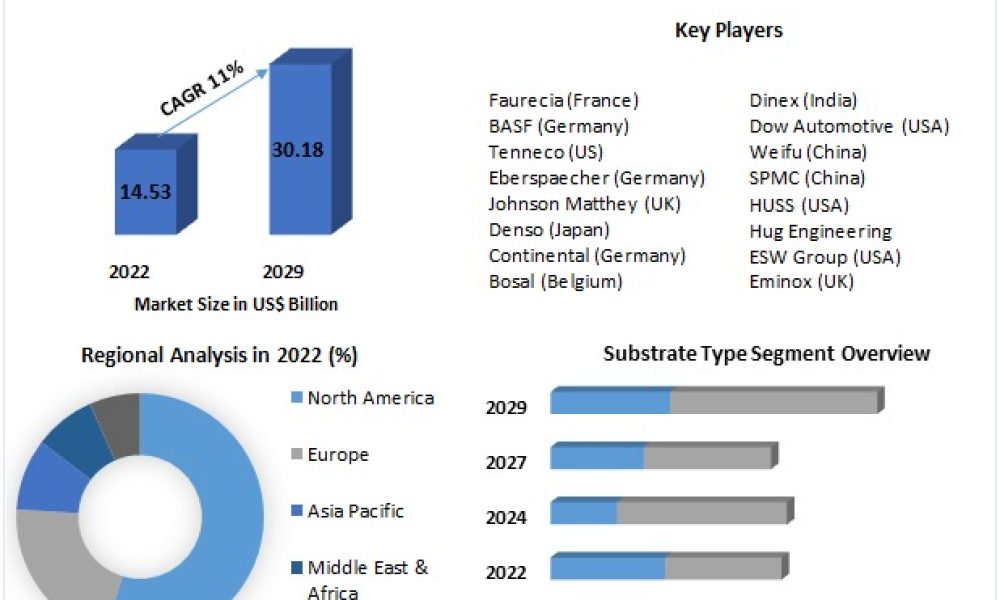
Diesel Particulate Filter (DPF) Market, valued at approximately USD 16.1 billion in 2024, is expected to witness robust growth and reach around USD 30.8 billion by 2033, growing at a CAGR of 6.77% during 2025 to 2033. The market expansion is primarily driven by the implementation of strict global emission standards, surge in demand for diesel vehicles, technological advancements in filter materials, and increased awareness regarding air pollution caused by diesel exhaust.
Key Highlights & Insights
- Market Size & Growth: Estimated to be USD 16.1 billion in 2024 and expected to reach USD 30.8 billion by 2033, at a CAGR of approximately 6.77%.
- Dominating Region: Asia Pacific is forecasted to dominate the DPF market due to rapid industrialization, increasing automobile production in nations such as China, India, Japan, and South Korea, and tightening emission regulations.
- Leading Segment: Silicon carbide-based diesel particulate filters dominate due to their superior thermal and mechanical properties, higher filtration efficiency, and durability, especially in passenger cars and commercial vehicles.
- Key Driver: Rising stringent regulations on particulate emissions, adoption of cleaner diesel technologies, government incentives for emission control technologies, and automotive industry push for fuel efficiency.
Recent Developments
- Market leaders such as BASF, Faurecia, Johnson Matthey, NGK Insulators, and Continental AG continue to innovate in high durability, high-performance DPF substrates.
- Asia Pacific countries like China and India are strengthening emission norms and providing incentives for widespread adoption of diesel particulate filters in commercial and passenger vehicles.
- Advances in regeneration technologies for DPFs aim to reduce maintenance frequency, lower pressure drops, and increase ash storage capacity.
- Development of integrated systems combining DPF with catalysts for simultaneous NOx and particulate matter reduction.
Interested in detailed insights? Inquire for a sample report : https://www.maximizemarketresearch.com/request-sample/16156/
Market Dynamics
Growth Drivers:
- Urgent need to comply with stringent emission regulations in Europe, North America, and Asia Pacific.
- Rising sales of light and heavy-duty diesel vehicles worldwide.
- Innovation in high-performance filter materials, such as silicon carbide, with better lifespan and efficiency.
- Government initiatives and incentives promoting cleaner diesel engine adoption.
Challenges:
- High maintenance and replacement costs of DPF systems.
- Growing market penetration of electric and hybrid vehicles potentially curbing diesel vehicle sales.
- Variations in emission regulations across countries leading to uneven market growth.
Regional Analysis
- Asia Pacific: Expected to hold the largest market share driven by increasing automotive production and tightening emission standards in China, India, South Korea, and Japan.
- Europe: Strong market presence with early adoption of emission standards and high diesel engine penetration.
- North America: Stable market fueled by commercial vehicle demand and regulations on diesel emissions.
- Latin America and Middle East & Africa: Emerging markets with growing adoption of diesel emission control technologies.
Product Segmentation
- By Substrate Type: Silicon carbide, Cordierite, and others.
- By Regeneration Catalyst: Platinum-rhodium, palladium-rhodium, platinum-palladium-rhodium catalysts.
- By Vehicle Type: Passenger Cars, Light Commercial Vehicles, Medium & Heavy Commercial Vehicles.
Key Trends
- Increasing dominance of silicon carbide filters for their efficient soot trapping and high durability.
- Growing integration of DPF with selective catalytic reduction (SCR) technology.
- Focus on enhancing full useful life (FUL) and reducing fuel penalties associated with DPF operation.
- Expansion of aftermarket DPF demand due to rising vehicle penetration.
Quote
The diesel particulate filter market’s growth underscores the critical role of emission control technologies in shaping sustainable transport solutions globally. With Asia Pacific leading adoption and innovation, the industry is set for significant advancements in cleaner diesel technologies through the coming decade.




