
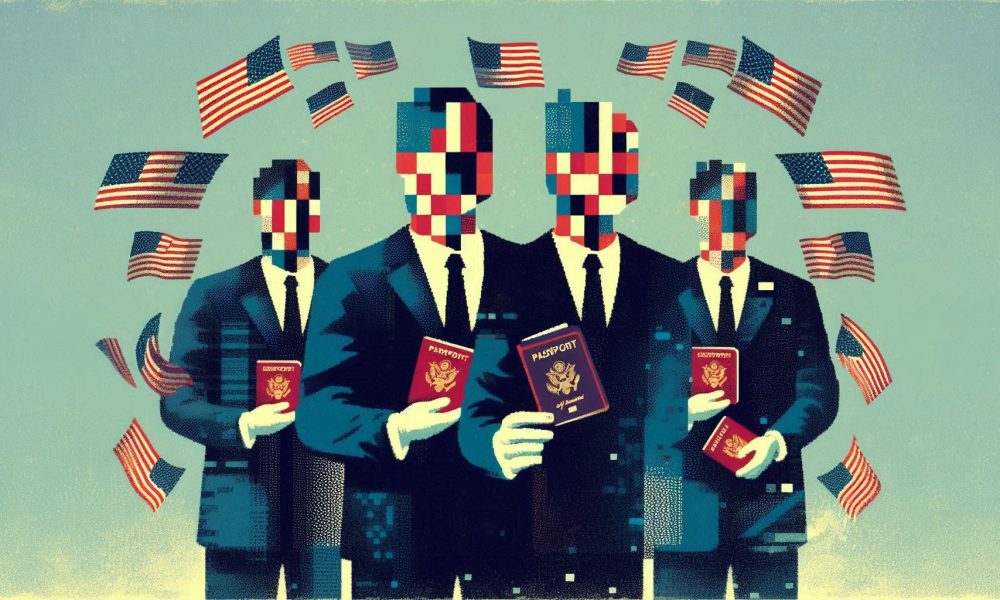
HOW MODERN FUGITIVES COMBINE DIGITAL OBFUSCATION AND REMOTE RELOCATION TO EVADE GLOBAL SURVEILLANCE
Vancouver, British Columbia — July 21, 2025 — Amicus International Consulting, a global authority on legal privacy strategies and identity restructuring, has released a comprehensive investigative report titled “Dark Web to Remote Villages: The Hybrid Anonymity Approach.” This groundbreaking report examines the sophisticated tactics employed by modern anonymity seekers to evade mass surveillance by combining advanced digital camouflage with traditional physical isolation—an approach known as “hybrid anonymity.”
In a world increasingly saturated with surveillance technology—from biometric scanning to predictive AI—specific individuals have developed a dual strategy: utilizing cutting-edge digital security tools to conceal their online presence while relocating to under-surveilled, often remote, physical environments. Amicus International Consulting unpacks how this method evolved, who uses it, and why it remains one of the most effective pathways to sustainable privacy in 2025.
THE EVOLUTION OF ANONYMITY: FROM SIMPLE DISAPPEARANCES TO HYBRID STRATEGIES
Historically, disappearing from scrutiny was simple:
Move to a new town, change your name, and sever contact.
Bureaucratic silos and non-digitized records allowed people to vanish effectively.
In contrast, modern fugitives and privacy seekers face:
More than 150 countries use biometric passport systems.
The FATF, KYC, and CRS frameworks facilitate global banking surveillance.
AI-driven social media monitoring, flagging anomalies and connections.
Interpol Red Notices, enabling international pursuit of fugitives, are multilayered, making evasion nearly impossible,” says Amicus’s senior privacy strategist. “The hybrid method emerged in response to this environment, combining digital invisibility with physical low-profile living.”
CASE STUDY: THE EASTERN EUROPEAN HACKER WHO VANISHED TWICE (2014–2023)
One of the most documented hybrid anonymity cases involves a European hacker indicted on multiple cybercrime charges:
Vanished digitally by erasing his online footprint and replacing it with false leads on dark web forums.
Meanwhile, I relocated to a secluded Southeast Asian village, where I lived as a local fisherman.
Evaded Interpol for nine years before voluntarily surrendering to negotiate a deal.
Key takeaway: Digital masking combined with remote relocation extended his freedom exponentially compared to digital or physical evasion alone.
STEP ONE: DIGITAL DISSOLUTION—ERASING YOUR VIRTUAL EXISTENCE
Amicus identifies key digital steps for hybrid anonymity:
Social Media Elimination: Total deletion of Facebook, Instagram, LinkedIn, TikTok, and similar platforms.
Metadata Control: Scrubbing of photo and file metadata, minimizing location leaks.
VPN Layering and Proxy Chaining: Utilizing multiple VPNs and proxies routed through privacy-friendly jurisdictions (e.g., Panama, Switzerland, Iceland).
Dark Web Migration: Conducting sensitive communications exclusively through Tor, I2P, or private decentralized networks.
Device Hardening: Transition to open-source hardware and software with no proprietary backdoors, turning off microphones and cameras.
Financial Opacity: Use of privacy coins (Monero, Zcash), decentralized exchanges, and physical cash to reduce financial visibility.
CASE STUDY: THE INVISIBLE WHISTLEBLOWER (2017–2025)
A Middle Eastern journalist targeted for exposing governmental corruption:
Deleted her online persona and created an anonymous identity using dark web publishing tools.
Relocated to a South American nation under a new legal identity.
Continues to report under a pseudonym while living in a low-profile coastal community.
Result: Ongoing activism with zero public connection to her physical self.
STEP TWO: PHYSICAL RELOCATION—VANISHING IN THE REAL WORLD
A hybrid strategy demands leaving the hyper-surveilled urban world behind:
Targeting Low-Surveillance Jurisdictions: Preference for countries outside Five Eyes agreements and beyond Euro-American data-sharing blocks.
Embracing Off-Grid Lifestyles: Settling in rural areas, small villages, or agricultural communities with minimal government oversight.
Blending into Local Culture: Learning languages and customs to avoid standing out.
Cash-Based Economies: Prioritizing locations where informal economies are dominant, thereby reducing banking dependencies.
Avoiding Border Triggers: Minimizing travel through biometric-controlled borders; preferring land crossings when necessary.
CASE STUDY: THE WESTERN EXECUTIVE WHO FOUND FREEDOM IN SOUTH AMERICA (2016–2025)
A disgraced European executive, facing corporate fraud accusations:
Acquired second citizenship through Investment.
Moved to a rural Argentinian farming community, living under his legal new name.
Operates a small ecological retreat under corporate structures unconnected to his previous identity.
Rebuilt financial independence using anonymous offshore holdings.
Key lesson: Physical remoteness, combined with a lawful identity change, facilitated personal and financial recovery.
STEP THREE: LEGAL TOOLS—SUSTAINABLE PRIVACY THROUGH STRUCTURED TRANSFORMATION
Amicus emphasizes lawful approaches to hybrid anonymity:
Court-Sanctioned Name Changes: Disassociating from Past Civil Records.
Citizenship by Investment (CBI): Acquiring new passports from privacy-focused jurisdictions (Dominica, St. Kitts & Nevis, Vanuatu).
Naturalization in Low-Surveillance Countries: Residency-based citizenship options in Paraguay, Uruguay, Argentina, and Georgia.
Offshore Corporate Structuring: Using international business companies (IBCs) or trusts to operate commercially without personal exposure.
Legal Digital Nomad Visas: Countries such as Panama, Costa Rica, and Portugal offer long-term residency for remote workers with minimal reporting requirements.
CASE STUDY: THE LEGAL FAMILY RESET (2018–2025)
A Western family, hounded by political harassment, utilized Amicus services to:
Legally change surnames in their home jurisdiction.
Secure second citizenship in Grenada.
Relocate to rural Paraguay and establish agricultural and e-commerce ventures.
Transition from a high-surveillance environment to peaceful anonymity.
Outcome: Zero detection incidents in seven years, no online traceability, and a whole lawful operation.
STEP FOUR: OPERATIONAL SECURITY (OPSEC)—SILENT LIVING PRACTICES
Amicus trains clients on behavioural discipline, noting:
Behaviour Predictability: Consistent daily routines minimize behavioural anomalies.
Social Media Abstinence: Even innocuous accounts can be scraped by AI.
Low-Profile Consumption: Avoiding conspicuous luxury purchases or high-profile business engagements.
Minimal Legal Entanglement: Avoiding litigation, excessive document requests, or contentious interactions that invite scrutiny.
Controlled Digital Footprints: When digital engagement is necessary, use pseudonyms, burner accounts, and separation of devices.
CASE STUDY: THE SILENT ENTREPRENEUR (2015–2025)
An American tech entrepreneur facing privacy breaches:
Transitioned to pseudonymous consulting via encrypted online forums.
Lives as a subsistence farmer in a remote Costa Rican village.
Conducts six-figure business transactions exclusively through Monero and crypto credit cards, leaving no fiat banking trail.
Result: Financial success without compromising location or identity.
POTENTIAL RISKS AND MODERN CHALLENGES
Hybrid anonymity, while effective, faces unique modern risks:
Facial Recognition Advances: The deployment of mobile facial scanners is even occurring in some rural towns.
Financial Forensics: Blockchain Analysis Exposing Weakly Anonymized Crypto Transactions.
AI Geo-Tagging: Scraping of random photos uploaded by others can compromise location secrecy.
Biometric Border Expansions: Increasing pressure on privacy havens to adopt biometrics due to multilayered agreements.
Mitigation of multilayered risk, multilayered PSEC, and multilayered digital audits.
EXPERT COMMENTARY: HYBRID PRIVACY IS THE FUTURE
A former counter-intelligence officer now consulting with Amicus shares:
“Pure digital escape is fantasy in 2025. Pure physical isolation is unsustainable. Hybrid anonymity—where lawful tools, financial decentralization, and physical remoteness converge—is the only effective, long-term privacy approach.”
FAVORABLE JURISDICTIONS (2025 OUTLOOK):
Digital Privacy Strongholds: Switzerland, Iceland, Panama.
Low-Surveillance Living: Paraguay, Georgia, Uruguay, Argentina.
Stable CBI Countries: Dominica, Vanuatu, St. Kitts & Nevis.
Emerging Privacy Frontiers: Southeast Asia’s Lesser-Known Provinces (Laos, Parts of Cambodia)
THE AMICUS HYBRID ANONYMITY PACKAGE
Amicus International Consulting offers full-suite services:
Digital Privacy Restoration Programs
Legal Identity Change Facilitation
Second Citizenship Procurement
Financial Decentralization Structuring
Remote Relocation Planning
Behavioural Privacy Training
CONCLUSION: HYBRID ANONYMITY—THE GOLD STANDARD OF PRIVACY IN 2025
In the modern surveillance age, sustainable privacy is achieved through hybrid anonymity—a balance of legal re-identification, strategic relocation, digital erasure, and behavioural mastery.
“Those who succeed do not vanish; they become invisible within lawful boundaries,” concludes Amicus International Consulting. “Our clients aren’t fugitives—they are individuals taking back control of their identity, finances, and freedom.”
CASE STUDIES, FULL REPORTS, AND PRIVATE CONSULTATIONS AVAILABLE
Phone: +1 (604) 200-5402
Email: [email protected]
Website: www.amicusint.ca




