
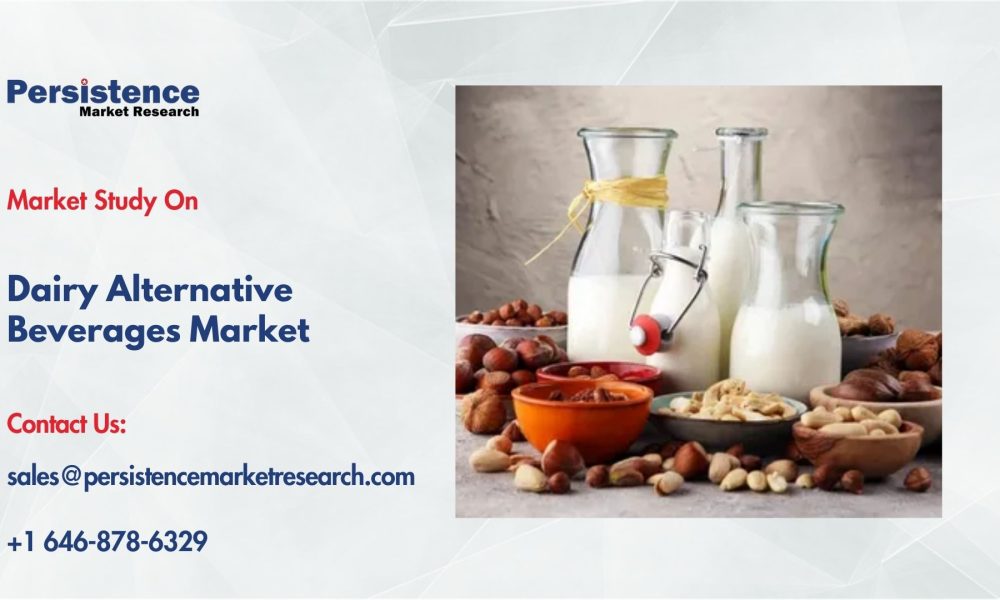
Overview of the Market
The global dairy alternative beverages market is witnessing remarkable growth as consumers increasingly shift toward plant-based nutrition. The market is projected to be valued at US$ 23.0 billion in 2025 and is expected to surge to US$ 40.5 billion by 2032, expanding at a CAGR of 8.4% during the forecast period. Growing health concerns linked to dairy consumption, the rise of lactose intolerance cases, and consumer preference for sustainable products are major factors propelling the adoption of plant-based beverages. In addition, the growing vegan population, along with heightened awareness regarding environmental impacts of animal farming, is creating significant opportunities for dairy alternatives such as almond milk, soy milk, oat milk, rice milk, and coconut milk.
Among product categories, soy milk and almond milk dominate the segment, supported by their wide availability, nutritional benefits, and established consumer trust. Oat milk is also emerging rapidly as one of the fastest-growing subsegments due to its creamy texture and sustainability credentials. Regionally, North America leads the global market, driven by early consumer adoption, a strong presence of leading plant-based beverage brands, and rising flexitarian diets. Europe follows closely, while Asia-Pacific is positioned as the fastest-growing region, thanks to its large lactose-intolerant population and increasing demand for healthier beverages.
Key Highlights from the Report
- The dairy alternative beverages market is projected to grow from US$ 23.0 billion in 2025 to US$ 40.5 billion by 2032.
- North America holds the dominant share, driven by strong consumer awareness and established players.
- Soy milk and almond milk remain the leading product categories in the market.
- Oat milk is experiencing the fastest growth due to consumer preference for sustainable and creamy alternatives.
- Rising lactose intolerance cases and dietary shifts toward veganism are fueling demand.
- Online distribution channels are gaining traction, complementing traditional retail presence.
𝐆𝐞𝐭 𝐚 𝐒𝐚𝐦𝐩𝐥𝐞 𝐏𝐃𝐅 𝐁𝐫𝐨𝐜𝐡𝐮𝐫𝐞 𝐨𝐟 𝐭𝐡𝐞 𝐑𝐞𝐩𝐨𝐫𝐭 (𝐔𝐬𝐞 𝐂𝐨𝐫𝐩𝐨𝐫𝐚𝐭𝐞 𝐄𝐦𝐚𝐢𝐥 𝐈𝐃 𝐟𝐨𝐫 𝐚 𝐐𝐮𝐢𝐜𝐤 𝐑𝐞𝐬𝐩𝐨𝐧𝐬𝐞): https://www.persistencemarketresearch.com/samples/3546
Market Segmentation
The dairy alternative beverages market can be segmented based on product type, source, end-user, and distribution channel. In terms of product type, soy milk and almond milk dominate due to their long-standing presence in global markets, affordability, and protein-rich content. Oat milk has emerged as a rapidly growing category, attracting both younger consumers and coffee enthusiasts for its taste and compatibility with hot beverages. Coconut milk and rice milk also play a key role, particularly in Asian and tropical markets.
By source, soy remains a leading raw material due to its high protein profile and nutritional benefits. Almonds are increasingly used, particularly in premium markets, while oats are gaining traction for their sustainable farming advantages. Other plant-based ingredients such as cashews, hemp, and peas are also contributing to innovation in dairy alternatives.
From the perspective of end-users, individual consumers represent the largest segment, with growing household adoption of dairy substitutes. Foodservice providers—including cafes, quick-service restaurants, and specialty coffee chains—are also embracing plant-based beverages to cater to evolving consumer demand. In terms of distribution, supermarkets and hypermarkets remain the primary sales channels, while e-commerce platforms are witnessing exponential growth, especially in urban areas where digital shopping dominates.
Regional Insights
Regionally, North America dominates the dairy alternative beverages market, accounting for a substantial share due to its early adoption of plant-based diets, established vegan consumer base, and the widespread presence of industry leaders. The United States, in particular, has seen a surge in oat and almond milk consumption, driven by health-conscious Millennials and Gen Z.
In Europe, consumer preference is strongly shaped by sustainability and animal welfare concerns. Countries like Germany, the UK, and Sweden are major adopters of plant-based alternatives, with oat milk becoming particularly popular. Regulations favoring eco-friendly consumption and reduced carbon footprint are also supporting market expansion.
The Asia-Pacific region is the fastest-growing market, primarily due to the high prevalence of lactose intolerance across China, India, and Southeast Asia. Increasing disposable incomes, urbanization, and health awareness further accelerate adoption in these countries. Meanwhile, Latin America and the Middle East & Africa are gradually embracing dairy alternatives, driven by urban consumer segments seeking healthier and innovative beverages.
Market Drivers
The primary driver for the dairy alternative beverages market is the increasing prevalence of lactose intolerance and milk allergies globally. Consumers are also becoming more conscious of the health benefits offered by plant-based beverages, such as lower cholesterol, reduced fat content, and added vitamins. Rising vegan and flexitarian populations, along with ethical concerns surrounding animal farming, are accelerating demand. Furthermore, environmental concerns, including the carbon footprint and water usage associated with dairy farming, are pushing consumers toward sustainable alternatives. The foodservice sector, particularly coffee chains and cafes, is also amplifying demand by incorporating plant-based beverages into their menus.
Market Restraints
Despite strong growth potential, the market faces several challenges. One of the key restraints is the higher cost of plant-based beverages compared to conventional dairy, which can limit adoption in price-sensitive markets. Additionally, certain dairy alternatives, such as rice or soy milk, face criticism over taste and texture, reducing repeat purchase rates among consumers. Supply chain challenges, including the availability of raw materials like almonds and oats, may also pose obstacles. Furthermore, nutritional perception gaps persist, as some consumers believe dairy alternatives may not match the protein and calcium content of traditional milk.
Market Opportunities
Significant opportunities exist in the expansion of oat and pea-based beverages, which combine sustainability with nutritional value. Growing innovation in flavors, fortified products, and barista blends tailored for coffee culture provides avenues for differentiation. The Asia-Pacific region presents the largest untapped opportunity, with millions of potential consumers who are lactose intolerant and increasingly health conscious. Additionally, strategic collaborations between foodservice giants and plant-based beverage producers can drive market penetration. The use of advanced food technology, such as precision fermentation and hybrid beverages, also holds strong potential to redefine consumer perceptions and expand the product landscape.
Reasons to Buy the Report
- Access detailed insights into the global dairy alternative beverages market, including size and growth forecasts.
- Understand evolving consumer preferences driving adoption of plant-based beverages.
- Identify the fastest-growing regions and product categories for investment opportunities.
- Gain competitive intelligence on leading players and their strategies.
- Explore the role of innovation and sustainability in shaping future growth of the market.
Frequently Asked Questions (FAQs)
How Big is the Market?
Who are the Key Players in the Global Market for Dairy Alternative Beverages?
What is the Projected Growth Rate of the Market?
What is the Market Forecast for 2032?
Which Region is Estimated to Dominate the Industry through the Forecast Period?
Company Insights
Key players operating in the global dairy alternative beverages market include:
• Danone S.A.
• Blue Diamond Growers
• Oatly Group AB
• Califia Farms
• Alpro (owned by Danone)
• The Hain Celestial Group
• Ripple Foods
• Elmhurst 1925
• Vitasoy International Holdings Ltd.
• Nestlé S.A.
Recent Developments:
- In 2024, Oatly Group AB announced its expansion into new Asian markets, capitalizing on the rising demand for oat-based beverages.
- In 2025, Danone launched a fortified almond and oat-based blend, targeting health-conscious consumers with enhanced protein content.
Conclusion
The global dairy alternative beverages market is on a strong growth trajectory, reflecting the intersection of health consciousness, sustainability, and changing dietary preferences. With its market size projected to expand from US$ 23.0 billion in 2025 to US$ 40.5 billion by 2032, the industry presents immense potential for both established brands and emerging players. While challenges such as cost and nutritional perceptions remain, ongoing innovations, supportive regulations, and increasing consumer awareness are expected to propel the market forward. As plant-based living continues to gain traction globally, dairy alternative beverages are set to become an integral part of mainstream consumption in the years ahead.
Read More Related Reports:




