
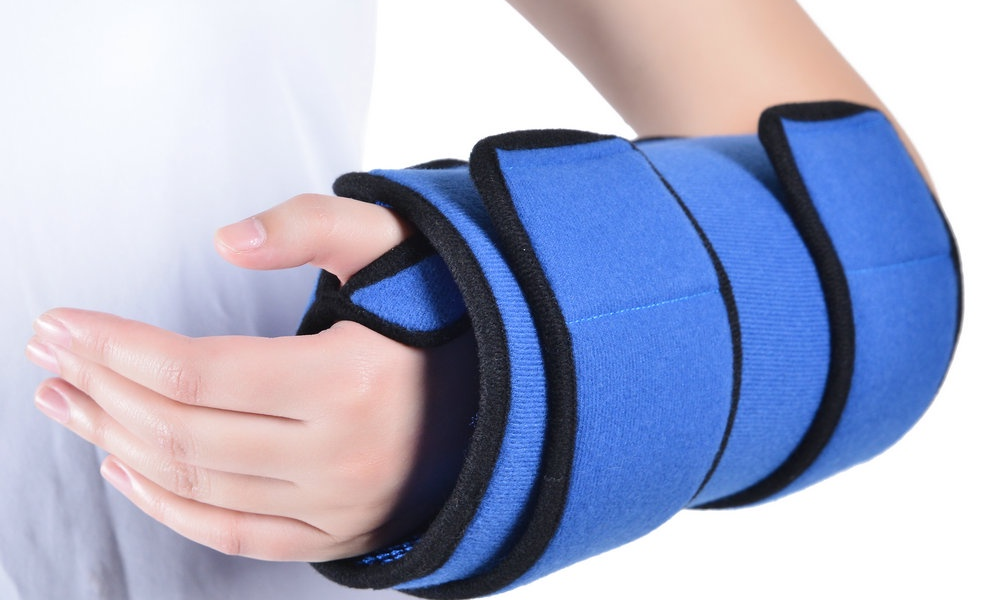
Cold therapy wraps for hand and wrist surgery recovery address one of the more challenging anatomical areas for effective cold therapy application — a complex joint with small surface area, significant mobility demands even during recovery, and sensitivity to pressure that makes standard ice pack application both uncomfortable and inconsistent. Hand and wrist procedures including carpal tunnel release, trigger finger surgery, wrist fracture repair, tendon repair, and ganglion cyst removal all generate post-surgical inflammation that cold therapy directly addresses — but the effectiveness of that therapy depends heavily on whether the cold application actually conforms to the hand and wrist anatomy rather than bridging across it.
What Makes Hand and Wrist Cold Therapy Challenging
The hand and wrist present a cold therapy challenge that larger joints like the knee or shoulder don’t encounter in the same way. The small surface area and complex three-dimensional anatomy of the hand means that a flat gel pack placed against the palm or dorsum of the hand contacts only a portion of the surface rather than conforming to the contours of the fingers, the thenar eminence, and the wrist simultaneously. That inconsistent contact means the therapeutic cold reaches some areas effectively while others receive minimal benefit from the same application.
The mobility demands of the hand during recovery add another dimension. Even in early post-surgical recovery, hand patients are typically asked to perform gentle range-of-motion exercises to prevent stiffness — which means cold therapy needs to be manageable during or around those exercises rather than requiring complete immobilization of the hand throughout the application. A cold therapy wrap that secures properly and maintains position through gentle movement is a qualitatively different recovery tool than one that requires the hand to stay completely still.
Carpal Tunnel Release Recovery Specifically
Carpal tunnel release is among the most commonly performed hand surgeries — and among the procedures where post-surgical cold therapy management has the most direct effect on recovery trajectory. The procedure involves releasing the transverse carpal ligament to decompress the median nerve, generating swelling in the wrist and palm that can temporarily increase the numbness and tingling the surgery was intended to relieve before resolution occurs as inflammation subsides.
Consistent cold therapy in the first several days after carpal tunnel release accelerates that resolution — reducing the swelling that’s producing residual compression symptoms and making the functional recovery feel more linear rather than temporarily worse before it gets better. A purpose-built cold therapy wrap for the hand and wrist delivers consistent cold contact across the palm and wrist simultaneously rather than requiring separate applications to address different parts of the surgical site.
Trigger Finger and Tendon Surgery Recovery
Trigger finger release and tendon repair surgeries involve the flexor tendon system of the hand — structures that run through tight sheaths in the fingers and palm and that generate significant swelling when surgically addressed. Post-surgical swelling in the tendon sheaths directly limits the early range-of-motion work that surgeons prescribe to prevent adhesion formation during healing, which creates a direct relationship between swelling management and recovery outcomes.
Cold therapy that reduces tendon sheath swelling effectively allows earlier and more productive range-of-motion work — which is the activity that determines whether the tendon heals with full functional excursion or with adhesions that limit grip strength and finger mobility permanently. The quality of cold therapy in the first several days after tendon surgery is one of the factors that directly influences that outcome.
Duration Considerations for Hand Recovery
The same duration considerations that apply to cold therapy in other post-surgical contexts apply to hand and wrist recovery — the period during which the product maintains therapeutic temperature determines how consistently the inflammation is being managed during the hours when it matters most. Standard consumer products that maintain effective cold for 20 to 30 minutes require frequent replacement that’s particularly burdensome when hand function is limited and the application itself requires fine motor control to manage.
Extended-duration cold therapy products that maintain therapeutic temperature for three or more hours allow sustained coverage during rest periods without requiring active management — which during hand and wrist recovery when dominant hand function may be significantly limited is a practical advantage that directly affects how consistently the therapy actually gets used versus how often it gets skipped because management feels too difficult.
Integration With Hand Therapy Protocols
Hand therapy — the specialized physical and occupational therapy that follows most hand and wrist surgical procedures — produces the best outcomes when cold therapy is integrated with the therapy protocol rather than managed independently. Hand therapists typically prescribe cold therapy before and after exercise sessions to reduce swelling that limits exercise range and to manage the inflammatory response that exercise itself generates.
Reusable cold therapy wraps that patients bring to their hand therapy appointments and use under therapist guidance — rather than improvising with ice bags at home — allow therapists to observe the cold therapy technique, ensure proper application, and integrate it precisely into the treatment session sequence that produces the best functional outcomes.




