
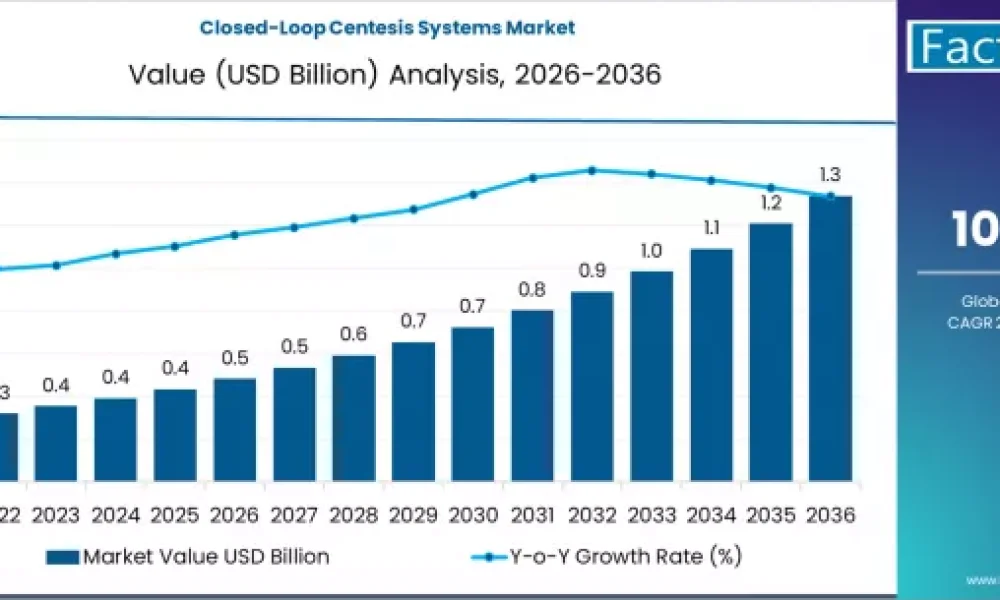
The global Closed-Loop Centesis Systems Market is poised for significant growth through 2036 as healthcare providers intensify efforts to improve patient outcomes, reduce procedural risks, and enhance efficiencies in fluid management therapies. Closed-loop centesis systems are advanced medical devices designed to facilitate controlled evacuation of excess body fluids, such as pleural effusion and ascites, with minimized risk of contamination, infection, and operator exposure. These systems are increasingly preferred over traditional manual drainage techniques due to their safety features, reliability, and suitability for both inpatient and outpatient care settings.
Rising prevalence of conditions that lead to pathological fluid accumulation — including liver cirrhosis, heart failure, cancer, and infectious diseases — is driving clinical demand for effective drainage solutions. Healthcare facilities, ambulatory care centers, and home health providers are adopting closed-loop centesis technologies to streamline procedures, reduce hospital stays, and improve patient comfort and quality of life.
Market Outlook (2026–2036)
Market Value in 2026: Estimated at USD 0.48 Billion
Market Value in 2036: Projected at USD 1.34 Billion
Forecast CAGR (2026–2036): Around 10.7%
Leading System Type: Vacuum-Assisted Closed-Loop Systems
Primary End Users: Hospitals, Ambulatory Surgical Centers
Key Drivers: Growing procedural volumes, demand for minimally invasive solutions
The anticipated growth reflects intensifying use of centesis procedures as part of clinical care pathways and expanded interest in technologies that support reduced complication rates and greater procedural precision.
To Access the Complete Data Tables & in-depth Insights, Request a Discount on this report: https://www.factmr.com/connectus/sample?flag=S&rep_id=13396
Market Overview
Closed-loop centesis systems are designed to offer a sealed drainage pathway for removing unwanted bodily fluids while minimizing exposure to pathogens and environmental contaminants. These systems often integrate controlled suction or regulated negative pressure mechanisms, one-way valves, ergonomic drainage catheters, and user-friendly interfaces that enhance consistency and safety during procedures.
Common applications include thoracentesis, the drainage of pleural fluid around the lungs, and paracentesis, the removal of ascitic fluid accumulating in the abdominal cavity. Use of closed-loop systems improves clinician control over fluid removal, reduces risk of over-drainage, and enhances procedural confidence in diverse clinical settings.
Key Market Drivers
1. Rising Incidence of Conditions Requiring Fluid Drainage
The growing burden of liver disease, heart failure, malignancies, and infectious conditions has led to increasing volumes of diagnostic and therapeutic centesis procedures. This broadening clinical need is propelling adoption of closed-loop drainage technologies that offer safer, standardized procedural workflows.
2. Preference for Minimally Invasive Interventions
Healthcare systems are shifting toward interventions that reduce patient discomfort, shorten recovery times, and support outpatient care. Closed-loop centesis systems align with these trends by enabling controlled fluid removal with reduced procedural risk.
3. Enhanced Procedural Safety and Contamination Control
Closed-loop systems limit exposure to bodily fluids and reduce contamination risk for both patients and healthcare workers. Integrated safety mechanisms such as one-way valves and regulated suction controls contribute to improved clinical safety profiles.
4. Expansion of Outpatient and Ambulatory Care Services
As hospitals outsource procedures to ambulatory surgical centers and specialty clinics, demand is rising for devices that facilitate efficient, high-quality care in non-hospital environments. Portable, easy-to-use closed-loop systems support this trend.
Market Segmentation Insights
By System Type:
Vacuum-Assisted Closed-Loop Systems: Provide controlled negative pressure and high precision.
Gravity-Based Closed-Loop Systems: Use passive drainage for lower-acuity cases.
Hybrid Systems: Combine controlled suction with gravity drainage for versatile use.
By Application:
Thoracentesis: A leading application due to the common occurrence of pleural effusions in cardiopulmonary and oncologic patients.
Paracentesis: Widely used for drainage of ascitic fluid associated with liver disease and related conditions.
By End User:
Hospitals and Acute Care Centers
Ambulatory Surgical Centers
Specialty Clinics
Home Healthcare Providers
Regional Demand Dynamics
North America is expected to hold a significant share of the market, supported by advanced healthcare infrastructure, high procedural volumes, strong clinical adoption of minimally invasive technologies, and favorable reimbursement frameworks.
Europe likewise represents a major regional segment, with established procedural guidelines, well-developed healthcare systems, and strong emphasis on safety and efficiency in medical interventions.
Asia Pacific is projected to register rapid growth as healthcare access expands, chronic disease prevalence rises, and adoption of modern procedural technologies increases across emerging markets.
Regions including Latin America and Middle East & Africa are gradually scaling up adoption as healthcare delivery systems evolve and access to advanced medical devices improves.
Competitive Landscape
The closed-loop centesis systems market features participation from global and regional medical device manufacturers focused on procedural innovations, device safety, and usability. Companies are emphasizing development of user-friendly designs, enhanced safety valves, ergonomic catheters, and integration with digital monitoring tools to support clinician workflow.
Competitive strategies include expanding product portfolios, forging partnerships with healthcare providers, and providing comprehensive clinical support and training services to ensure effective use. Differentiators in the market include device reliability, procedural consistency, ease of use, and comprehensive service offerings.
Future Outlook
The Closed-Loop Centesis Systems Market is expected to maintain significant momentum through 2036 as demand for safer, efficient fluid drainage solutions continues to grow. As healthcare systems emphasize patient comfort, procedural safety, and cost-effective care pathways, closed-loop centesis technologies will play a pivotal role in enhancing clinical outcomes.
With advancements in device design, expanded outpatient care models, and increasing procedural demand across a broad range of clinical conditions, the market for closed-loop centesis systems is positioned for long-term expansion and innovation.
Have specific requirements or need assistance on report pricing or have a limited budget? Please contact [email protected]
About Fact.MR:
Fact.MR is a global market research and consulting firm, trusted by Fortune 500 companies and emerging businesses for reliable insights and strategic intelligence. With a presence across the U.S., UK, India, and Dubai, we deliver data-driven research and tailored consulting solutions across 30+ industries and 1,000+ markets. Backed by deep expertise and advanced analytics, Fact.MR helps organizations uncover opportunities, reduce risks, and make informed decisions for sustainable growth



