
The Cell-based Assays Market has emerged as a vital component of modern biomedical research and pharmaceutical development. Cell-based assays are experimental techniques that utilize living cells to study biological processes, drug responses, toxicity, and cellular mechanisms in controlled environments. These assays provide a closer approximation to human physiology compared with biochemical assays or traditional animal models. As pharmaceutical companies and research institutions seek more predictive and human-relevant testing systems, the demand for cell-based assays has surged across drug discovery, toxicology, and disease modeling applications.
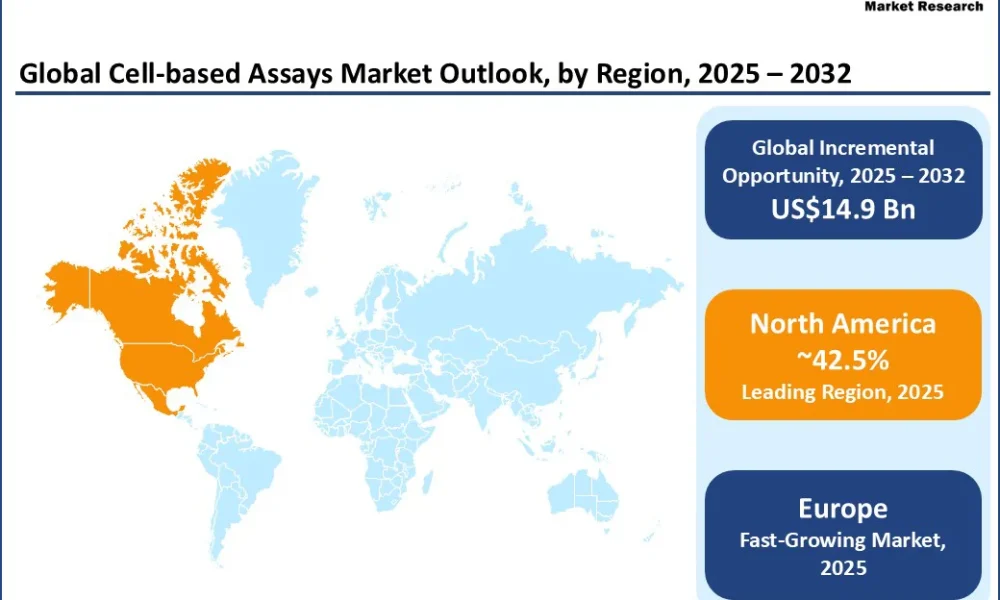
The global cell-based assays market size is projected to reach US$18.4 billion in 2025 and is expected to grow to US$33.3 billion by 2032, expanding at a compound annual growth rate (CAGR) of 8.9% during the forecast period. Growth is fueled by the rising prevalence of complex diseases such as cancer, neurological disorders, and infectious diseases, which require sophisticated cellular models for drug screening and research. In addition, regulatory agencies are encouraging the adoption of human-relevant experimental models, accelerating the replacement of animal testing with cell-based approaches. Assay kits represent the leading product segment with approximately 39.1% market share in 2025, mainly due to their ready-to-use formats and reproducibility across laboratories. In terms of application, drug discovery dominates the market with about 41.8% share, as pharmaceutical companies increasingly rely on cell-based models for early-stage screening and target validation. Geographically, North America leads the market with around 42.5% share, supported by strong regulatory frameworks, advanced research infrastructure, and early adoption of AI-enabled imaging and high-content screening technologies.
Download Your Free Sample & Explore Key Insights: https://www.persistencemarketresearch.com/samples/3204
Key Highlights from the Report
• The global cell-based assays market is projected to reach US$33.3 billion by 2032, growing at a CAGR of 8.9% from 2025.
• Assay kits hold the largest product segment share due to their ready-to-use design and consistent reproducibility across laboratories.
• Drug discovery remains the dominant application segment as pharmaceutical companies increasingly adopt cell-based models for early-stage drug screening.
• North America leads the market owing to regulatory support for innovative in vitro testing methodologies and strong biotechnology infrastructure.
• The growing prevalence of complex diseases such as cancer and infectious diseases is accelerating the adoption of human-relevant cell models.
• Automation, high-content imaging, and miniaturization technologies are expanding throughput and improving assay reproducibility.
Market Segmentation
The cell-based assays market is segmented based on products and services, applications, and end-user utilization, reflecting the diverse ecosystem supporting cellular research and drug development.
Based on products and services, the market includes reagents, assay kits, microplates, probes and labels, instruments and software, and cell lines. Among these categories, assay kits dominate the segment due to their ability to streamline experimental workflows and eliminate the complexities associated with assay development. These kits allow researchers to conduct standardized experiments without the need for extensive optimization, making them particularly valuable in pharmaceutical laboratories and contract research organizations. Their plug-and-play functionality also ensures reproducibility across multiple research sites, which is essential for global pharmaceutical research programs.
Reagents represent another important segment as they form the core components required for assay customization and detection. With the growing adoption of advanced cellular models such as 3D cultures and organoids, demand for specialized reagents has increased significantly. These reagents enable researchers to modify experimental conditions for specific cell types, co-culture systems, or disease models. Additionally, the transition toward high-content imaging platforms and multiplex detection technologies has created demand for brighter, more stable fluorescent probes and labeling systems capable of delivering detailed cellular readouts.
Microplates, probes, labels, and instruments form the technological backbone of cell-based assays. Microplates are widely used in high-throughput screening environments because they allow hundreds or thousands of experiments to be conducted simultaneously. Instruments such as automated microscopes, plate readers, and high-content screening systems enable detailed monitoring of cellular behavior, including gene expression, metabolic activity, and morphological changes. As the complexity of cell-based models increases, advanced instruments integrated with artificial intelligence and automated analysis software are becoming essential tools for modern laboratories.
In terms of application, the market is primarily divided into drug discovery, basic research, and other specialized applications. Drug discovery represents the largest segment because cell-based assays serve as highly predictive in vitro models for evaluating potential drug candidates. Pharmaceutical companies use these assays to study mechanisms such as receptor binding, intracellular signaling pathways, and cytotoxic responses before progressing to animal or clinical studies. This early validation reduces the likelihood of failure in later stages of drug development, thereby saving time and resources.
Basic research is another significant application area. Academic institutions and biotechnology laboratories use cell-based assays to investigate fundamental biological processes such as cell signaling, gene expression, cell cycle regulation, and disease progression. The ability to manipulate cellular environments in vitro enables researchers to test hypotheses and observe cellular responses in a controlled manner. This flexibility makes cell-based assays indispensable tools in fields such as molecular biology, immunology, and developmental biology.
Other emerging applications include toxicology studies, regenerative medicine research, and personalized medicine. In toxicology, cell-based assays help evaluate the safety of chemicals, cosmetics, and pharmaceuticals without relying heavily on animal testing. Meanwhile, in regenerative medicine and stem cell research, these assays are used to assess differentiation potential and tissue regeneration capabilities.
Regional Insights
The global cell-based assays market demonstrates strong regional variations influenced by regulatory frameworks, research investments, and biotechnology infrastructure.
North America holds the largest share of the global market, accounting for approximately 42.5% of the total market in 2025. The region’s leadership is largely attributed to strong support from regulatory authorities for alternative testing methodologies. Government agencies and regulatory bodies have encouraged the use of New Approach Methodologies (NAMs) that emphasize human-relevant models over traditional animal testing. This regulatory encouragement has prompted pharmaceutical and biotechnology companies to adopt advanced cell-based assay platforms. The presence of leading biotechnology firms, academic research institutions, and contract research organizations also contributes to the region’s dominant position.
In addition, North America has witnessed rapid adoption of cutting-edge technologies such as AI-powered imaging platforms, high-content screening systems, and organ-on-chip models. These innovations enable researchers to analyze cellular behavior in greater detail and generate more predictive experimental data. Collaboration between industry and academic institutions has also played a crucial role in accelerating technological advancements within the region.
Europe represents another significant market for cell-based assays, driven by strict regulatory policies promoting alternatives to animal testing. The European Union has implemented comprehensive policies aimed at reducing animal experimentation in scientific research. Initiatives aligned with the **3Rs principle—Replacement, Reduction, and Refinement—**have accelerated the development and adoption of cell-based assay technologies across pharmaceutical, cosmetic, and chemical industries.
Several European countries, including Germany, Switzerland, and the United Kingdom, have established strong biotechnology ecosystems supporting advanced cell culture and organoid research. Academic-industry collaborations are particularly prominent in Europe, with universities and pharmaceutical companies working together to develop and validate innovative in vitro models. These partnerships have helped standardize assay methodologies and expand their applications in toxicology and drug development.
The Asia-Pacific region is emerging as a rapidly expanding market due to increasing government investments in biotechnology and pharmaceutical research. Countries such as China, Japan, India, and South Korea are actively strengthening their life sciences infrastructure and promoting innovation in drug discovery technologies. China’s biotechnology initiatives and national research programs have encouraged the adoption of cell-based assays among local pharmaceutical companies and contract research organizations.
Japan has a unique position in the regional market because of its leadership in stem cell research and regenerative medicine. Japanese research institutions and biotechnology companies are heavily involved in developing induced pluripotent stem cell (iPSC)-derived models, which serve as advanced platforms for disease modeling and drug screening. India, on the other hand, is gaining recognition as a cost-effective research and outsourcing hub, attracting collaborations from global pharmaceutical companies. Australia also contributes to regional growth through strong translational research programs in oncology and infectious diseases.
Get Custom Insights Designed for Your Business: https://www.persistencemarketresearch.com/request-customization/3204
Market Drivers
One of the primary drivers of the cell-based assays market is the increasing prevalence of complex diseases that require advanced research models. Diseases such as cancer, neurodegenerative disorders, and viral infections involve intricate cellular mechanisms that cannot be fully replicated using traditional biochemical assays or animal models. Cell-based assays provide a more realistic representation of human biological processes, enabling researchers to study disease mechanisms at the cellular level. The COVID-19 pandemic demonstrated the importance of rapid screening platforms capable of evaluating antiviral drugs and vaccine candidates. Laboratories worldwide adopted cell-based models to study viral entry, replication, and immune responses, highlighting their crucial role in infectious disease research.
Another key driver is the shift toward human-relevant testing models in pharmaceutical development. Regulatory agencies and scientific communities are increasingly recognizing the limitations of animal testing, particularly in predicting human responses. As a result, pharmaceutical companies are investing heavily in cell-based assays, organoids, and organ-on-chip technologies to improve drug development outcomes. These models allow researchers to assess drug efficacy, toxicity, and pharmacological activity in environments that closely mimic human physiology.
Technological advancements have also contributed significantly to market growth. Innovations such as high-content screening systems, automated cell imaging platforms, and artificial intelligence-based data analysis have enhanced the efficiency and accuracy of cell-based experiments. Automation enables researchers to conduct large-scale experiments with minimal manual intervention, improving reproducibility and reducing operational errors.
Market Restraints
Despite its strong growth potential, the cell-based assays market faces several challenges that may hinder widespread adoption. One of the most significant barriers is the complexity and cost associated with advanced cellular models such as organoids and co-culture systems. These models often require extended culture periods to reach functional maturity, which can delay research timelines and increase operational expenses. For instance, developing certain organoid models for drug metabolism studies may take several weeks, making them less suitable for rapid high-throughput screening applications.
Biological variability also presents a major challenge in cell-based assays. Differences in cell sources, culture conditions, and experimental protocols can lead to inconsistent results across laboratories. This variability becomes even more pronounced when using patient-derived cells or tissues, as genetic and epigenetic differences between donors can significantly influence cellular responses to drugs or environmental stimuli. Such variability complicates the process of standardizing assay protocols and interpreting experimental outcomes.
Another limitation is the requirement for specialized infrastructure and expertise. Advanced cell-based experiments often require sophisticated equipment, sterile laboratory environments, and skilled personnel trained in cell culture techniques. Smaller research institutions and biotechnology startups may face difficulties in acquiring these resources, potentially limiting market adoption in certain regions.
Market Opportunities
The cell-based assays market is poised to benefit from several emerging opportunities driven by technological innovation and evolving research priorities. One of the most promising opportunities lies in the integration of automation and miniaturization technologies. Automated robotic systems are capable of performing hundreds of experiments simultaneously, dramatically increasing throughput while reducing human error. Miniaturized assay platforms also allow researchers to conduct experiments using smaller reagent volumes, lowering overall research costs.
The development of organ-on-chip systems represents another transformative opportunity for the market. These microfluidic devices replicate the structural and functional characteristics of human organs, enabling researchers to study complex physiological interactions in vitro. Organ-on-chip platforms have the potential to revolutionize drug testing by providing highly predictive models for toxicity and efficacy assessments.
Artificial intelligence and machine learning are also expected to play a significant role in the future of cell-based assays. AI-powered image analysis tools can process vast amounts of experimental data and identify subtle cellular changes that may be difficult for human researchers to detect. These technologies improve data accuracy and enable more efficient interpretation of complex biological processes.
In addition, the growing focus on personalized medicine is creating new demand for patient-specific cell models. Researchers are increasingly using patient-derived cells to develop individualized treatment strategies and evaluate therapeutic responses. This approach has significant implications for cancer research, rare disease studies, and precision therapeutics.
Checkout Now & Download Complete Market Report: https://www.persistencemarketresearch.com/checkout/3204
Company Insights
The cell-based assays market is highly competitive, with several global biotechnology and life sciences companies offering advanced assay platforms, reagents, and instrumentation.
Key Players in the Market
• Bio-Rad Laboratories, Inc.
• Merck KGaA
• Corning Incorporated
• Becton, Dickinson and Company (BD)
• Charles River Laboratories
• Lonza Group AG
• F. Hoffmann-La Roche Ltd.
• Danaher Corporation
• PerkinElmer Inc.
• Thermo Fisher Scientific Inc.
• Promega Corporation
These companies are continuously investing in research and development to introduce innovative assay technologies, improve detection systems, and expand their product portfolios. Strategic collaborations, acquisitions, and partnerships are common strategies used to strengthen market presence and accelerate technological advancements.
Recent developments highlight the dynamic nature of the market. In May 2025, AstraZeneca announced the acquisition of biotechnology company EsoBiotec for up to US$1 billion, aiming to enhance its capabilities in cell therapy for cancer and autoimmune diseases. In April 2024, Bio-Rad Laboratories partnered with Oncocyte Corporation to develop and commercialize transplant monitoring assays using Bio-Rad’s Droplet Digital PCR technology. Such collaborations demonstrate the growing importance of cell-based platforms in biomedical innovation.
Conclusion
The global cell-based assays market is undergoing significant transformation as scientific research shifts toward more predictive and human-relevant experimental models. With a projected value of over US$33 billion by 2032, the market is experiencing steady growth driven by rising disease prevalence, technological advancements, and regulatory support for alternatives to animal testing. The increasing adoption of assay kits, high-content screening technologies, and automated laboratory systems is enhancing experimental efficiency and reproducibility across research institutions. While challenges such as high operational costs and biological variability remain, ongoing innovations in organoid technology, AI-powered analysis, and organ-on-chip platforms are expected to reshape the landscape of cell-based assays. As pharmaceutical companies, biotechnology firms, and academic institutions continue to collaborate and invest in advanced cellular research tools, the cell-based assays market is poised to play a pivotal role in the future of drug discovery, disease modeling, and personalized medicine.




