
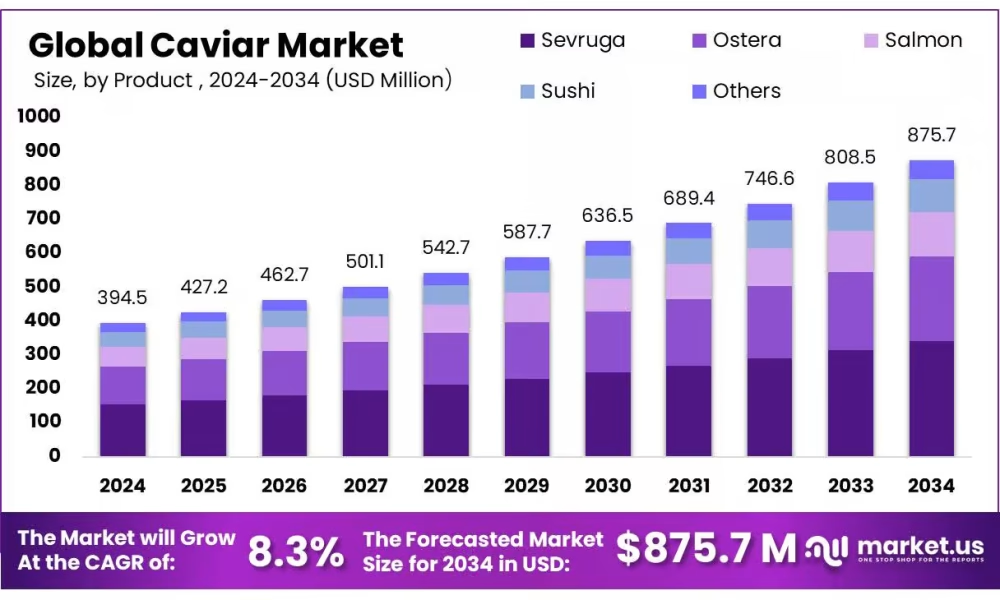
According to market.us, the Global Caviar Market size is projected to reach approximately USD 875.7 million by 2034, rising from USD 394.5 million in 2024, advancing at a CAGR of 8.3% between 2025 and 2034. This growth is largely influenced by caviar’s established reputation as a premium delicacy associated with luxury dining experiences and elite consumer preferences.
Extracted from sturgeon species, caviar continues to hold a strong position in the gourmet food sector, with sustained demand coming from upscale restaurants, five-star hotels, and high-end retailers catering to wealthy clientele.
Despite increasing interest worldwide, caviar remains far from a mass-market product. The exceptionally high cost—especially for top-tier varieties priced between $1,000 and $5,000 per kilogram—significantly limits access for the average consumer. This steep pricing restricts broader adoption and confines market growth to a niche audience.
Additionally, the constrained supply of sturgeon, complex aquaculture practices, and stringent fishing regulations further impact the scalability of production. While there is notable demand growth in emerging luxury markets across Asia and the Middle East, widespread accessibility remains hindered.
Key Takeaways
- The global caviar market was valued at USD 394.5 million in 2024and it is projected to grow at a CAGR of 8.3% and is estimated to reach USD 876.7 million by 2034.
- Among products, sevruga accounted for the largest market share of 39.4%.
- Among forms, fresh caviar accounted for the majority of the market share at 42.2%.
- By application, restaurants accounted for the largest market share of 62.3%.
- By sales channel, on-trade accounted for the majority of the market share at 67.2%.
- North America is estimated as the largest market for caviar with a share of 48.5% of the market share.
- Caviar provides a unique gastronomic experience with its delicate texture and briny flavor, making it a prized ingredient in gourmet tasting menus and luxury events, appealing to connoisseurs of rare, refined flavors.
Access a Complimentary Sample of This Premium Report: https://market.us/report/global-caviar-market/request-sample/
Factors Affecting the Growth of the Caviar Market
High Price Point: Caviar remains a premium product, with some varieties reaching extremely high prices. This pricing structure limits accessibility for middle- and lower-income consumers, making it a luxury item reserved primarily for affluent buyers, thus restricting market expansion.
Supply Constraints from Sturgeon Farming: Caviar production relies on sturgeon, a fish species with long maturation periods and stringent environmental requirements. Limited breeding populations and slow reproduction cycles lead to constrained supply, which impacts availability and consistency in the market.
Strict Regulatory Frameworks: Global trade and production of caviar are heavily regulated due to conservation concerns. CITES (Convention on International Trade in Endangered Species) and national regulations often restrict farming, harvesting, and exporting, which can slow market growth and complicate entry for new producers.
Growing Demand in Emerging Economies: Luxury food demand is rising in regions such as Asia and the Middle East, where a growing class of affluent consumers is seeking exclusive culinary experiences. This shift is creating new market opportunities, although the high cost still limits volume-based growth.
Consumer Preferences and Culinary Trends: There is increasing interest in gourmet and artisanal foods, which is positively influencing the demand for specialty items like caviar. However, evolving dietary trends and ethical food sourcing concerns may also impact consumer choices, influencing both demand and production practices.
Key Market Segmentation
By Product Analysis
In 2024, the Sevruga segment accounted for 39.4% of the global caviar market revenue, reflecting its strong demand among premium consumers. Sevruga caviar is prized for its delicate flavor and smooth texture, making it a popular choice in luxury dining settings.
Its limited availability—due to the rarity of the Sevruga sturgeon and strict conservation measures—adds to its exclusivity and value. This scarcity, combined with global recognition and consistent demand from upscale restaurants and affluent buyers, has firmly established Sevruga as a leading product type in the caviar market.
By Form Analysis
In 2024, the fresh caviar segment dominated the market with a 42.2% share, driven by its reputation for superior quality, delicate texture, and vibrant flavor. Preferred by gourmet chefs and luxury consumers, fresh caviar is closely associated with exclusivity and high-end dining. Its strong appeal lies in its authenticity, premium taste, and versatility in culinary use, securing its leading position in the market.
By Application Analysis
In 2024, the restaurant segment held a dominant 62.3% share of the caviar market, driven by strong demand from high-end and fine dining establishments. Caviar is widely used in gourmet dishes to deliver a luxurious culinary experience, particularly for special occasions and upscale events.
Restaurants also benefit from bulk purchasing, proper storage infrastructure, and expert presentation, making them the leading application segment. Household consumption remains limited due to high costs and storage constraints.
By Sales Channel Analysis
In 2024, the on-trade segment dominated the caviar market with a 67.2% share, driven by strong demand from restaurants, hotels, and bars where caviar is served as part of luxury dining experiences.
These venues provide the ideal environment for premium caviar consumption, emphasizing quality, presentation, and exclusivity. In contrast, off-trade sales remain limited due to high prices and lower household demand, reinforcing the on-trade channel’s leading position.
Key Market Segments
By Product
- Sevruga
- Ostera
- Salmon
- Sushi
- Others
By Form
- Fresh
- Dried
- Preserved and Frozen
By Application
- Restaurants
- Household
By Sales Channel
- On-Trade
- Off-Trade
Geopolitical Impact Analysis
The caviar market in 2024 is heavily impacted by geopolitical factors such as sanctions, trade restrictions, and regional instability. Russia and Iran—among the largest caviar producers—face international sanctions that disrupt exports and supply chains, leading to price increases in major markets like the EU and North America. Shifts in trade agreements or tariffs, particularly those involving the European Union, further influence pricing and market access.
Environmental regulations, including those under the CITES convention, limit the trade of wild sturgeon to protect endangered species, thereby increasing reliance on farmed caviar. Sustainable practices in regions like the Caspian Sea also affect production and cost structures. Additionally, political unrest, especially in Iran and the Caspian Sea area, creates supply chain disruptions and market volatility, contributing to fluctuating prices and reduced availability in the global caviar trade.
Top Key Players in the Market
- Black River Caviar
- Agroittica Lombarda
- California Caviar Company
- Caviar Blanc
- Caviar Creator, Inc.
- JSC Russian caviar house
- Kaluga Queen
- Karat Caviar
- Labeyrie Fine Food
- L’Osage Caviar Company., Inc.
- Sasanian Caviar Inc.
- Sepehr Dad Caviar GmbH
- Sterling Caviar
- The Caviar Co.
- Others
Get in Touch with Us:
Market.us (Powered By Prudour Pvt. Ltd.)
Address: 420 Lexington Avenue, Suite 300 New York City, NY 10170, United States
Send Email: [email protected]
Refer More Related Reports:



