
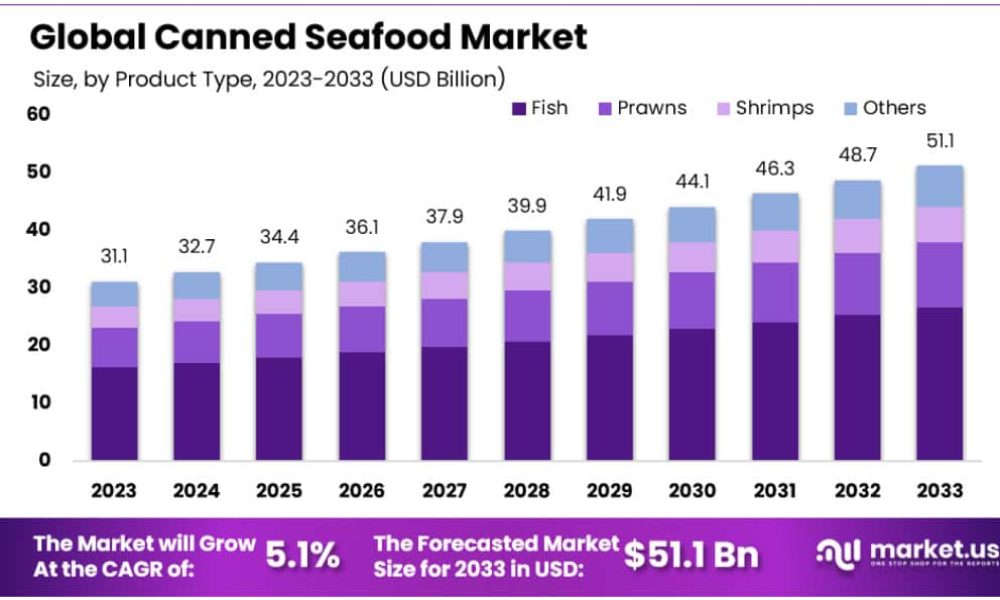
According to market.us, the global canned seafood market is projected to reach approximately USD 51.1 billion by 2033, rising from USD 31.1 billion in 2023, expanding at a compound annual growth rate (CAGR) of 5.1% over the forecast period.
Canned seafood refers to fish or shellfish that undergo sterilization through heating, are sealed in airtight containers, and are preserved for extended shelf life, typically ranging from one to five years. Common varieties include tuna, sardines, mackerel, anchovies, and scallops, which are pre-cooked and ready to consume directly from the can.
Market expansion is being propelled by a growing consumer preference for convenient, ready-to-eat protein sources, coupled with advancements in distribution networks that have improved product accessibility. Lifestyle changes and greater affordability have further supported market adoption. The COVID-19 pandemic played a pivotal role in accelerating demand, as homebound consumers increasingly turned to canned seafood for its convenience and ease of use.
With limited dining options during lockdowns, consumption patterns shifted toward shelf-stable, nutritious alternatives like canned seafood. Additionally, data from the Food and Agriculture Organization highlighted a 15.2% rise in U.S. canned tuna imports in 2020, underlining heightened consumer interest during that period.
Key Takeaways
- The Global Canned Seafood Market is expected to reach a value of approximately USD 51.1 billion by 2033.
- In 2023, the market size for Canned Seafood was USD 31.1 billion.
- The market growth is projected to have a Compound Annual Growth Rate (CAGR) of 5.1% from 2023 to 2033.
- The Food and Agriculture Organization of the United Nations reported a 15.2% increase in canned tuna imports to the United States in 2020.
- In 2023, the retail sector accounted for more than 58.3% of the market, thanks to supermarkets, convenience stores, and local shops.
- The Asia Pacific region leads the global canned seafood market, with a market share of 45.9% in 2023 and a value of USD 15.2 billion.
Access a Complimentary Sample of This Premium Report: https://market.us/report/canned-seafood-market/request-sample/
Factors Affecting the Growth of the Canned Seafood Market
Rising Demand for Convenient and Ready-to-Eat Foods: The shift in consumer lifestyles, especially among working professionals and urban populations, has increased the demand for time-saving meal options. Canned seafood, being pre-cooked and easy to consume, aligns well with this demand, making it a preferred choice for quick and nutritious meals.
Expanding Distribution Channels: Improvements in global supply chains, cold storage infrastructure, and the rise of online grocery platforms have made canned seafood more accessible across urban and rural markets. This enhanced availability has significantly contributed to market expansion.
Health and Nutritional Awareness: Canned seafood is recognized for being high in protein and rich in omega-3 fatty acids. As awareness of heart health, weight management, and nutritional benefits increases, consumers are more inclined toward such protein-rich, shelf-stable food products.
Growth in Urbanization and Changing Eating Habits: Urban lifestyles often involve busy schedules and limited time for cooking. This has resulted in a growing reliance on canned products, including seafood, as part of regular diets, particularly in single-person households and young adult segments.
Fluctuations in Raw Material Supply and Environmental Regulations: The canned seafood industry is highly dependent on the availability of marine resources. Climate change, overfishing, and sustainability regulations can impact fishery yields and raw material pricing, influencing both production and market growth.
Key Market Segmentation
By Product Type Analysis
In the canned seafood market, different product segments are experiencing varied growth patterns. As of 2023, the tuna segment led the market with a significant 42.3% share. This dominance is largely due to the high demand for convenient, ready-to-eat meals among the global working population.
According to a 2020 report by the National Fisheries Institute, canned tuna had strong market penetration in the U.S., with 88% of households consuming it, 50% doing so monthly, and 17% weekly. New product innovations, such as Mind Fish Co.’s launch of Fair Trade Certified canned tuna in August 2021, have further supported segment growth.
Canned sardines have also witnessed rising popularity, driven by their snack-ready format and convenience. Their consumption has outpaced that of fresh sardines, encouraging companies to introduce new products. For instance, Minnow launched its first line of tinned seafood in January 2022, featuring Alaskan salmon, Icelandic cod liver, and Spanish sardines.
Prawns and shrimps, though holding a smaller share of the market, continue to grow steadily. Known for their distinctive taste and flexibility in various cuisines, these products have carved out a niche consumer base, adding diversity and value to the canned seafood category.
By Distribution Channel Analysis
In 2023, the retail sector led the canned seafood market’s distribution landscape, accounting for over 58.3% of the total market share. This dominance is attributed to the widespread presence of supermarkets, hypermarkets, convenience stores, and grocery outlets, which enhance product accessibility across regions. According to a February 2021 report by Supermarket News, convenience stores played a key role in retail sales, with the sector comprising around 48% of total distribution.
While retail remains the primary channel, the foodservice segment is witnessing faster growth. The increased use of canned seafood in restaurants and hotels is being driven by rising consumer focus on food safety and ease of storage. Supporting this trend, the U.S. Census Bureau reported a 1.6% year-on-year rise in chain restaurant establishments, totaling 107,541 in 2022.
This expansion in the foodservice sector reflects growing opportunities for canned seafood distribution beyond traditional retail outlets. Overall, both retail and foodservice channels are contributing significantly to the market’s growth trajectory, reflecting a dynamic and evolving distribution environment.
Кеу Маrkеt Ѕеgmеntѕ
By Product Type
- Fish
- Tuna
- Salmon
- Sardines
- Others
- Prawns
- Shrimps
- Others
By Distribution Channel
- Foodservice
- Retail
Drivers
Growing health consciousness is a key factor propelling the demand for canned seafood, largely due to its rich nutritional profile. Containing around 7 grams of protein per ounce and high levels of omega-3 fatty acids, canned seafood is increasingly viewed as a healthy dietary choice, supporting heart and overall wellness.
Simultaneously, the rise of plant-based canned seafood alternatives is reshaping the market. With projections indicating the sector could reach USD 165 billion by 2032, this growth reflects consumer interest in sustainable and nutritious options that replicate the flavor and texture of traditional seafood.
Sustainability also plays a central role in shaping market dynamics. Consumers are increasingly prioritizing environmentally responsible products, and companies like Bumble Bee Seafoods, which obtained Marine Stewardship Council certification, are aligning with this shift by ensuring traceable and eco-friendly sourcing practices.
Moreover, the appeal of canned seafood is further strengthened by its convenience and long shelf life. These attributes became particularly important during the COVID-19 pandemic, as consumers gravitated towards ready-to-eat, non-perishable food items, reinforcing canned seafood’s role in everyday consumption habits.
Маrkеt Кеу Рlауеrѕ
- Thai Union Group
- Bumble Bee Foods LLC
- Maruha Nichiro Corporation
- Dongwon Industries (StarKist)
- Nippon Suisan Kaisha, Ltd.
- Trident Seafoods Corporation
- F.C.F. Fishery Co., Ltd.
- Maldives Industrial Fisheries Company Limited (MIFCO)
- Jim Pattison Group Inc
- LDH (La Doria) Ltd
- Icicle Seafoods Inc.
- Universal Canning, Inc.
- Wild Planet Foods
- American Tuna, Inc.
- Tri Marine Group
- Connors Bros. Ltd.
- Other Key Players
Get in Touch with Us:
Market.us (Powered By Prudour Pvt. Ltd.)
Address: 420 Lexington Avenue, Suite 300 New York City, NY 10170, United States
Send Email: [email protected]
Refer More Related Reports:



