
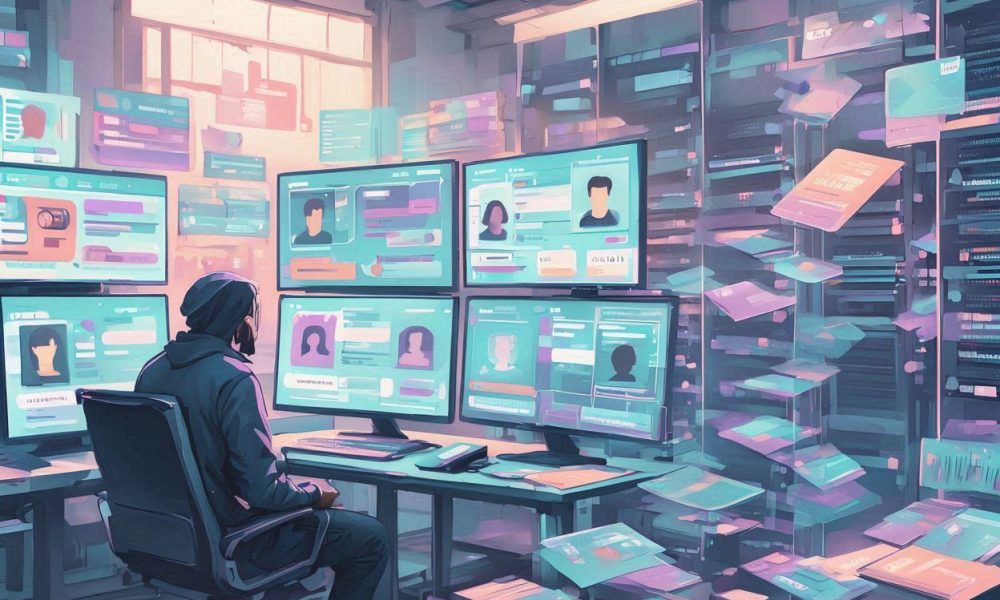
Investigation reveals the hidden dangers of persona kits and why darknet markets are the fastest way to lose your money and your freedom.
WASHINGTON, DC, April 27, 2026, the dark web sells the fantasy of instant reinvention, but the reality is darker, riskier, and far more humiliating for the people who believe a stolen identity can become a new life.
The phrase “buy a new ID” sounds simple in criminal forums, but most offers result in stolen data, fake documents, unusable account bundles, undercover operations, malware traps, extortion schemes, or immediate failure at the first serious verification checkpoint.
The popular claim that 90% of vendors are scams or stings should be treated as a warning phrase rather than a verified market statistic, because darknet marketplaces are deliberately opaque, unstable, and built around deception.
What is clear is that buyers face several overlapping risks, including being robbed by the vendor, being infected with malware, being exposed to law enforcement, having their data sold to another victim, or being arrested when the document fails.
The FBI’s Internet Crime Complaint Center remains the official reporting channel for cyber-enabled fraud, identity theft, and online scams, which increasingly overlap with stolen credentials and fake identity packages sold through underground markets.
The $1 identity is not a new life; it is usually stolen debris
The cheapest identity listings are often not full identities, because they may be scraped emails, reused passwords, partial profiles, breached account records, old phone numbers, or stale personal data that has already been sold many times.
A person buying a $1 identity is not purchasing a clean new beginning, because they are usually buying fragments of someone else’s compromised life that may already be flagged, reported, monitored, or useless.
These fragments can include names, addresses, dates of birth, login details, account histories, and partial financial data, but they rarely create a functioning legal identity that survives modern verification.
Criminal vendors use low prices as bait because once a buyer responds, the seller may upsell forged documents, malware-laced files, “premium” persona kits, or fake government credentials.
The buyer often becomes the next victim, because darknet sellers know that someone seeking illegal identity documents cannot safely complain to banks, police, courts, or consumer-protection agencies.
Persona kits are built from victims, not magic
A persona kit is usually a bundle of stolen or fabricated identity materials packaged to appear to be a ready-made person, including documents, logins, addresses, bank details, and sometimes social media accounts.
The moral problem is obvious because the kit is not created from nothing; many of its pieces may come from real victims whose lives can be damaged for years.
A stolen passport image, utility bill, tax number, bank statement, or residence card can be used to support account openings, payment fraud, false travel claims, or fraudulent rental applications.
The person who buys the kit may believe they are escaping their own past, but they are actually stepping into a criminal chain built on someone else’s stolen records.
That is why persona kits are dangerous for both the victim and the buyer, because the victim faces contamination while the buyer creates evidence of identity theft, fraud, and intent.
Darknet vendors sell confidence because they cannot sell legality
The most successful darknet vendors do not merely sell documents because they sell confidence through staged screenshots, fake reviews, escrow claims, delivery photos, insider jargon, and false stories about government access.
The sales language often promises “clean,” “registered,” “biometric-ready,” “bank verified,” or “travel safe” identity packages, but those phrases are marketing devices rather than legal guarantees.
A vendor may claim that the document will open bank accounts, pass border checks, defeat watchlists, or create a new profile, but the buyer cannot verify those claims before committing a crime.
The guarantee disappears once payment is made, because criminal sellers can vanish, change handles, close accounts, threaten exposure, or resell the buyer’s details to another fraud network.
The darknet marketplace is therefore designed to exploit the desperate, including fugitives, overstayers, fraud suspects, debtors, scammers, and people frightened enough to believe impossible promises.
The fastest way to lose money is to trust a criminal marketplace
A buyer entering a darknet identity market is surrounded by people whose business model is deception, making it irrational to expect honesty from sellers of stolen identities and forged documents.
The vendor may take payment and deliver nothing, send useless files, provide already-flagged data, install malware, demand additional fees, or threaten to expose the buyer unless more money is paid.
Some sellers operate as pure scammers, while others may be compromised marketplaces, informant channels, undercover operations, or criminal groups collecting data about buyers for later extortion.
The buyer also creates a digital trail through messages, wallet transactions, downloads, device fingerprints, delivery instructions, and account activity that investigators or criminals can later exploit.
A person seeking illegal identity materials, therefore, loses control twice, first by trusting criminals, then by creating evidence that can follow them into banking, borders, and courts.
Law enforcement has already shown that darknet markets are not safe spaces
Darknet users often believe anonymity tools protect them completely, but major investigations repeatedly show that marketplace operators, vendors, buyers, servers, wallets, and delivery networks can be identified over time.
The Associated Press has reported on large international cybercrime crackdowns where authorities arrested suspects, seized infrastructure, and disrupted criminal markets that relied on online anonymity and cross-border fragmentation.
That enforcement pattern matters because identity sellers rarely operate in isolation, since stolen documents connect to phishing groups, mule networks, malware operators, counterfeiters, money launderers, and shipping routes.
Once one part of the market is penetrated, investigators may gain access to messages, customer lists, wallet records, vendor panels, delivery addresses, and technical infrastructure.
The buyer who thought they were purchasing invisibility may later discover that the marketplace was already compromised, monitored, or poised to become evidence in a broader investigation.
Modern borders make fake identity packages weaker than ever
Even if a buyer receives a convincing document, the border environment has changed because biometric systems increasingly compare fingerprints, facial images, passport history, entry records, and watchlist information.
A forged passport may look impressive in a photograph, but the person presenting it must still match the biometric profile, chip data, travel history, and identity record expected by authorities.
A stolen identity may work in a weak online form, yet fail immediately when a live facial scan, fingerprint comparison, or document reader exposes the mismatch.
This is why dark web vendors exaggerate their capabilities: they can show a document image but cannot prove it will survive an airport kiosk, a bank review, or an immigration inspection.
In 2026, the problem is no longer only whether the document looks real, because the entire identity story must withstand systems built to detect contradictions.
Banks are often where the fake identity collapses first
Some buyers never reach a border because the stolen identity collapses during banking, where know-your-customer rules require documents, proof of address, source-of-funds explanations, device signals, and transaction monitoring.
A bank account opened with stolen or synthetic identity material can be frozen when documents fail verification, transactions look suspicious, or another institution reports the same compromised profile.
The buyer may lose deposited funds, trigger suspicious activity reporting, be linked to money laundering, or face deeper review when accounts are connected to fraud, crypto platforms, or unusual transfers.
A persona kit that appears complete in a darknet advertisement can fall apart when the bank asks for live verification, tax documents, proof of employment, or consistent residency history.
That is why illegal identity buying often fails quietly before it fails publicly, beginning with frozen accounts, rejected applications, locked platforms, and compliance questions the buyer cannot answer.
The victim pays long after the buyer disappears
Behind every stolen identity listing is often a person whose records may be misused for bank fraud, rental applications, phone accounts, online credit, immigration deception, or travel document abuse.
The victim may spend months proving that they did not open accounts, receive funds, cross borders, rent property, or authorize transactions connected to the stolen profile.
The Federal Trade Commission’s identity theft recovery guidance explains how victims can use fraud alerts, credit freezes, and recovery steps to reduce further misuse.
Those steps are necessary because identity theft can spread across institutions, forcing victims to repeatedly contact banks, credit bureaus, government agencies, landlords, employers, and law enforcement.
The buyer sees a persona kit as a shortcut, but the victim experiences it as a long administrative attack on reputation, financial access, privacy, and personal security.
The “new ID” fantasy usually ends in exposure
The fantasy promises a clean start, but illegal identity buying usually exposes the buyer because the buyer must eventually use the document, account, profile, or credentials within regulated systems.
That use generates evidence from uploads, IP addresses, device fingerprints, failed verification attempts, bank applications, travel bookings, courier records, and communications with criminal vendors.
If the document fails, the buyer cannot explain it honestly without admitting contact with illegal markets or possession of stolen personal information.
If the document works briefly, the risk persists because each successful use creates another record that can later link the buyer to identity fraud.
The illegal identity, therefore, becomes a trap: it must be used to have value, but using it leaves a trail that can destroy the buyer.
The legal alternative is data control, not stolen identity
People searching for a new identity often have legitimate concerns, including stalking, harassment, reputational damage, business exposure, relocation pressure, privacy needs, or safety concerns after personal conflict.
The legal path is not to buy stolen data, because the safer route is to remove exposed information, secure accounts, correct records, change names lawfully, and build a verified digital presence.
Through legal identity planning, the primary objective is a defensible identity structure that can withstand banking review, border screening, consular questioning, and document renewal.
That approach is slower than a darknet promise, but it produces records that can be explained, renewed, verified, and used without creating a hidden criminal liability.
A lawful fresh start is not the same as pretending to be someone else, because it creates a documented progression from the old profile to the new one.
Second passports must be lawful, not bought from anonymous vendors
A lawful second passport can support mobility, family security, emergency relocation, and business continuity, but it cannot be replaced by a forged booklet purchased through a criminal marketplace.
People exploring second-passport planning should understand that legitimate citizenship depends on eligibility, government issuance, consistent records, and use that withstands scrutiny by border and banking authorities.
A darknet passport may look attractive to a desperate person, but it usually fails the renewal test because the holder cannot safely authenticate, replace, renew, or defend it later.
A lawful passport creates options, while an illegal passport creates vulnerability every time the holder presents it to an airline, border officer, bank, landlord, or digital platform.
The difference is simple: lawful documents connect to recognized status, while forged documents connect to vendors who disappear when the first serious question arises.
Why the 90% scam warning feels believable
The exact percentage of darknet identity vendors that are scams or stings cannot be reliably verified because the market is hidden, deceptive, constantly changing, and intentionally resistant to measurement.
Yet the warning feels believable because every incentive points toward fraud, including anonymous sellers, desperate buyers, non-refundable crypto payments, unverifiable claims, and products that cannot be tested safely.
A seller can make money faster by pretending to provide identity documents than by actually producing documents that can withstand modern verification systems.
A fake vendor also carries less risk than a true document supplier because selling empty promises avoids the logistical complexity of producing convincing documents and shipping physical evidence.
This is why buyers should assume the market is hostile, because every participant may be a scammer, informant, extortionist, undercover channel, malware operator, or future witness.
Dark web searches can create their own evidence trail
Even searching for illegal identity documents can create risk because devices, accounts, wallets, messages, screenshots, downloads, and cryptocurrency transactions may later become part of an investigation.
A person may think they are browsing privately, but operational errors, compromised forums, malware, reused usernames and delivery addresses, and blockchain analysis can expose interest in illegal documents.
The buyer’s first mistake is assuming anonymity is automatic, while the second mistake is assuming the seller is not collecting information for leverage, resale, or protection.
Criminal forums often survive by turning every user into a potential asset, whether as a buyer, victim, lead, target, mule, or extortion opportunity.
That is why the safest answer to dark web identity offers is not to be curious, because even contact with the seller can create a record that the buyer cannot control.
The real fresh start begins with boring legal work
A lawful digital reset begins with data removal, credit freezes, account security, professional reputation repair, official name-change processes where eligible, and consistent document updates across institutions.
It also requires strong email security, separate communications channels, careful public profiles, secure cloud storage, and disciplined handling of passports, residence cards, tax numbers, and banking documents.
People should correct inaccurate records rather than hide from them, because the wrong data will continue to resurface until the root cause is fixed.
Victims should report identity theft through official channels, preserve evidence, notify banks, update passwords, freeze credit where appropriate, and build a recovery file to document the misuse.
The process is not glamorous, but it works because legitimate institutions recognize lawful records, whereas criminal marketplaces recognize only payment.
The darknet sells escape, but usually delivers a cage
The promise of a new ID on the dark web survives because fear creates demand, and demand attracts criminals who know how to sell urgency, secrecy, and false hope.
A buyer may start by seeking privacy, but the moment stolen data, forged documents, or illegal credentials enter the picture, the problem becomes criminal exposure rather than personal protection.
The darknet vendor does not deliver freedom, because the buyer becomes dependent on a criminal who can disappear, exploit, blackmail, or expose them at any time.
Even worse, the purchased identity may belong to a real victim whose life becomes contaminated by someone else’s attempt to escape consequences.
In 2026, the fastest way to lose money and freedom is to believe that anonymous criminals can sell a legal life that governments, banks, and borders will accept.
The truth is simple: you cannot safely buy a new life
A new legal presence can be built, but it cannot be safely bought through a dark web vendor offering stolen data, forged documents, or instant government credentials.
The legal path requires patience, documentation, security, data cleanup, lawful identity changes, verified credentials, and a public footprint that reflects the person’s real status.
The illegal path offers speed, but that speed is exactly what makes the trap dangerous, as the buyer skips the records required to pass serious verification.
For anyone seeking privacy, relocation, protection, or a fresh start, the safest move is to avoid persona kits entirely and build a lawful profile that can withstand scrutiny.
The dark web can sell names, numbers, passwords, and forged images, but it cannot sell legitimacy, and legitimacy is the only identity that survives.




