
FOR IMMEDIATE RELEASE
Clare, Nova Scotia – In an era saturated with headlines, algorithms, and endless scrolling, some humanitarian stories slip through the cracks. Volume Two of Cajun Dead et le Walkin’ Stick refuses to let that happen with its Grand Pré Diaspora narrative parable tale to the current human refugee crisis.
This newly released cinematic trailer segment elevates the book series into bold, emotionally charged territory—linking the Grand Pré Diaspora 1755 deportation of the Acadians from Grand-Pré to a 400,000-year continuum of displacement driven by war, empire, and power. While modern media fixates on trending crises, this project confronts a deeper truth: forced migration is not new. It is ancient. And it is still happening.
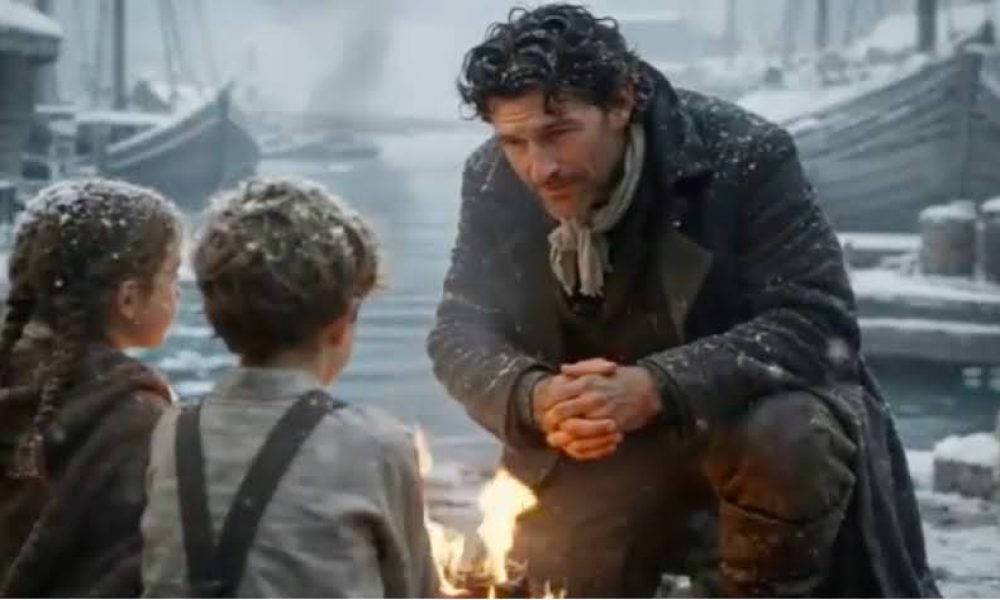
Volume One introduced audiences to Eva Lynn and Gabby Dev, two children separated from their families during the Grand Pré Diaspora known as the Great Upheaval. Volume Two transforms their search into something far more strategic, urgent, and politically charged. This is not merely a children’s story. It is a layered humanitarian parable disguised as historical adventure—and it lands with force.
The trailer presents Cajun Dead, a shapeshifting resistance figure who reveals the existence of a covert registry: a list of names, coordinates, and secret routes intended to reunite scattered Acadian families. In contrast, British forces are compiling their own registry to track and deport those who remain. The message is chillingly modern—whoever controls the data controls destiny.
In a time when refugee registries, border databases, and biometric systems define human futures, this narrative resonates beyond the 18th century. The movie trailer reframes the book Trilogy of the Grand Pré Diaspora deportation of approximately 11,500 Acadians between 1755 and 1764 not as distant history but as a blueprint for understanding today’s global displacement patterns.
And that is precisely why this trailer matters.
Humanitarian Refugee Crisis and Grand Pré Diaspora: A Cajun Dead et le Walkin`Stick Story the Media Noise Ignores
Search trends spike daily around contemporary conflicts, yet long-form historical context rarely sustains attention. The humanitarian refugee crisis tied to the Grand Pré diaspora remains under-discussed in mainstream media, overshadowed by immediate political cycles.
Volume Two of the Cajun Dead et le Walkin’ Stick recenters that narrative: Bayou Teche to Saint Pierre
The trailer’s pivotal warehouse sequence in Philadelphia dramatizes the moral stakes: Eva Lynn must choose between personal safety and protecting a registry containing the fates of hundreds of displaced families. She refuses to betray her allies—even under threat of execution. This moment is not theatrical excess; it is a reflection of real choices faced by displaced populations throughout history.
Between 1755 and 1764, families were scattered across North America, Europe, and the Caribbean. Children were separated from parents. Siblings vanished across oceans. Many were never reunited. By presenting these Grand Pré Diaspora facts through cinematic storytelling, the trailer forces viewers to confront an uncomfortable parallel: displacement is cyclical, not episodic.
The humanitarian dimension of this crisis is not simply historical documentation—it is emotional continuity. The Acadian expulsion becomes a lens through which we examine refugee identity, loss of homeland, bureaucratic erasure, and resistance through solidarity.
In a digital landscape flooded with distraction, this trailer cuts through by grounding viewers in a human story that refuses to fade into archival silence.
Humanitarian Refugee Crisis and Grand Pré Diaspora: Why This Cajun Dead et le Walkin’ Stick Trailer Demands to Be Shared
This is more than a promotional clip. It is a narrative intervention.
Volume Two demonstrates clear structural maturation from the first installment. The storytelling follows a disciplined three-act arc—departure, initiation, and return—while raising the stakes from personal search to organized resistance. The children evolve from passive victims into active agents. They infiltrate settlements, decode star charts, and ultimately reclaim the registry that holds hundreds of futures.
Yet the ending remains bittersweet. They reunite multiple families—but not their own.
That creative decision is critical. It rejects simplistic closure in favor of realism. In real humanitarian crises, not every family finds resolution. The trailer honors that truth without surrendering hope. The “elixir” returned to the community is not just a document; it is restored courage, renewed solidarity, and the refusal to let displacement define identity, something that has never been more evident than now.
For audiences, the relevance is unmistakable. Today, global refugee numbers reach historic highs. Debates about borders dominate policy discussions. Yet the human texture of displacement—its generational scars and moral dilemmas—rarely receives sustained artistic attention. This Cajun Dead et le Walkinè Stick Bayou Teche to Saint Pierre movie trailer fills that gap.
Sharing this video becomes an act of awareness. It invites viewers to reconsider how historical expulsions inform modern humanitarian frameworks. It encourages educators, historians, cultural institutions, and advocates to engage with the Acadian story as part of a broader discourse on migration and justice.
From a creative standpoint, the production value reinforces its impact. Dockside winter scenes, coded astrolabes, burning ships, and shadowed warehouses provide cinematic immediacy. The antagonist—an unflinching British officer building a deportation registry—adds tangible tension. The emotional climax rests not on spectacle but on moral choice.
And that moral choice echoes loudly.
In a world conditioned to consume crisis content passively, Volume Two asks a sharper question: What does it mean to act?
By anchoring a 400,000-year narrative of displacement in the Grand Pré Diaspora, Cajun Dead et le Walkin’ Stick reframes Acadian history as global world humanitarian crisis commentary. It positions the Great Upheaval not as a regional tragedy but as part of humanity’s recurring confrontation with power structures that displace the vulnerable.
This is why the trailer matters now.
It challenges viewers to look beyond the news cycle. It bridges past and present. It humanizes statistics. And it insists that stories of exile deserve amplification—not silence.
As the final frame fades toward a possible journey to Louisiana, the message is clear: the search continues. The story is unfinished. The humanitarian conversation is far from over.
For those seeking meaningful narratives in a noisy media landscape, Volume Two delivers a powerful reminder—history speaks if we are willing to listen.
Media Contact:
MBF-Lifestyle Creative Studio
Digby, Nova Scotia
About the Series:
Cajun Dead et le Walkin’ Stick is an evolving historical fiction project exploring displacement, resistance, and identity through the lens of the 1755 Acadian deportation, Grand Pré Diaspora reframed within a transhistorical humanitarian context.