
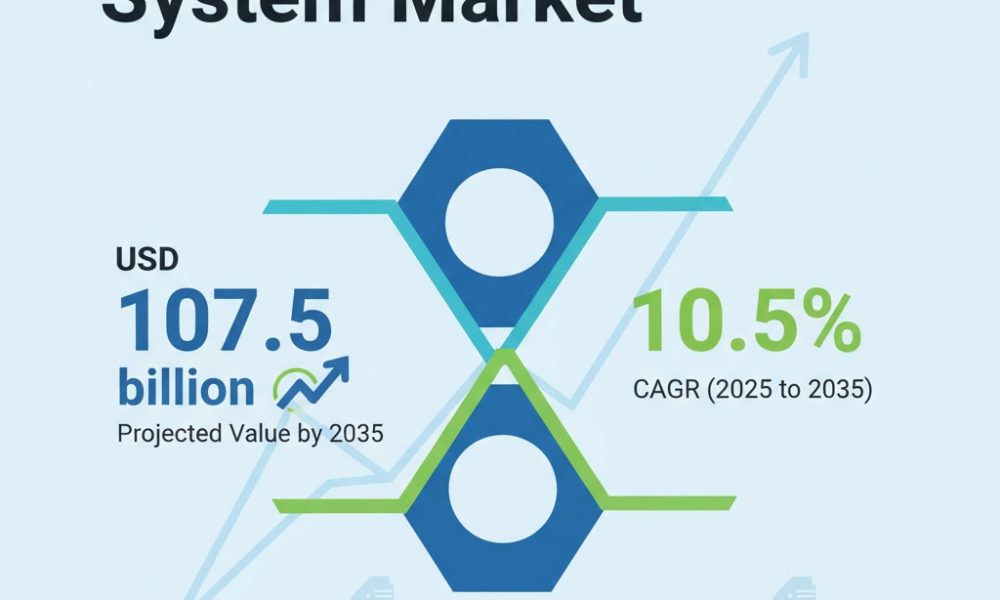
The global Building Automation System (BAS) market is entering a high-growth phase, driven by an accelerated shift toward energy efficiency, smart city development, and sustainability. According to new research from Future Market Insights (FMI), the market is projected to reach USD 107.5 billion by 2035, expanding at a compound annual growth rate (CAGR) of 10.5% between 2025 and 2035.
The demand for intelligent infrastructure is reshaping the global built environment. From commercial skyscrapers to residential complexes, BAS technologies are enabling centralized control and monitoring of HVAC, lighting, security, and energy systems—creating efficient, adaptive, and low-carbon spaces. This transformation is underpinned by advancements in IoT, AI, and cloud computing, which are redefining how buildings consume, manage, and optimize energy.
Market Consolidation and Competitive Landscape
The BAS market is moderately consolidated, with Honeywell International Inc., Siemens AG, and Johnson Controls International collectively holding approximately 42% of global market share. These industry leaders are expanding through integrated smart building solutions that enhance comfort, efficiency, and security while supporting decarbonization goals.
Honeywell has strengthened its leadership by launching AI-powered building systems and smart thermostats aimed at optimizing energy consumption in commercial and residential buildings. Siemens AG continues to innovate with cloud-enabled energy management platforms, allowing real-time system control across multiple facilities. Meanwhile, Johnson Controls is investing in predictive analytics and intelligent HVAC systems to improve operational reliability and sustainability.
Explore trends before investing — request a sample report today!:- https://www.futuremarketinsights.com/reports/sample/rep-gb-20440
Tier-II competitors such as Schneider Electric and ABB, accounting for roughly 20% of market share, are advancing the green building agenda with integrated automation platforms that prioritize carbon reduction and renewable energy use. Schneider Electric’s 2024 rollout of energy-efficient automation solutions further underscored the company’s focus on sustainability, while ABB expanded its industrial automation offerings through IoT-enabled energy management systems.
Regional and Segmental Insights
While North America currently leads the market with a projected 38% share by 2035, the Asia-Pacific region is emerging as the fastest-growing territory due to rapid urbanization, government smart city initiatives, and increased construction activity in economies such as China, India, and South Korea.
Hardware remains the cornerstone of BAS infrastructure, encompassing sensors, controllers, and actuators essential for system integration. The software segment, however, is gaining momentum—enabling data-driven decision-making, predictive maintenance, and cloud connectivity. Services, including installation and long-term maintenance, are expected to represent a steady source of recurring revenue, as the complexity of automation systems demands ongoing technical support.
Technology Driving Sustainable Transformation
As sustainability becomes a central business mandate, BAS solutions are being integrated with renewable energy sources, smart meters, and AI-based control systems. This convergence enables buildings to reduce energy use by up to 30%, lower carbon emissions, and enhance occupant well-being. The expansion of Building Energy Management Systems (BEMS) further accelerates these efforts by providing comprehensive visibility into energy consumption patterns.
Click Here to Purchase the Report:- https://www.futuremarketinsights.com/checkout/20440
Future Outlook and Investment Opportunities
Between 2025 and 2035, the BAS industry will witness intensified investment in smart automation, adaptive control software, and cloud-based integration platforms. Companies are expected to focus on emerging markets, particularly across Asia-Pacific and the Middle East, where the infrastructure modernization wave is accelerating.
Post-sale services, including maintenance contracts, retrofitting, and system upgrades, will remain key revenue drivers as building operators seek long-term efficiency gains. With increasing government regulations favoring green building certifications and energy efficiency standards, the BAS market’s role in achieving net-zero emissions targets will become even more pronounced.
About Future Market Insights (FMI)
Future Market Insights, Inc. (ESOMAR certified, Stevie Award winner, and member of the Greater New York Chamber of Commerce) is a global leader in market intelligence, consulting, and advisory services. With a team of over 400 analysts across more than 110 countries, FMI delivers in-depth market insights and strategic guidance across industries including Industrial Automation, Consumer Technology, Packaging, and Healthcare.
Contact Us:
Future Market Insights Inc.
Christiana Corporate, 200 Continental Drive,
Suite 401, Newark, Delaware – 19713, USA
T: +1-347-918-3531
For Sales Enquiries: [email protected]
Website: https://www.futuremarketinsights.com



