
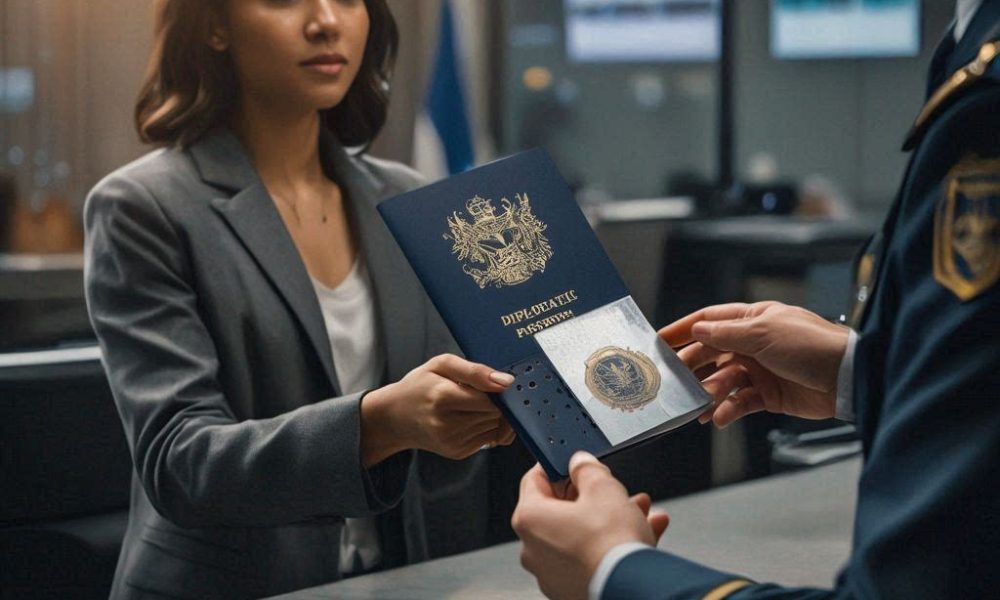
A practical comparison of ordinary passports and diplomatic passports, focused on official status, border treatment, and the real legal limits that separate a black passport from the document most travelers carry every day.
WASHINGTON, DC, April 17, 2026.
When people compare a black passport with a regular passport, they often assume the diplomatic document is simply a stronger, more privileged, and more friction-free version of the ordinary booklet, even though the real difference is not raw power but legal purpose. A regular passport is built for civilian movement, which means tourism, family visits, study, relocation, and private business, while a diplomatic passport is built for a much narrower function, namely travel undertaken in a recognized official capacity on behalf of the state. That is why the document looks different, why governments control it differently, and why host countries often treat it differently without ever treating it as unlimited protection from their own laws.
The clearest official starting point remains the State Department’s special issuance passport rules, which state that diplomatic passports are issued to defined categories of federal personnel, certain titled officials, people with diplomatic status because of their mission or job, and some qualifying family members directly tied to that role.
An ordinary passport follows the citizen, while a diplomatic passport follows the job.
A regular passport falls within the broader legal realm of citizenship, identity, and private travel, meaning the state confirms who the person is and what nationality they hold without implying that the traveler is speaking or acting for the government abroad. A diplomatic passport does something very different, because it signals that the bearer may be moving through the international system in an official capacity that other governments are expected to recognize through diplomatic or official channels rather than purely civilian ones.
That is why the black passport is best understood not as an upgraded travel document but as a state instrument tied to office, mission, and recognized public function. The holder is not simply traveling as a person with a stronger passport. The holder is traveling as someone the state says is operating inside a narrower official framework.
This distinction matters because the public usually reads passports through the lens of status symbolism, not their legal function, and that habit creates much of the confusion. A black passport looks more powerful, more formal, and more politically charged than a regular one, so people naturally assume it must offer broader rights. In practice, the opposite is often true in private life, because the regular passport is built for personal travel in the broadest sense, while the diplomatic passport is tied to official duties and can be invalid or inappropriate for ordinary private movement outside that role.
Most people can get a regular passport, while only a narrow class can get a diplomatic one.
A regular passport sits inside the normal relationship between a citizen and the state, so the central questions are whether the applicant can prove citizenship, identity, and compliance with ordinary passport requirements. A diplomatic passport sits within a much tighter administrative and political structure, so the key question is whether the government is prepared to designate that person as traveling abroad in a recognized official capacity.
In practice, that usually means accredited diplomats, certain federal officials, some people with diplomatic or consular titles, and a limited set of derivative family members attached to those assignments. It usually does not mean wealthy private citizens, politically connected donors, celebrities, consultants, or status-seekers who want a more impressive document for easier travel.
That narrow eligibility structure reveals what the black passport really is. The state is not distributing prestige. It is certifying representation. A diplomatic passport says the government is prepared to send this person abroad as part of its official external presence. That is a much more serious and much narrower claim than simply issuing a regular passport to a citizen.
Readers who want a broader background on how public fascination often outruns the legal structure can see it in Amicus coverage of diplomatic passports and immunity, which helps explain why the black passport is so often misunderstood as a private status object rather than a controlled state instrument.
Diplomats may receive different border treatment, but they do not travel in a lawless lane.
A regular passport holder usually moves through civilian border channels, where the central questions are straightforward, namely identity, visa status, purpose of visit, admissibility, and compliance with customs and immigration rules. A diplomatic passport holder may be processed under a more formal framework because the host state needs to determine not only who the traveler is, but also what recognized public role is being claimed and whether the trip falls within that role.
That can mean more protocol awareness, more ministry-to-ministry handling, and sometimes smoother administrative treatment. But it does not mean the border disappears. The host country still wants to know why the traveler is there, whether the status is current, and whether the trip actually fits the official function attached to the document.
This is where many public myths fall apart. People imagine the black passport as a fast pass-through international movement, but real border treatment depends on recognition, purpose, and the receiving state’s own rules. Diplomatic travel may be handled differently, but different does not mean unrestricted.
Diplomatic courtesy is real, but courtesy is not freedom.
Diplomatic courtesy does exist. Officials may be handled more formally, spoken to through different channels, or processed with more protocol sensitivity than an ordinary tourist or business traveler. Yet courtesy should never be confused with a legal right to ignore the system.
Courtesy is contextual. It depends on the traveler’s role, the relationship between the two governments, and whether the host state accepts the claimed official purpose. A diplomatic passport may open a more official conversation at the border, but it does not end that conversation. The host country still decides how much deference to extend and how tightly to interpret the rules surrounding that traveler’s entry and movement.
That is one reason diplomatic passports are more political than ordinary passports. A regular passport is mostly subject to immigration law. A diplomatic passport is subject to immigration law, as well as the state-to-state relationship behind it.
Visa rules can still tighten for diplomatic passport holders.
One of the clearest reminders came when, as Reuters reported in 2025, France moved to tighten visa rules for Algerian diplomats amid an escalating bilateral dispute. The importance of that example lies not only in the specific disagreement but in the broader lesson that diplomatic passport holders are not floating above host-state policy.
That is a direct blow to the fantasy that black passports guarantee freer travel than ordinary passports in every situation. In some situations, they may smooth official movement. In others, they may become the very category a host government chooses to target when it wants to apply political pressure. A diplomatic passport can therefore become a marker of tighter control, not broader freedom.
This is one of the biggest practical differences between black and regular passports. The ordinary passport belongs to the routine world of civilian travel rules. The diplomatic passport belongs to the more volatile world of reciprocity, recognition, and politics.
Immunity is not the same thing as mobility.
A regular passport does not invite much legal fantasy. It proves identity and nationality, but no one imagines it creates immunity from local law or converts the bearer into someone beyond questioning or arrest. A diplomatic passport, by contrast, is constantly misunderstood because people conflate the document with diplomatic immunity into a single dramatic image.
The truth is much narrower. A diplomatic passport may support a claim to official status, but the document itself does not automatically confer immunity, nor does it override immigration law, customs law, or host-country border authorities. Mobility and immunity overlap only in limited ways, and confusing them is one of the main reasons the black passport remains so mythologized.
That confusion is also explored in a second Amicus background piece on what to know about diplomatic passports, which is useful because it shows how often the public reads extraordinary power into the document itself rather than into the narrower legal framework governing the holder’s status.
The regular passport is broader in private life, while the diplomatic passport is narrower but more symbolically loaded.
This is one of the most important comparisons and one of the least intuitive. The ordinary passport is often more useful in everyday life because it is designed for a wide range of personal reasons people travel. It is broad, personal, and flexible.
The diplomatic passport is more specialized. It can be extremely important within the exact context for which it was issued, but outside that context it may be more limited, more scrutinized, and more dependent on continuing official purpose than most people expect. It looks more powerful, but it is often less free.
That is why diplomats travel under different rules. They are not traveling simply as private people with better documents. They are traveling as agents of a state within a narrower, more political framework. The benefits and burdens both come from that fact.
The cleanest comparison is the least glamorous one.
A regular passport is the document of the ordinary citizen on the move. It is built for private travel, ordinary border control, and the broad civilian life of international mobility. A diplomatic passport is the document of a person that the state has designated to travel in a recognized official capacity, which means it can attract different treatment at the border, different visa questions, and different political consequences.
That is why black passports and regular passports should never be treated as simply weak and strong versions of the same product. They belong to different legal worlds. The ordinary passport supports private movement. The diplomatic passport supports official representation.
In the end, the black passport is much less a symbol of unlimited personal privilege than a tightly controlled instrument of state purpose. That is why diplomats travel under different rules, and it is also why the dramatic mystique of the black passport usually says more about public imagination than about the actual law governing the document.




