
The Bamboo Market is gaining strong traction as industries increasingly shift toward sustainable, renewable, and eco-friendly materials. Bamboo is widely recognized for its versatility and fast-growing nature, making it an attractive alternative to traditional wood, plastic, and synthetic materials. It is used across various industries including construction, furniture, textiles, paper and pulp, and bioenergy. Governments and environmental organizations are also promoting bamboo cultivation as part of sustainable development initiatives. The rising emphasis on green building materials and environmentally responsible consumer products is further supporting demand. Additionally, bamboo’s durability, strength, and natural aesthetics have expanded its use in flooring, décor, and lifestyle products. These factors collectively strengthen the global bamboo industry’s growth potential in the coming years.
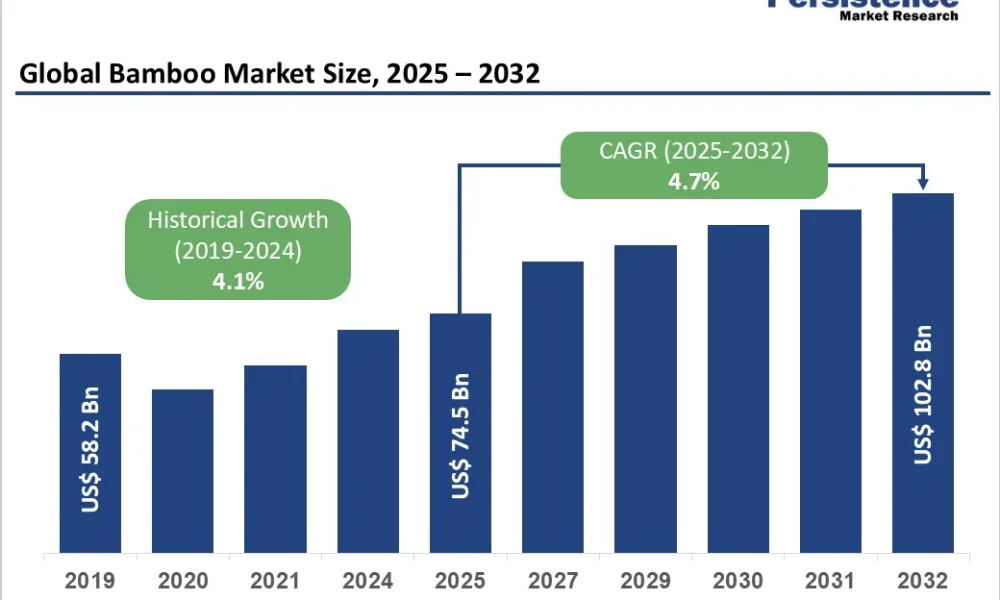
According to Persistence Market Research, the global bamboo market size is likely to be valued at US$74.5 billion in 2025 and is projected to reach US$102.8 billion by 2032, growing at a CAGR of 4.7% from 2025 to 2032. The steady growth reflects the increasing adoption of bamboo-based materials in sustainable construction and eco-conscious consumer goods. Bamboo furniture and construction materials are expected to remain the leading product segments due to their strength, durability, and aesthetic appeal. The building and construction sector continues to be the leading end-use industry, supported by rising demand for sustainable building materials. Regionally, Asia Pacific dominates the market as countries such as China, India, and Southeast Asian nations have abundant bamboo resources, established manufacturing networks, and strong domestic demand for bamboo-based products.
Download Your Free Sample & Explore Key Insights : https://www.persistencemarketresearch.com/samples/35731
Key Highlights from the Report
➤ The global bamboo market is projected to expand steadily with rising adoption of eco-friendly materials in construction and furniture industries.
➤ Increasing demand for sustainable alternatives to wood and plastic is driving the use of bamboo in multiple industries.
➤ The construction and infrastructure sector remains a major consumer of bamboo due to its strength and sustainability.
➤ Asia Pacific continues to lead the bamboo market because of abundant bamboo cultivation and established processing industries.
➤ Rising consumer awareness regarding environmentally friendly lifestyle products is boosting bamboo-based product adoption.
➤ Technological advancements in bamboo processing and treatment are improving durability and expanding its industrial applications.
Market Segmentation
The bamboo market can be segmented based on product type, including raw bamboo, bamboo flooring, bamboo furniture, bamboo pulp, bamboo charcoal, and bamboo textiles. Among these, bamboo furniture and bamboo flooring segments are gaining significant traction due to their durability, cost-effectiveness, and sustainable nature. Bamboo furniture is widely used in residential and commercial interiors because of its natural appearance and eco-friendly appeal. Bamboo pulp and fibers are also witnessing growing demand in the paper and textile industries, where companies are actively seeking biodegradable raw materials. As consumers increasingly prefer sustainable products, manufacturers are introducing innovative bamboo-based items ranging from flooring panels to lifestyle accessories.
From an end-use perspective, the bamboo market serves industries such as construction, furniture manufacturing, pulp and paper, textiles, energy, and consumer goods. The construction sector remains a major consumer of bamboo as it offers high strength-to-weight ratio and sustainability benefits. Bamboo is increasingly being used in green building projects, structural frameworks, scaffolding, and flooring solutions. Meanwhile, the textile sector is exploring bamboo fiber for sustainable clothing production due to its softness and antimicrobial properties. The growing demand for environmentally responsible products across industries is encouraging companies to explore new bamboo-based applications.
Customize This Report for Your Exact Requirements : https://www.persistencemarketresearch.com/request-customization/35731
Regional Insights
Asia Pacific dominates the global bamboo market due to its extensive bamboo cultivation and well-established production infrastructure. Countries such as China and India are among the largest producers and consumers of bamboo products. The region benefits from favorable climatic conditions that support large-scale bamboo farming. Additionally, government initiatives promoting bamboo cultivation and rural development have further strengthened the industry. Bamboo-based furniture, handicrafts, and construction materials are widely used across the region, making Asia Pacific the leading contributor to global market revenue.
North America and Europe are witnessing increasing demand for bamboo products as sustainability becomes a central theme in consumer purchasing decisions. The rising adoption of eco-friendly furniture, flooring, and lifestyle products is driving market expansion in these regions. Bamboo is also gaining popularity in green construction projects and sustainable interior design. Meanwhile, Latin America and Africa are gradually expanding bamboo cultivation and processing industries as part of their sustainable economic development strategies.
Market Drivers
One of the primary drivers of the bamboo market is the increasing global demand for sustainable and renewable materials. Bamboo is one of the fastest-growing plants and can be harvested without causing environmental damage, making it an ideal substitute for wood and plastic. Governments and environmental organizations are encouraging the use of bamboo as part of sustainable development goals. In construction and infrastructure projects, bamboo offers high strength, flexibility, and durability, making it a preferred material for eco-friendly building solutions. The rising awareness of climate change and deforestation is also motivating industries to adopt bamboo-based products as environmentally responsible alternatives.
Another key driver is the growing popularity of bamboo products in furniture and home décor. Consumers are increasingly seeking natural and sustainable materials for interior design. Bamboo furniture offers a unique aesthetic appeal while also being lightweight and durable. Additionally, improvements in bamboo processing technologies have enhanced product quality, allowing manufacturers to develop innovative bamboo flooring, panels, and composite materials. As global demand for sustainable lifestyle products continues to grow, bamboo is expected to play a vital role in multiple industries.
Market Restraints
Despite its advantages, the bamboo market faces certain challenges that may hinder its growth. One major restraint is the lack of standardized processing and quality control systems in some regions. Bamboo products require proper treatment and processing to enhance durability and resistance to pests and moisture. Inadequate processing technologies in certain developing markets can lead to inconsistent product quality, limiting the adoption of bamboo in high-end applications. This issue also affects consumer confidence and can slow down market expansion.
Another challenge is the limited awareness and adoption of bamboo products in certain developed markets. While bamboo is widely used in Asia, its usage in some Western markets remains relatively limited due to unfamiliarity and misconceptions about its durability. Additionally, the supply chain for bamboo products can sometimes face logistical challenges, including transportation and storage issues. Addressing these challenges through improved processing technology and stronger distribution networks will be essential for long-term market growth.
Market Opportunities
The growing focus on sustainable construction presents a major opportunity for the bamboo market. Bamboo is increasingly being recognized as an eco-friendly building material with excellent structural properties. Architects and construction companies are exploring bamboo-based materials for green building projects, including flooring, roofing, and structural frameworks. As global sustainability regulations become stricter, bamboo is expected to gain wider acceptance as a viable construction material.
Another promising opportunity lies in the expansion of bamboo-based consumer products and textiles. Bamboo fibers are being used to produce sustainable clothing, bedding, and personal care products due to their softness and antibacterial properties. Companies are investing in research and development to improve bamboo fiber processing and develop innovative products. Additionally, the increasing popularity of eco-friendly packaging and biodegradable materials could further boost demand for bamboo-based solutions in the future.
Get Instant Access – Complete Your Purchase : https://www.persistencemarketresearch.com/checkout/35731
Company Insights
Key players operating in the bamboo market include:
- Moso International
- Bamboo Village Company Limited
- Smith & Fong Co.
- Jiangxi Feiyu Industry Co., Ltd.
- Teragren LLC
- Dasso Industrial Group Co., Ltd.
- Fujian Jianou Huayu Bamboo Industry Co., Ltd.
- EcoPlanet Bamboo Group
Recent Developments
- March 2024 – Dasso Industrial Group expanded its bamboo flooring product portfolio to meet rising demand for sustainable construction materials.
- September 2023 – Moso International introduced advanced bamboo composite products designed for high-performance building applications.
Future Opportunities and Growth Prospects
The future of the bamboo market appears promising as sustainability continues to shape industrial strategies and consumer behavior. With increasing environmental concerns and rising demand for renewable resources, bamboo is expected to play a key role in the development of eco-friendly products and construction materials. Investments in bamboo cultivation, advanced processing technologies, and product innovation are likely to expand the market’s potential.
Additionally, governments and private organizations are supporting bamboo-based industries to promote rural employment and sustainable economic growth. As awareness about bamboo’s environmental benefits continues to rise, its adoption across construction, furniture, textiles, and consumer goods industries is expected to grow steadily, supporting long-term market expansion.




