
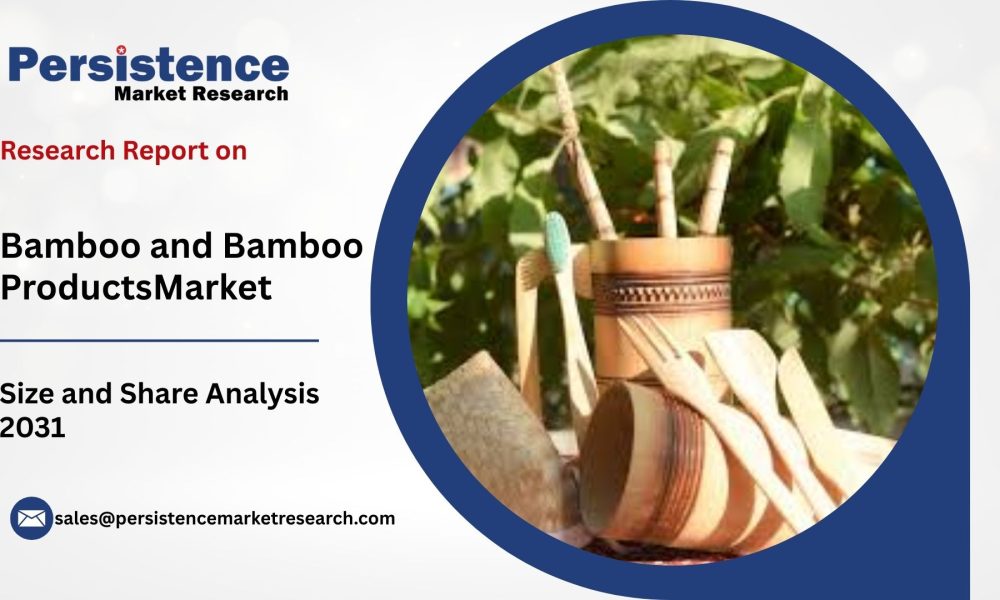
The global bamboo and bamboo products market is entering a period of significant growth, driven by rising environmental awareness, expanding applications across industries, and strong government support for sustainable materials. According to recent market insights, the sector is projected to register a robust compound annual growth rate (CAGR) of 10.3% from 2024 to 2031, with total market value expected to surge from US$ 75.5 billion in 2024 to approximately US$ 150.1 billion by 2031. This remarkable trajectory highlights bamboo’s emergence as a versatile, renewable resource capable of transforming multiple industrial and consumer markets worldwide.
Rising Demand for Sustainable and Renewable Materials
A key factor fueling the market’s expansion is the global shift toward sustainable and biodegradable materials. Bamboo is widely recognized as one of the fastest-growing plants on Earth, making it an ideal alternative to traditional materials such as wood, plastic, and even certain metals. Its rapid renewability, high tensile strength, and carbon sequestration capabilities position bamboo as a preferred material for eco-conscious manufacturing and construction.
➤ Download Your Free Sample & Explore Key Insights: https://www.persistencemarketresearch.com/samples/34996
As environmental concerns such as deforestation and plastic waste intensify, both consumers and industries are increasingly adopting bamboo-based solutions. Governments and environmental organizations are also promoting bamboo cultivation and product development as part of broader climate and sustainability strategies. These initiatives are expected to further accelerate adoption across regions and industries in the coming years.
Expanding Applications Across Multiple Industries
Bamboo’s versatility is another major growth driver. The material is used in more than 1,500 applications globally, ranging from construction and furniture to textiles, packaging, and personal care products. In construction, bamboo’s strength and flexibility make it ideal for eco-friendly flooring, panels, and structural components. In the furniture industry, it offers durability and aesthetic appeal while meeting consumer demand for sustainable home décor.
Textile and fashion manufacturers are also increasingly turning to bamboo fibers due to their antimicrobial properties, softness, and breathability. Bamboo-based fabrics are gaining popularity in apparel, home furnishings, and technical textiles, reflecting a broader shift toward sustainable fashion. Additionally, the growing use of bamboo in disposable items such as cutlery, straws, and packaging materials underscores its potential as a substitute for single-use plastics.
Construction materials remain one of the largest product segments within the market, benefiting from rising demand for green building solutions and supportive government policies. Bamboo flooring, furniture, and structural components are particularly in demand as sustainable architecture and eco-friendly housing projects expand worldwide.
Processed Bamboo Dominates Market Share
Processed bamboo products account for the majority of market value, reflecting their versatility and industrial utility. In 2024, processed bamboo is expected to hold more than 90% of the total market share. This dominance stems from its widespread use in high-quality furniture, construction materials, and textiles, as well as its ability to be engineered into durable, market-ready products.
Technological advancements in bamboo processing are also enhancing product quality and expanding applications. Innovations in manufacturing and mobile processing systems are enabling efficient transformation of raw bamboo into finished goods, while also supporting rural economies and sustainable supply chains.
Regional Insights
Asia-Pacific remains the dominant regional market, accounting for the largest share of global bamboo production and consumption. Countries such as China, India, and Vietnam possess abundant bamboo resources and well-established manufacturing infrastructure, making the region a global hub for bamboo-based products. East Asia alone is expected to hold a significant share of the market through 2031, supported by strong policy initiatives and industrial innovation.
In South Asia and Oceania, India is emerging as a key growth market due to rising construction activity, expanding manufacturing capacity, and supportive government programs. Meanwhile, North America and Europe are witnessing increasing adoption of bamboo products as consumers shift toward environmentally friendly alternatives and sustainable building materials.
Emerging markets in Africa and Latin America also present substantial growth opportunities, driven by urbanization, rising populations, and expanding use of bamboo in agriculture, construction, and consumer goods. These regions are expected to contribute to the global market’s expansion over the forecast period.
➤Customize This Report for Your Exact Requirements: https://www.persistencemarketresearch.com/request-customization/34996
Sustainability and Policy Support Driving Growth
Government initiatives worldwide are playing a crucial role in supporting bamboo cultivation and industrial development. Policies promoting renewable materials, reducing plastic pollution, and encouraging sustainable construction are boosting demand for bamboo products. In addition, investment in bamboo processing infrastructure and value-chain development is helping scale production and improve product quality.
The material’s environmental benefits further strengthen its market outlook. Bamboo absorbs significant amounts of carbon dioxide, stabilizes soil, and prevents erosion, making it a valuable resource for climate mitigation and land restoration efforts. These ecological advantages are expected to sustain long-term demand for bamboo-based solutions across industries.
Future Outlook
Looking ahead, the global bamboo and bamboo products market is poised for sustained growth as industries and consumers increasingly prioritize sustainability. Expanding applications in construction, textiles, packaging, and consumer goods, combined with supportive policies and technological advancements, are expected to drive market expansion through 2031.
With its projected doubling in value to US$ 150.1 billion by 2031 and a steady CAGR of 10.3%, the bamboo industry is set to play a central role in the global transition toward renewable materials and circular economies. As innovation continues and awareness grows, bamboo and bamboo-based products are likely to become essential components of sustainable manufacturing and eco-friendly lifestyles worldwide.




