
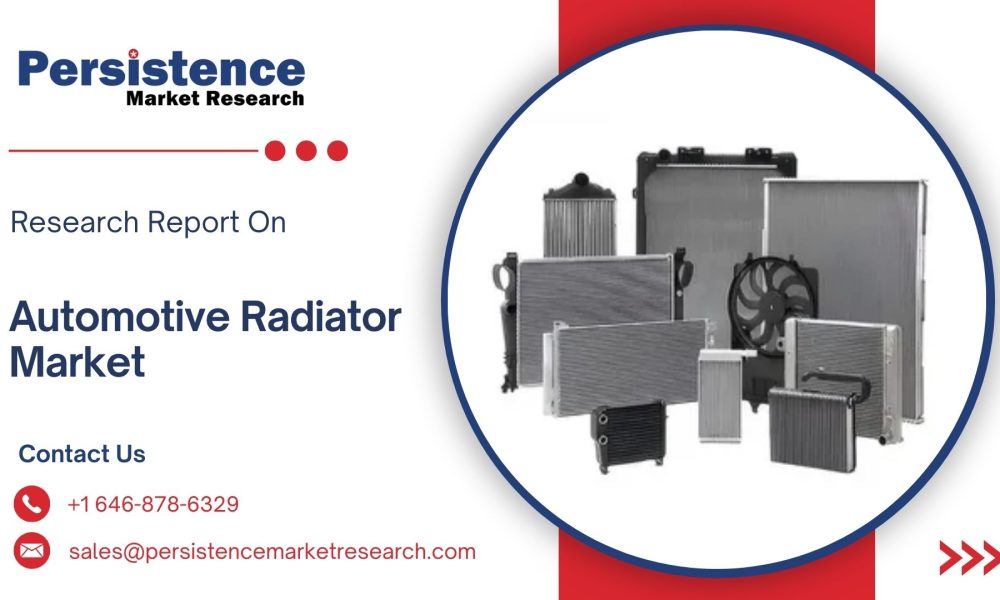
The global Automotive Radiator Market is entering a transformative growth phase, fueled by evolving vehicle architectures, increasing production volumes, and the rapid transition toward electrified mobility. According to comprehensive research analysis by leading market intelligence firms, the global automotive radiator market size is projected to be valued at US$ 10.6 billion in 2026 and is forecast to reach US$ 15.2 billion by 2033. This growth trajectory represents a steady compound annual growth rate (CAGR) of 5.2% between 2026 and 2033.
The market’s expansion is underpinned by sustained growth in vehicle production across both developed and emerging economies. Rising urbanization, increasing disposable incomes, and expanding logistics networks are driving demand for passenger and commercial vehicles worldwide. At the same time, accelerated electrification is redefining thermal management requirements. Electric vehicles (EVs), hybrid electric vehicles (HEVs), and plug-in hybrid electric vehicles (PHEVs) require advanced cooling solutions not only for engines but also for battery packs, power electronics, and electric motors.
Stringent emission norms and fuel efficiency standards introduced across regions are further reinforcing the need for efficient engine cooling systems. Governments are mandating lower carbon emissions and improved fuel economy, compelling automotive manufacturers to adopt lightweight, high-performance radiators. Technological advancements in materials such as aluminum alloys and composite plastics are enhancing heat dissipation capabilities while reducing overall vehicle weight, supporting compliance with environmental regulations.
Get Your FREE Sample Report Instantly Click Now: https://www.persistencemarketresearch.com/samples/13000
Key Highlights from the Report
➤ The global automotive radiator market is projected to grow from US$ 10.6 billion in 2026 to US$ 15.2 billion by 2033, registering a CAGR of 5.2% during the forecast period.
➤ Increasing global vehicle production and the rapid penetration of electric and hybrid vehicles are significantly boosting demand for advanced thermal management systems.
➤ Aluminum radiators continue to dominate the market due to superior heat transfer efficiency, corrosion resistance, and lightweight properties.
➤ Passenger vehicles account for the largest share of radiator demand, while electric vehicle applications are emerging as the fastest-growing segment.
➤ Asia Pacific remains the leading regional market, supported by high automotive manufacturing volumes and expanding EV adoption.
➤ Technological integration, including AI-enabled thermal monitoring and IoT-based predictive maintenance systems, is reshaping next-generation radiator solutions.
Segmentation Analysis
By Type
The automotive radiator market is segmented into aluminum radiators, copper/brass radiators, and plastic-aluminum composite radiators. Among these, aluminum radiators dominate the global landscape due to their superior thermal conductivity, lower weight, and enhanced corrosion resistance. Automotive manufacturers increasingly prefer aluminum radiators as they contribute to vehicle lightweighting initiatives, which are critical for meeting fuel efficiency and emission standards.
Copper/brass radiators, traditionally known for durability and repairability, continue to find applications in heavy-duty commercial vehicles and certain aftermarket segments. However, their relatively higher weight and cost compared to aluminum limit broader adoption. Plastic-aluminum composite radiators are gaining traction in cost-sensitive markets, offering a balance between performance and affordability. The aluminum segment is expected to retain its leading position throughout the forecast period, while composite solutions are projected to witness notable growth due to material innovation.
By Vehicle Type
Based on vehicle type, the market is categorized into passenger vehicles, light commercial vehicles (LCVs), and heavy commercial vehicles (HCVs). Passenger vehicles account for the largest market share, driven by high production volumes and consistent consumer demand globally. Increasing adoption of SUVs and crossover vehicles, which often require enhanced cooling performance due to higher engine capacities, is further strengthening this segment.
The commercial vehicle segment, particularly heavy-duty trucks and buses, demands robust radiators capable of withstanding high thermal loads and prolonged operational cycles. Infrastructure development, e-commerce expansion, and cross-border trade are contributing to growth in LCV and HCV production. Additionally, electrified buses and delivery fleets are accelerating the need for advanced cooling systems tailored to battery and powertrain thermal management.
By Propulsion Type
By propulsion type, the market is segmented into internal combustion engine (ICE) vehicles, hybrid vehicles, and electric vehicles. While ICE vehicles continue to dominate in terms of volume, hybrid and electric vehicles represent the fastest-growing segments. EVs require multi-loop thermal management systems to regulate battery temperature, ensuring optimal performance, safety, and longevity.
The integration of liquid-cooled battery packs and dedicated radiators for inverters and onboard chargers is driving innovation in radiator design. As global EV adoption accelerates, radiator manufacturers are diversifying portfolios to cater to both traditional engine cooling and electric powertrain requirements. This shift is expected to significantly influence product development strategies over the forecast period.
Regional Insights
Asia Pacific leads the global automotive radiator market, accounting for the largest share in terms of both production and consumption. Countries such as China, India, Japan, and South Korea serve as major automotive manufacturing hubs. Strong government support for electric mobility, expanding middle-class populations, and rising vehicle ownership are reinforcing regional dominance.
North America represents a mature yet technologically advanced market. The presence of leading automotive OEMs and increasing investments in EV production are supporting steady demand for high-performance radiators. Regulatory emphasis on fuel economy and emission reduction continues to drive innovation.
Europe is characterized by stringent environmental regulations and rapid EV adoption. Countries such as Germany, France, and the United Kingdom are investing heavily in sustainable mobility solutions. The region’s focus on reducing carbon emissions is encouraging adoption of lightweight and energy-efficient radiator systems.
Meanwhile, Latin America and the Middle East & Africa are emerging markets with growing automotive assembly activities and infrastructure development, presenting long-term growth opportunities.
Customize This Report for Your Exact Requirements: https://www.persistencemarketresearch.com/request-customization/13000
Unique Features and Innovations in the Market
Modern automotive radiators are significantly different from traditional cooling systems. Advanced manufacturing techniques, including vacuum brazing and precision stamping, are enhancing structural integrity and heat exchange efficiency. Lightweight materials and compact designs are enabling better integration within increasingly complex vehicle architectures.
Digital technologies are playing a pivotal role in transforming thermal management. AI-driven thermal analytics allow real-time monitoring of engine and battery temperatures, enabling predictive maintenance and optimized performance. IoT-enabled sensors embedded within cooling systems provide data-driven insights to fleet operators and OEMs. Furthermore, 5G connectivity is facilitating faster data transmission, supporting remote diagnostics and proactive system adjustments.
Manufacturers are also focusing on modular radiator designs that can be easily customized for various vehicle platforms, reducing production costs and improving scalability.
Market Highlights
Businesses across the automotive value chain are increasingly adopting advanced radiator solutions due to multiple strategic advantages. Efficient cooling systems enhance engine durability, improve fuel efficiency, and reduce overall vehicle emissions. As sustainability becomes a key priority, automakers are integrating radiators that support eco-friendly refrigerants and low-energy consumption designs.
Regulatory frameworks worldwide are compelling OEMs to reduce greenhouse gas emissions and enhance vehicle efficiency. Radiator manufacturers are responding with lightweight, high-capacity systems that align with these mandates. Additionally, cost optimization through material innovation and streamlined manufacturing processes is enabling competitive pricing without compromising performance.
The growing emphasis on vehicle electrification, autonomous driving, and connected mobility is further reinforcing the importance of reliable thermal management systems in ensuring operational safety and performance.
Key Players and Competitive Landscape
The automotive radiator market is moderately consolidated, with several global and regional players competing through innovation, partnerships, and geographic expansion. Key market participants include:
✦ Denso Corporation – Focuses on advanced thermal management systems for both ICE and electric vehicles, emphasizing lightweight aluminum solutions and integrated cooling modules.
✦ Valeo – Expands its portfolio with smart thermal systems designed for electrified vehicles, leveraging digital monitoring capabilities.
✦ Mahle GmbH – Invests in next-generation cooling technologies tailored for battery-electric and hybrid powertrains.
✦ T.RAD Co., Ltd. – Strengthens global manufacturing footprint and develops compact, high-efficiency radiator designs.
✦ Hanon Systems – Enhances product offerings with integrated thermal management solutions for electric mobility platforms.
These companies are prioritizing R&D investments, strategic collaborations with OEMs, and expansion into emerging markets to maintain competitive advantage.
Recent Developments
- Several leading manufacturers have announced investments in EV-focused thermal management production facilities to meet rising global demand for electric vehicle components.
- Strategic partnerships between radiator suppliers and automotive OEMs are accelerating the development of integrated cooling modules for next-generation electric platforms.
Ready to Dive Deep? Buy Full Report Today: https://www.persistencemarketresearch.com/checkout/13000
Future Opportunities and Growth Prospects
The future of the automotive radiator market is closely linked to the pace of vehicle electrification and advancements in thermal management technologies. As battery energy densities increase and charging speeds accelerate, efficient heat dissipation will become even more critical. This creates substantial opportunities for manufacturers specializing in high-performance, compact, and digitally enabled radiator systems.
Emerging technologies such as solid-state batteries, hydrogen fuel cell vehicles, and advanced hybrid architectures will further redefine cooling requirements. Regulatory pressures aimed at achieving net-zero emissions will continue to influence material selection, product design, and manufacturing processes.
In conclusion, the automotive radiator market is poised for sustained expansion through 2033, driven by technological innovation, evolving vehicle powertrains, and stringent environmental standards. Industry stakeholders that prioritize research, digital integration, and strategic partnerships are well-positioned to capitalize on the growing demand for advanced thermal management solutions in the global automotive landscape.




