
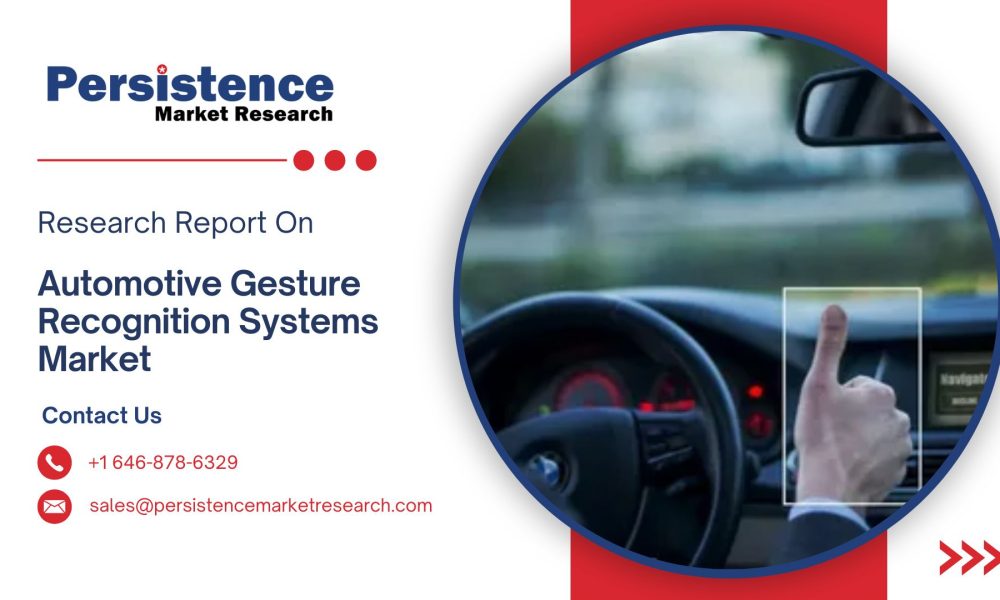
The global automotive gesture recognition systems market is witnessing robust growth, propelled by rising consumer demand for advanced, intuitive in-vehicle technologies and the rapid adoption of autonomous and semi-autonomous vehicles. According to market projections, the market is expected to grow from US$1.56 billion in 2024 to US$2.8 billion by 2031, registering an impressive CAGR of 18.7% during the forecast period of 2024 to 2031. This growth is primarily driven by the increasing emphasis on enhancing user experience, improving safety, and integrating innovative technologies into modern vehicles.
The automotive industry is undergoing a significant transformation, with gesture recognition systems emerging as a pivotal element in redefining in-vehicle interaction. The market expansion is underpinned by consumer expectations for seamless, user-friendly interfaces that allow drivers and passengers to interact with infotainment systems, climate controls, and other vehicle functions without physical contact. Gesture recognition technology enables touchless control, enhancing convenience while reducing distractions for drivers, thereby improving road safety.
Request Sample Copy of Report: https://www.persistencemarketresearch.com/samples/34864
Additionally, the rise of autonomous vehicles is accelerating the demand for gesture-based interfaces. As vehicles become more self-driving, the driver’s role evolves from active control to monitoring and interaction, making intuitive interfaces like gesture recognition systems essential for effective human-machine interaction. Moreover, advancements in sensor technologies, AI-driven image processing, and IoT integration are further bolstering the adoption of gesture recognition systems across passenger vehicles, commercial fleets, and luxury cars.
Segmentation Analysis
By Type
The automotive gesture recognition systems market can be segmented based on the type of technology employed. Major types include camera-based systems, radar-based systems, and infrared (IR) sensor systems. Among these, camera-based systems currently dominate the market due to their higher accuracy, versatility, and ability to support complex gestures. These systems leverage advanced imaging sensors and machine learning algorithms to detect and interpret hand and body movements, making them ideal for modern vehicles that integrate multiple interactive functions.
Radar-based gesture recognition, while currently less prevalent, is gaining traction due to its reliability under varying lighting conditions and its ability to operate effectively in low-visibility environments. IR sensor systems are primarily utilized for basic gesture detection and are often incorporated in cost-sensitive vehicle models. The fastest-growing segment is projected to be AI-enhanced camera-based systems, owing to their capability to provide more nuanced gesture interpretation, integrate with infotainment and driver assistance systems, and support personalization features.
By Vehicle/Product/Service Type
The adoption of gesture recognition systems varies across vehicle types. Passenger cars remain the largest market segment due to the higher prevalence of infotainment systems and the consumer demand for premium in-cabin experiences. Within passenger vehicles, luxury and mid-tier models are particularly adopting advanced gesture recognition as a differentiating feature, while economy segments are gradually integrating basic functionalities.
Commercial vehicles, including buses, trucks, and fleet vehicles, are increasingly incorporating gesture recognition systems to improve driver safety and reduce manual intervention. In these vehicles, gesture control can facilitate operational functions such as controlling telematics systems, navigating in-cabin menus, or adjusting vehicle settings without compromising attention on the road. Emerging service-oriented applications, such as gesture-based access controls and automated fleet monitoring, further expand the market potential in commercial transportation.
By Propulsion/Technology/Channel
While gesture recognition systems are largely independent of vehicle propulsion, their integration is closely aligned with advanced vehicle technologies. Electric vehicles (EVs) and hybrid vehicles are witnessing a higher adoption rate due to their technology-forward positioning and integration with digital cockpits. Similarly, vehicles equipped with ADAS (Advanced Driver Assistance Systems) and autonomous driving capabilities are prime candidates for gesture control systems, as these vehicles emphasize reducing physical interaction and enhancing intuitive controls.
Regional Insights
Geographically, North America and Europe currently lead the automotive gesture recognition systems market. North America dominates due to the presence of major automotive manufacturers, advanced technology adoption, and consumer preference for innovative in-car experiences. Europe, on the other hand, is driven by stringent safety regulations, rising adoption of electric and autonomous vehicles, and the presence of key automotive technology suppliers.
The Asia-Pacific (APAC) region is projected to be the fastest-growing market during the forecast period. This growth is attributed to the rapid expansion of the automotive sector in countries such as China, Japan, and South Korea, increased urbanization, and the growing penetration of connected vehicles. High consumer demand for technologically advanced vehicles, coupled with government initiatives promoting smart and sustainable transportation, is further accelerating the adoption of gesture recognition systems in the region.
Request Customization of Report: https://www.persistencemarketresearch.com/request-customization/34864
Unique Features and Innovations in the Market
Modern automotive gesture recognition solutions are distinguished by their integration of AI, IoT, and 5G technologies, which enhance system responsiveness, accuracy, and reliability. AI algorithms enable advanced gesture interpretation, predicting driver intent and supporting customizable control functions based on user behavior. IoT integration allows gesture recognition systems to interact seamlessly with other connected devices and smart vehicle ecosystems, creating a cohesive user experience.
The deployment of 5G connectivity is significantly improving real-time data processing capabilities, enabling ultra-fast gesture recognition and interaction with cloud-based systems for updates, analytics, and personalization. Other innovative features include multi-gesture support, context-aware gestures, and adaptive user interfaces that modify their responses based on driving conditions, environmental factors, and driver preferences. These innovations collectively enhance safety, comfort, and user satisfaction, positioning gesture recognition systems as a crucial component of modern automotive technology.
Market Highlights
Businesses across the automotive sector are increasingly adopting gesture recognition systems to achieve multiple strategic objectives. First, the technology enhances safety by enabling hands-free operation, reducing driver distraction, and supporting advanced driver-assistance features. Second, gesture recognition offers a premium user experience, aligning with consumer expectations for modern, intuitive, and connected vehicles. Third, integrating these systems contributes to cost optimization in manufacturing by reducing the need for complex physical controls while supporting software-based customization.
Sustainability is another notable factor driving adoption. By reducing reliance on mechanical components, gesture recognition systems contribute to lightweight vehicle designs, lower energy consumption, and a reduced environmental footprint. Additionally, regulatory frameworks in regions such as North America and Europe, which emphasize driver safety and the integration of smart vehicle technologies, are further incentivizing manufacturers to incorporate gesture recognition systems as part of their compliance and innovation strategies.
Key Players and Competitive Landscape
The automotive gesture recognition systems market is characterized by active participation from both automotive technology providers and OEMs. Leading companies include Bosch, Continental AG, Denso Corporation, Valeo, and Delphi Technologies, each focusing on innovation, strategic partnerships, and regional expansions.
Bosch is leveraging its expertise in sensor technology and AI-driven systems to develop highly accurate and reliable gesture recognition solutions, targeting both luxury and mass-market vehicles. Continental AG is integrating gesture recognition with advanced driver-assistance systems, emphasizing safety and seamless in-cabin interaction. Denso Corporation focuses on combining gesture recognition with infotainment and telematics systems, while Valeo is known for its radar-based gesture solutions that operate effectively in diverse environmental conditions. Delphi Technologies is prioritizing software-driven gesture interfaces that can be updated and customized post-production, catering to evolving consumer preferences.
Competitive strategies across the industry include product innovation, collaborations with OEMs, and expansion into emerging markets. Many companies are investing in R&D to enhance system intelligence, expand gesture libraries, and improve multi-sensor integration. Strategic alliances with AI and software developers further enable automotive technology providers to deliver holistic solutions that meet future mobility requirements.
Buy Now: https://www.persistencemarketresearch.com/checkout/34864
Future Opportunities and Growth Prospects
The automotive gesture recognition systems market is poised for sustained growth, driven by evolving vehicle technologies, regulatory support, and rising consumer demand for intuitive interfaces. Future opportunities lie in the integration of fully autonomous vehicles, where gesture recognition will become a critical medium for human-machine interaction. Additionally, expansion into electric and connected vehicle platforms, particularly in APAC and Latin America, presents significant potential for market penetration.
Advancements in AI, machine learning, 5G connectivity, and edge computing are expected to further refine gesture recognition capabilities, enabling real-time, context-sensitive, and adaptive interfaces. As manufacturers prioritize sustainability, safety, and user experience, gesture recognition systems will continue to play a strategic role in shaping the in-cabin ecosystem of next-generation vehicles.
The global automotive gesture recognition systems market is entering a period of transformative growth. With increasing adoption of autonomous, electric, and connected vehicles, along with technological innovations in AI, IoT, and 5G, the market is expected to reach US$2.8 billion by 2031. This trajectory underscores the critical role of gesture recognition in redefining in-vehicle interaction, enhancing safety, and delivering an enriched, intuitive user experience for drivers and passengers worldwide.




