
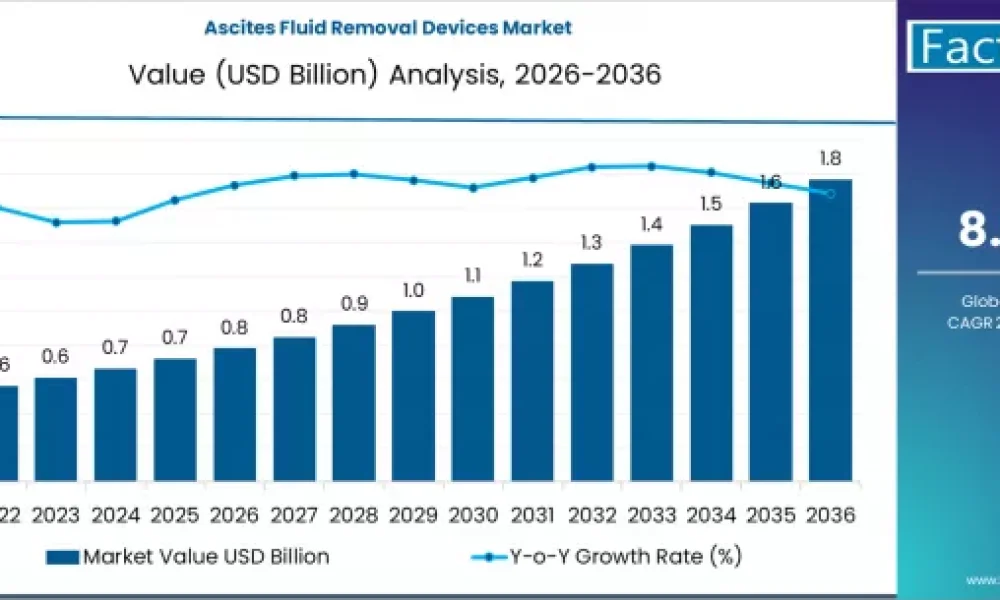
The global Ascites Fluid Removal Devices Market is set to experience significant growth through 2036, driven by the increasing prevalence of liver disease, cancer, heart failure, and other conditions that lead to fluid accumulation in the abdominal cavity. Ascites — the buildup of fluid in the peritoneal cavity — can cause severe discomfort and complications. Ascites fluid removal devices offer clinicians efficient, safer, and less invasive methods to manage this condition, improving patient comfort and reducing the need for repeated hospital admissions.
These devices — including advanced drainage catheters, automated aspiration systems, portable drainage kits, and tunneled peritoneal catheters — play a key role in therapeutic interventions for patients with moderate to severe ascites. Healthcare providers increasingly favor these solutions to support outpatient care protocols, reduce procedural risks, and enhance patient quality of life.
Market Outlook (2026–2036)
Market Value in 2026: Estimated at USD 345 million
Market Value in 2036: Projected to reach USD 820 million
Forecast CAGR (2026–2036): Approximately 9.4%
Leading Product Category: Tunneled Peritoneal Drainage Catheters
Primary End Users: Hospitals, Gastroenterology Clinics, Home Healthcare Providers
The anticipated growth reflects wider adoption of liver disease management solutions, increases in chronic disease prevalence, and a push toward minimally invasive procedures that enhance patient outcomes.
To Access the Complete Data Tables & in-depth Insights, Request a Discount on this report: https://www.factmr.com/connectus/sample?flag=S&rep_id=13387
Market Overview
Ascites is most commonly associated with liver cirrhosis, portal hypertension, malignancies, and cardiovascular conditions, affecting a substantial number of patients worldwide. Traditional management often involves repeated paracentesis — a procedure to drain excess fluid using a needle and syringe — which can be painful, time-consuming, and carries infection risk. By contrast, ascites fluid removal devices provide clinicians with controlled, efficient drainage options that improve safety, comfort, and procedural consistency.
Tunneled peritoneal catheters, for example, allow long-term, controlled fluid drainage with lower infection risk and fewer repeat procedures. Portable drainage kits and automated systems support outpatient treatment models, reducing hospital stays and lowering overall healthcare costs.
Key Market Drivers
1. Rising Incidence of Chronic Liver Disease and Cancer
Increasing rates of liver cirrhosis, non-alcoholic fatty liver disease (NAFLD), viral hepatitis, and cancer contribute to higher incidences of ascites. As fluid management becomes a critical component of disease care pathways, demand for reliable removal devices is increasing.
2. Focus on Minimally Invasive Therapy
Healthcare providers are shifting toward minimally invasive procedures that improve patient comfort and outcomes while reducing procedural risks and hospital resource use. Ascites fluid removal devices support these goals by streamlining fluid evacuation and minimizing complications.
3. Expansion of Outpatient Care Models
With growing emphasis on outpatient and home healthcare, devices that facilitate safe fluid removal outside the hospital environment are increasingly attractive. Portable and user-friendly drainage systems enable clinicians to offer care in ambulatory settings.
4. Growing Patient Awareness and Healthcare Access
Improved awareness of treatment options, coupled with expanding access to modern medical technologies in developing regions, is contributing to increased adoption of advanced ascites management solutions.
Market Segmentation Insights
By Device Type:
Tunneled Peritoneal Drainage Catheters: Designed for long-term fluid management with reduced infection risk.
Automated Drainage Systems: Feature controlled aspiration for consistent fluid evacuation.
Portable Drainage Kits: User-friendly setups suitable for outpatient or home use.
Peritoneal Dialysis-Linked Drains: Used in conjunction with renal support therapies where appropriate.
Ancillary Accessories: Safety valves, one-way connectors, and patient comfort components.
By End User:
Hospitals and Acute Care Centers
Gastroenterology and Hepatology Clinics
Outpatient Specialty Centers
Home Healthcare and Hospice Services
Regional Demand Dynamics
North America is expected to hold a substantial share of the market due to well-established healthcare infrastructure, high clinical adoption rates, and reimbursement pathways that support advanced fluid removal therapies.
Europe represents a major regional segment, supported by progressive healthcare systems, strong clinical guidelines for chronic disease management, and steady adoption of minimally invasive procedural technologies.
Asia Pacific is predicted to be a high-growth region due to increasing incidences of liver disease, expanding healthcare access, rising elderly populations, and growing investments in healthcare infrastructure.
Regions such as Latin America and Middle East & Africa are also witnessing gradual uptake of ascites fluid removal technologies as clinical diagnosis and interventional care services expand.
Competitive Landscape
The ascites fluid removal devices market is moderately competitive, featuring participation from global medical device manufacturers, specialty interventional equipment producers, and innovative healthcare technology firms. Key players focus on product innovation — particularly around patient comfort, safety features, and ease of use — as well as strategic partnerships with healthcare providers to improve clinical adoption.
Product differentiation is achieved through improvements in catheter materials, ergonomic designs, enhanced safety valves, and integration with digital monitoring or telehealth support services.
Future Outlook
The Ascites Fluid Removal Devices Market is expected to maintain steady growth through 2036 as demand for effective, minimally invasive fluid management solutions continues to rise. Ongoing advancements in device design, coupled with broader healthcare access and progressive care models, will further support adoption.
With a growing focus on patient-centered care, outpatient treatment options, and enhanced procedural safety, ascites fluid removal solutions will play an increasingly vital role in managing fluid accumulation disorders and improving quality of life for affected patients worldwide.
Have specific requirements or need assistance on report pricing or have a limited budget? Please contact [email protected]
About Fact.MR:
Fact.MR is a global market research and consulting firm, trusted by Fortune 500 companies and emerging businesses for reliable insights and strategic intelligence. With a presence across the U.S., UK, India, and Dubai, we deliver data-driven research and tailored consulting solutions across 30+ industries and 1,000+ markets. Backed by deep expertise and advanced analytics, Fact.MR helps organizations uncover opportunities, reduce risks, and make informed decisions for sustainable growth



