
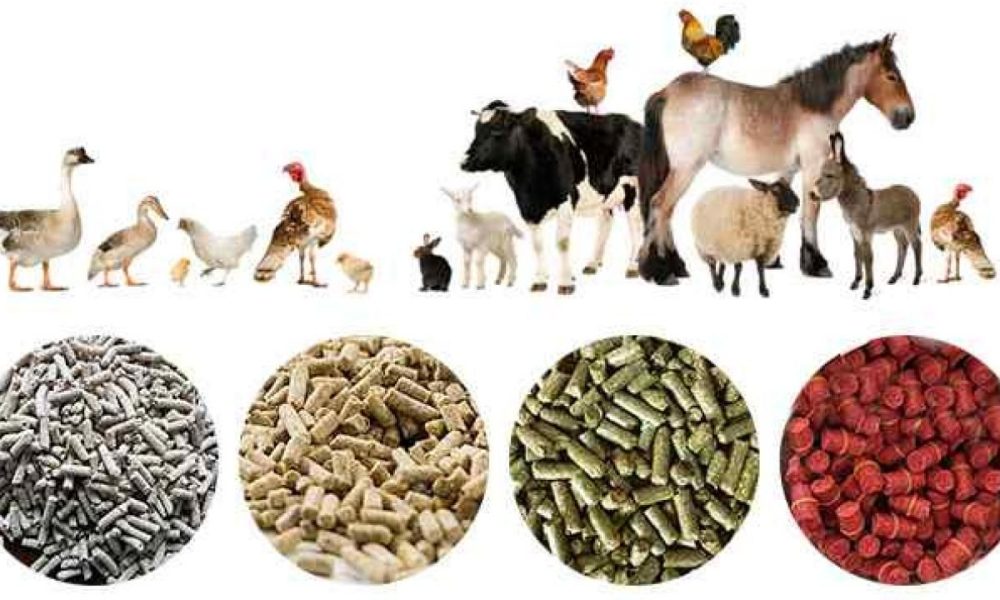
The global animal feed additives market, currently valued at USD 55.8 billion in 2025, is set for robust expansion, projected to nearly double and reach USD 108.8 billion by 2035. With a CAGR of 6.9%, the sector is being fueled by rising global demand for meat, poultry, dairy, and aquaculture products—particularly in rapidly developing regions across Asia Pacific and Latin America.
Request a Sample Copy for Exclusive Insights: https://www.futuremarketinsights.com/reports/sample/rep-gb-418
Why the Market is Growing
Animal protein consumption is climbing as populations expand and household incomes rise. This trend is pressing producers to improve feed efficiency, reduce mortality rates, and enhance the nutritional value of animal diets. Feed additives such as amino acids, enzymes, probiotics, and immune modulators are now considered indispensable in modern livestock management.
Moreover, growing volatility in traditional feed protein sources such as soybean meal and fishmeal is pushing producers to adopt technological additives that maximize nutrient utilization and maintain consistent performance. Powder-based additives, accounting for 70% of the market share in 2025, remain the most widely used form thanks to their cost-effectiveness and ease of handling.
Regulatory Push Driving Innovation
Global regulators have tightened restrictions on antimicrobial growth promoters. Authorities such as the U.S. FDA, the European Food Safety Authority (EFSA), and China’s Ministry of Agriculture (MARA) are requiring higher safety standards, better traceability, and proof of efficacy. This regulatory environment has created new opportunities for alternatives such as probiotic microbes, phytogenic extracts, organic acids, and postbiotic metabolites.
Recent investments, such as the USDA’s USD 8.5 million sterile screwworm fly facility in Texas and USD 21 million expansion in Mexico, highlight the increasing emphasis on safeguarding livestock health while promoting sustainable production systems.
Established Leaders and Emerging Innovators
Market leaders like Cargill Inc., BASF SE, Archer Daniels Midland (ADM), Evonik Industries AG, and DSM Nutritional Products continue to set industry benchmarks with broad product portfolios ranging from amino acids to vitamins and organic acids. Their strength lies in scaling production, ensuring global compliance, and investing in precision nutrition solutions that optimize feed conversion and lower emissions.
Meanwhile, companies such as Nutreco N.V., Kemin Industries, and Novus International are pioneering natural additives, probiotics, and phytogenic solutions that cater to the rising demand for clean-label, antibiotic-free products.
At the same time, newer entrants and mid-tier players including Alltech and Adisseo are pushing the innovation frontier with encapsulated trace minerals, fermentation-based bioactives, and functional feed enhancers. These developments reflect the market’s openness to collaboration, partnerships, and technology-sharing across traditional and emerging manufacturers.
Global Trade and Country Insights
The animal feed additives trade is expanding steadily, shaped by production capacities and import needs. Major exporters include China, the U.S., Brazil, and the European Union, while key importers such as India, Mexico, South Korea, and Middle Eastern nations are ramping up imports to meet livestock feed demands.
- China: Fastest-growing market with 6.3% CAGR, driven by swine herd recovery and aquaculture expansion.
- USA: Expected to grow at 3.8% CAGR, supported by strict FDA regulations and demand for antibiotic-free labels.
- UK & France: Growth around 4.3–4.4% CAGR, with a focus on traceability and sustainable feed systems.
- Japan: Estimated at 4.1% CAGR, with strong demand for premium aquaculture and Wagyu beef production.
Emerging Technologies Shaping the Future
The market is embracing innovation at a rapid pace:
- AI-powered feed formulation and real-time animal health monitoring are helping optimize additive use.
- Microencapsulation and emulsion-based delivery systems are improving nutrient stability.
- Alternative proteins such as insect meals, algae-based nutrients, and single-cell oils are finding their way into formulations.
These shifts are not only improving efficiency but also aligning with sustainability goals and consumer demand for ethical, residue-free animal products.
Recent Industry Moves
- March 2025: A new corn milling plant opened in Gwalior, India, with capacity of 500 tons/day (expandable to 1,000 tons/day), strengthening local starch supply for food and feed industries.
- April 2024: TrinamiX partnered with Intraco Ltd. to deploy mobile NIR spectroscopy solutions for real-time feed analysis, empowering livestock farmers with better nutritional balance and cost efficiency.
Get the Report Brochure Now: https://www.futuremarketinsights.com/reports/brochure/rep-gb-418
Outlook: A Market of Opportunities
The animal feed additives market is positioned at the intersection of sustainability, food security, and technological advancement. While established global giants continue to expand their portfolios, emerging manufacturers are leveraging new technologies to carve their share in a fast-evolving marketplace.
With consumer demand shifting toward antibiotic-free, traceable, and nutrient-efficient animal products, the next decade will present immense opportunities for companies that innovate responsibly. Whether through advanced enzymes, precision nutrition, or natural health-promoting compounds, the market is clearly moving toward a future where animal health and sustainable farming practices go hand in hand.
About Future Market Insights (FMI)
Future Market Insights, Inc. (ESOMAR certified, recipient of the Stevie Award, and a member of the Greater New York Chamber of Commerce) offers profound insights into the driving factors that are boosting demand in the market. FMI stands as the leading global provider of market intelligence, advisory services, consulting, and events for the Packaging, Food and Beverage, Consumer Technology, Healthcare, Industrial, and Chemicals markets. With a vast team of over 400 analysts worldwide, FMI provides global, regional, and local expertise on diverse domains and industry trends across more than 110 countries.



