
The aluminum beverage bottles market is gaining significant traction as beverage manufacturers increasingly shift toward sustainable and recyclable packaging solutions. Aluminum bottles are widely used for packaging water, soft drinks, beer, energy drinks, and ready-to-drink beverages due to their durability, lightweight properties, and premium appearance. As environmental awareness grows globally, consumers are increasingly favoring packaging that is recyclable and environmentally responsible. Aluminum bottles meet these requirements by offering high recyclability and reduced environmental impact compared to conventional plastic containers.
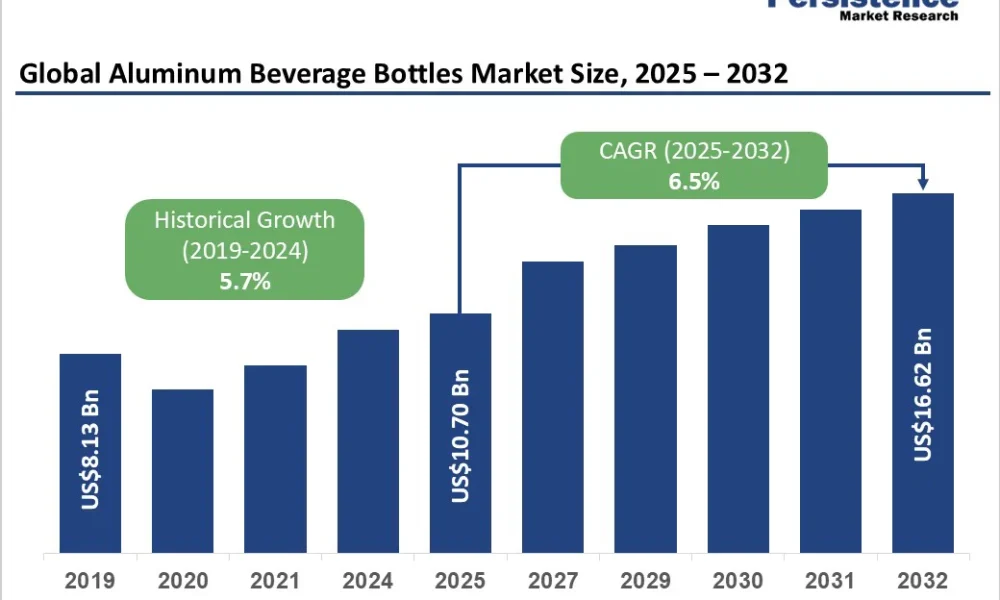
According to Persistence Market Research, the global aluminum beverage bottles market size is expected to reach US$10.70 billion by 2025 and is projected to expand to US$16.62 billion by 2032, growing at a CAGR of 6.5% during the forecast period from 2025 to 2032. The growth of this market is driven by increasing sustainability mandates, rising consumer preference for premium beverages, and technological advancements in manufacturing and lightweighting. The beverage industry’s shift toward eco-friendly packaging solutions has positioned aluminum bottles as an attractive option for brands seeking to enhance product appeal while meeting environmental regulations.
Download Your Free Sample & Explore Key Insights : https://www.persistencemarketresearch.com/samples/35696
Key Highlights from the Report
➤ The aluminum beverage bottles market is projected to grow from US$10.70 billion in 2025 to US$16.62 billion by 2032.
➤ Rising global sustainability mandates are encouraging beverage manufacturers to adopt recyclable aluminum packaging solutions.
➤ Growing consumer demand for premium beverage packaging is boosting the adoption of aluminum bottles across beverage categories.
➤ Technological advancements in lightweight aluminum bottle manufacturing are improving production efficiency and reducing costs.
➤ Expansion of ready-to-drink beverage categories such as energy drinks and flavored water is supporting market demand.
➤ Increasing recycling awareness among consumers is strengthening the long-term outlook for aluminum packaging solutions.
Market Segmentation
The aluminum beverage bottles market can be segmented based on product type, beverage category, and end-use industry. By product type, the market includes standard aluminum bottles and customized premium bottles designed for branding and aesthetic appeal. Premium aluminum bottles are gaining popularity among beverage brands because they provide a distinctive appearance and enhance product differentiation on retail shelves. Many manufacturers are also introducing resealable aluminum bottles, which add convenience and improve product usability for consumers.
From an application perspective, aluminum beverage bottles are widely used in water, carbonated soft drinks, alcoholic beverages, energy drinks, and ready-to-drink beverages. The alcoholic beverage segment remains a prominent user of aluminum bottles due to their ability to preserve flavor and maintain product freshness. Additionally, energy drink and functional beverage brands are increasingly adopting aluminum packaging to appeal to environmentally conscious consumers while reinforcing premium branding strategies.
Customize This Report for Your Exact Requirements : https://www.persistencemarketresearch.com/request-customization/35696
Regional Insights
North America represents a leading region in the aluminum beverage bottles market due to the strong presence of beverage manufacturers and growing consumer awareness regarding sustainable packaging. Beverage companies across the United States and Canada are actively shifting toward aluminum packaging to reduce plastic waste and comply with sustainability commitments. The popularity of craft beverages and premium drinks in the region has further accelerated the demand for stylish and recyclable aluminum bottles.
Europe is another key region where strict environmental regulations and recycling initiatives are encouraging the use of aluminum packaging. Countries across Western Europe have been promoting circular economy policies, which support the adoption of recyclable materials such as aluminum. Meanwhile, the Asia-Pacific region is emerging as a rapidly growing market as urbanization, rising disposable incomes, and expanding beverage consumption drive the demand for innovative packaging solutions.
Market Drivers
One of the primary drivers of the aluminum beverage bottles market is the increasing focus on sustainability and environmental responsibility. Governments, beverage companies, and consumers are collectively pushing for packaging materials that reduce plastic waste and support recycling initiatives. Aluminum bottles offer nearly infinite recyclability without losing material quality, making them a preferred alternative to single-use plastic containers. Beverage manufacturers are adopting aluminum packaging to align with sustainability goals and enhance their brand image.
Another important growth driver is the rising consumer preference for premium beverage experiences. Aluminum bottles provide a sleek and modern look that appeals to consumers seeking high-quality products. Beverage brands are leveraging aluminum packaging to differentiate their offerings and enhance shelf visibility. The ability to print vibrant graphics and branding on aluminum bottles also enables companies to create strong visual appeal, which plays a critical role in influencing purchasing decisions.
Market Restraints
Despite its positive outlook, the aluminum beverage bottles market faces several challenges. One of the major restraints is the relatively higher production cost of aluminum bottles compared to plastic packaging. Aluminum requires specialized manufacturing processes and materials, which can increase overall production expenses. This cost factor can limit adoption among small and medium-sized beverage manufacturers that operate with tight profit margins.
Another limitation is the complexity of supply chain management for aluminum materials. Fluctuations in raw material availability and pricing can impact production planning and profitability for manufacturers. Additionally, some beverage companies continue to rely on established plastic packaging infrastructure, making it difficult for them to transition quickly to aluminum alternatives without significant investments in equipment and logistics.
Market Opportunities
The aluminum beverage bottles market presents strong opportunities for growth through technological advancements in lightweighting and manufacturing processes. Modern production techniques allow manufacturers to create lighter bottles without compromising strength or durability. This innovation reduces material usage and shipping costs, making aluminum bottles more competitive compared to traditional packaging formats.
Another promising opportunity lies in the expansion of premium and specialty beverage segments. As consumers increasingly explore craft beverages, flavored drinks, and functional beverages, brands are focusing on packaging that enhances the product experience. Aluminum bottles offer both aesthetic appeal and environmental benefits, making them an attractive option for beverage companies seeking to stand out in a competitive market.
Exclusive Data Awaits – Continue to Checkout : https://www.persistencemarketresearch.com/checkout/35696
Company Insights
Key players operating in the aluminum beverage bottles market include:
Ball Corporation
Crown Holdings Inc.
Ardagh Group
Aluminum Bottles Inc.
CCL Container
Exal Corporation
Envases Group
Can-Pack S.A.
Toyo Seikan Group Holdings Ltd.
Alucon Public Company Limited
Recent Developments
March 2024 – Ball Corporation introduced advanced lightweight aluminum bottle designs aimed at improving sustainability and reducing packaging material usage.
October 2023 – Crown Holdings Inc. expanded its aluminum beverage bottle manufacturing capabilities to support increasing demand for sustainable beverage packaging.
Future Opportunities and Growth Prospects
The aluminum beverage bottles market is expected to witness consistent growth in the coming years as sustainability becomes a central priority for both consumers and manufacturers. Increasing regulatory pressure to reduce plastic waste, combined with rising consumer demand for recyclable packaging, will continue to drive adoption across beverage categories. Manufacturers are also investing in innovative bottle designs and advanced production techniques to improve efficiency and reduce costs.
In addition, the rapid expansion of ready-to-drink beverages, energy drinks, and premium alcoholic beverages will create new opportunities for aluminum bottle packaging. As beverage companies seek packaging solutions that combine sustainability with premium branding, aluminum beverage bottles are expected to play a vital role in shaping the future of the global beverage packaging industry.




