
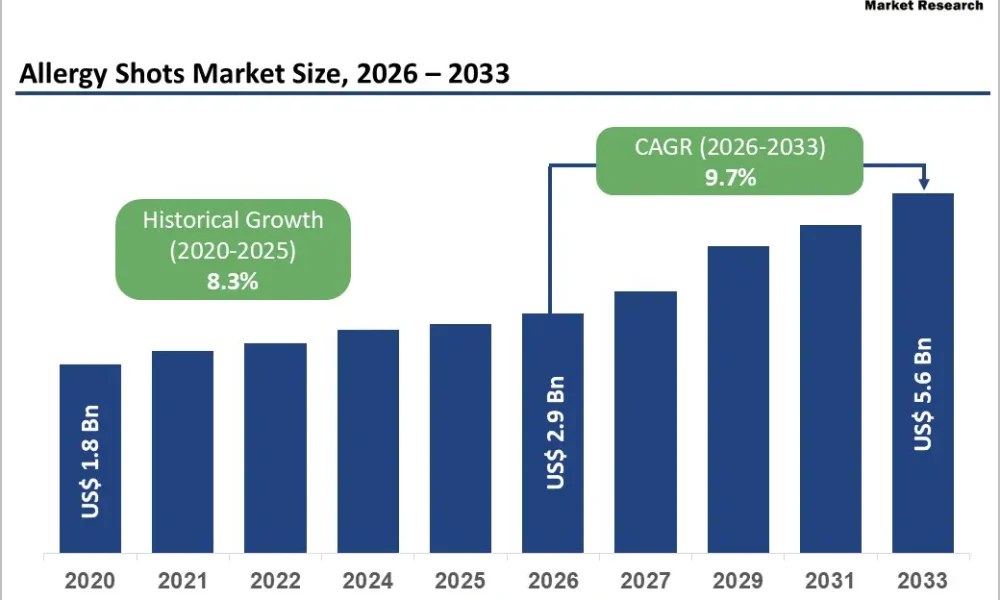
The global allergy shots market is poised for robust expansion over the next decade, reflecting rising incidence of allergic disorders, heightened awareness around disease‑modifying therapies, and continuous innovation in immunotherapy options. According to industry estimates, the market is projected to grow from an estimated US $2.9 billion in 2026 to US $5.6 billion by 2033, representing a compound annual growth rate (CAGR) of approximately 9.7 % during the forecast period.
Allergy shots, a form of allergen immunotherapy, work by gradually exposing patients to controlled doses of specific allergens to build immune tolerance. This approach treats the underlying cause of allergies rather than simply alleviating symptoms, making it an increasingly preferred long‑term management option for conditions such as allergic rhinitis, asthma, venom allergies, and food‑related allergic reactions.
Download Your Free Sample & Explore Key Insights: https://www.persistencemarketresearch.com/samples/31924
Market Drivers: Rising Allergy Burden and Therapeutic Adoption
A primary force propelling market growth is the rising global prevalence of allergic diseases, particularly allergic rhinitis, which affects a substantial percentage of populations globally. Urbanization, environmental pollution, climate change, and increased exposure to airborne allergens such as pollen and dust mites are significant contributors to this trend. In many developed countries, allergic rhinitis alone affects between 15 % and 25 % of individuals, with similar upward trends occurring in emerging economies.
This growing disease burden has intensified demand for effective immunotherapy options that can offer long‑term relief and reduce reliance on symptomatic medications like antihistamines and corticosteroids. Allergy shots have emerged as a cornerstone treatment modality due to their ability to modify immune responses, reduce symptom severity, and even prevent progression to more severe conditions such as allergic asthma.
Technological Advancements Fueling Product Innovation
Innovation within the allergy shots market has further supported growth, particularly through advancements in sublingual immunotherapy (SLIT) and refined subcutaneous immunotherapy (SCIT) products. SLIT tablets and drops provide a convenient alternative to traditional injections, offering improved safety profiles, greater patient adherence, and reduced need for frequent clinical visits, which is especially appealing for pediatric patients and individuals with needle anxiety. Products such as Odactra, Grastek, and Ragwitek have gained traction in markets like North America and Europe due to these benefits.
Meanwhile, SCIT remains a dominant segment due to its extensive clinical history and proven efficacy, particularly for patients with moderate to severe allergic conditions or multiple sensitivities. Its ability to address a broad range of allergens simultaneously has kept it as a core treatment choice in clinical settings.
Emerging technological trends also include personalized immunotherapy formulations, recombinant allergen technologies, and digital health integrations to support patient adherence and customize treatment plans. These innovations aim to enhance clinical outcomes and lower barriers to broader adoption among diverse patient populations.
Get Custom Insights Designed for Your Businecss: https://www.persistencemarketresearch.com/request-customization/31924
Segmental Insights: Products, Indications, and Allergens
The market is broadly segmented across product types, indications, allergens, distribution channels, and regions:
Product Segmentation:
- SLIT Tablets: This segment is rapidly gaining market share due to convenience and favorable safety profiles.
- Oral Immunotherapy: Includes treatments like Palforzia, which targets specific food allergies such as peanut allergy and is driving growth in food allergy immunotherapy.
- Injection (SCIT): Continues to be widely adopted, especially for respiratory and venom allergies, due to long‑term clinical evidence supporting its effectiveness.
Indications:
- Allergic Rhinitis: Dominates the market due to its high prevalence and significant impact on quality of life.
- Allergic Asthma: A key segment, often co‑occurring with rhinitis, contributing to market demand.
- Food Allergy and Atopic Dermatitis: These are among the fastest‑growing indications, supported by greater clinical focus and regulatory approvals for new therapies.
- Venom Allergy: Remains a significant niche segment due to the need for desensitization protocols in individuals with severe reactions.
Allergen Types:
Allergen segmentation includes pollen, house dust mites, mold, animal dander, and insect venom. Among these, pollen remains the most common trigger for seasonal allergic responses, driven in part by ecological changes such as extended pollen seasons due to climate change.
Distribution Channels:
- Institutional Sales: Include specialty clinics and hospital immunology departments where professional supervision ensures treatment adherence and safety.
- Retail Sales: Include pharmacies and other outlets where patients can access allergy products, particularly SLIT formulations.
Regional Market Dynamics
North America continues to lead the global allergy shots market, driven by well‑established healthcare systems, high awareness of immunotherapy, and strong investment in R&D. Advanced regulatory frameworks and robust reimbursement environments, particularly in the United States, support rapid product approvals and adoption.
Europe holds a significant portion of the market as well, with broad recognition of allergy immunotherapy and extensive clinical practice guidelines promoting its use. European regulatory nuances, such as standardized allergen extract requirements, influence product development and market access frameworks in key countries.
Asia Pacific is expected to exhibit the fastest growth rate through 2033, driven by increasing allergy prevalence due to urbanization, environmental pollution, and lifestyle changes. Emerging healthcare infrastructures and rising patient awareness in countries such as China and India are expanding access to immunotherapy treatments. Investments by multinational and local pharmaceutical companies in manufacturing and clinical trial expansion are further bolstering this regional outlook.
Latin America and Middle East & Africa also present growth opportunities as healthcare spending increases and allergy diagnosis and treatment awareness improve among medical professionals and patients alike.
Competitive Landscape and Strategic Initiatives
The allergy shots market features a moderately concentrated competitive landscape with several notable players driving innovation and expansion through product development, regulatory approvals, and strategic partnerships. Key companies active in the market include:
- ALK‑Abelló – A leading manufacturer with extensive immunotherapy portfolios.
- Stallergenes Greer – Focused on allergen extracts and traditional immunotherapy.
- Allergy Therapeutics – Developing next‑generation therapies and immunotherapy products.
- Aimmune Therapeutics – Specializing in food allergy treatments such as Palforzia.
- DBV Technologies – Innovating in epicutaneous immunotherapy platforms.
- HAL Allergy Group, Arrayit Corporation, Biomay AG, Anergis and others contributing to a diversified competitive field.
Companies are increasingly pursuing strategic growth initiatives such as expanding geographic footprints, enhancing product pipelines through clinical trials, and leveraging digital technologies to support patient‑centered care. Collaboration with research institutions and regulatory bodies is also playing a pivotal role in advancing treatment modalities and facilitating market entry for novel therapies.
Checkout Now & Download Complete Market Report: https://www.persistencemarketresearch.com/checkout/31924
Challenges and Future Opportunities
Despite strong growth prospects, certain challenges could impact the allergy shots market. These include standardization issues for allergen extracts, variable regulatory requirements across regions, and the high cost and long duration of therapy that may limit patient uptake.
However, the development of targeted allergy vaccines, precision immunotherapy, and personalized treatment regimens represent significant future opportunities. Advances in biotechnology and a deeper understanding of immunological biomarkers could lead to more effective, shorter treatment courses and improved patient outcomes, further expanding the market’s potential.
Conclusion
The global allergy shots market is on a strong growth trajectory through 2033, driven by rising burden of allergic diseases, technological innovation, and increased access to immunotherapy treatments. With expanding product options, strategic developments by key players, and rising patient demand across regions, the market is well positioned to deliver sustained expansion and improved clinical outcomes for individuals with allergic conditions worldwide.




