
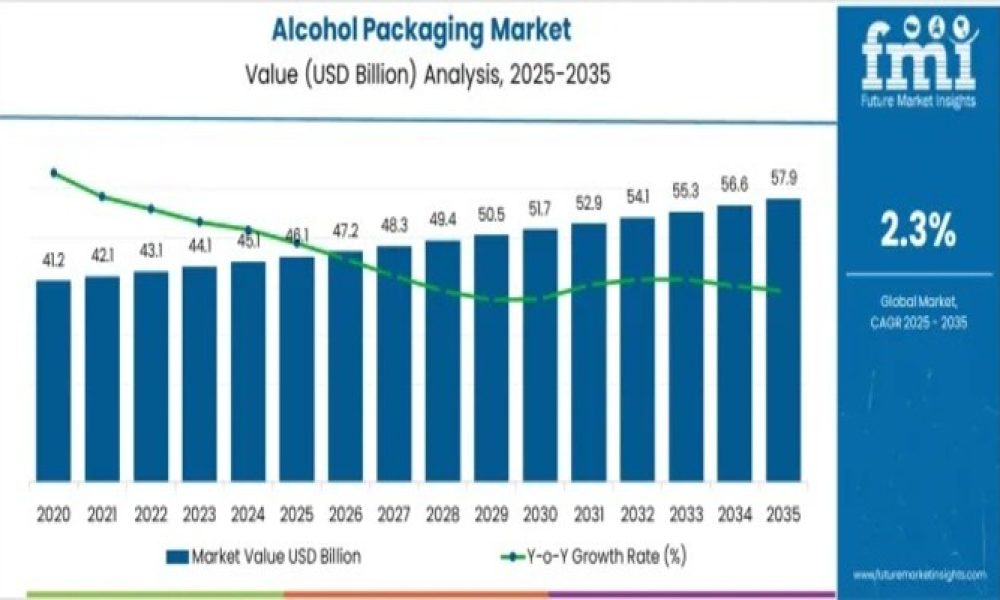
The global alcohol packaging market is entering a phase of steady and strategic expansion, with market value projected to rise from USD 46.1 billion in 2025 to USD 57.9 billion by 2035, growing at a compound annual growth rate (CAGR) of 2.3%. While growth remains measured, the market’s evolution reflects deeper shifts in consumer behavior, regulatory priorities, and brand strategies across beer, wine, spirits, and emerging ready-to-drink (RTD) categories.
Packaging has moved far beyond its traditional role of containment. Today, it plays a critical role in product preservation, safety, sustainability, branding, and consumer engagement, making it a strategic investment area for both established global players and emerging manufacturers seeking differentiation and scale.
Discover Growth Opportunities in the Market – Get Your Sample Report Now
Market Snapshot: Key Highlights
- Market Value (2025): USD 46.1 billion
- Forecast Value (2035): USD 57.9 billion
- Forecast CAGR (2025–2035): 2.3%
- Leading Material Segment: Glass (46.2% share in 2025)
- Top Application Segment: Beer (67.1% share in 2025)
- Key Growth Regions: North America, Europe, Asia-Pacific
- Major Players: Mondi, Amcor plc, ProAmpac, Crown, Ardagh Group, Diageo PLC, Ball Corporation, Berry Global, Tetra Pak, Saint-Gobain Group, and others
Glass Maintains Leadership as Sustainability and Premiumization Align
Glass continues to dominate alcohol packaging, accounting for 46.2% of total market share in 2025. Its enduring appeal lies in its premium perception, excellent barrier properties, and recyclability, making it particularly attractive for spirits and wine brands focused on authenticity and quality.
Manufacturers are innovating with:
- Lightweight glass bottles to reduce emissions
- Higher recycled content to support circular economy goals
- Custom shapes, colors, and embossing for brand differentiation
These innovations allow traditional glass packaging to remain relevant while aligning with modern sustainability mandates, particularly in Europe and North America.
Primary Packaging Drives Brand Identity and Consumer Choice
The primary packaging segment is expected to hold 35.0% of market revenue in 2025, underscoring its importance in preserving product integrity and influencing purchasing decisions. Advances in sealing technologies, ergonomic designs, and lightweight formats are helping producers improve operational efficiency while maintaining shelf appeal.
Primary packaging has become a brand’s first point of interaction with consumers, especially in premium spirits, craft beer, and boutique wine segments, where visual storytelling plays a decisive role.
Beer Packaging Leads on Volume and Innovation
Beer remains the largest application segment, contributing 67.1% of market revenue in 2025. The rise of craft beer, premium lagers, and non-alcoholic beer variants is driving demand for cans, glass bottles, and kegs that balance durability, freshness, and design flexibility.
Key trends shaping beer packaging include:
- Increased adoption of aluminum cans for portability and sustainability
- Growing demand for single-serve formats for events and on-the-go consumption
- Eco-friendly materials and recycled content to meet consumer expectations
Sustainability and Design Shape the Next Decade
Environmental responsibility is no longer optional. Alcohol producers are responding to stricter regulations and consumer awareness by adopting:
- Recyclable and biodegradable materials
- Reduced plastic usage in secondary packaging
- Compostable labels, closures, and inks
At the same time, design and branding innovation are intensifying. Interactive elements such as QR codes, smart labels, and traceability features are increasingly used to enhance transparency and consumer engagement, particularly among younger demographics.
Regional Growth Patterns Reflect Shifting Consumption
- Asia-Pacific is the fastest-growing region, fueled by rising disposable incomes and premium alcohol consumption in China and India.
- Europe remains a sustainability leader, supported by strong wine and spirits demand.
- North America continues to innovate in RTD beverages and craft beer packaging.
- Latin America and Africa offer long-term growth opportunities as local production and distribution expand.
Country-wise CAGR (2025–2035):
- India: 5.1%
- China: 4.2%
- Spain: 2.4%
- France: 1.2%
- United States: 0.8%
Opportunities for Established and Emerging Manufacturers
The alcohol packaging market offers fertile ground for both global leaders and new entrants. Established players such as Amcor, Ball Corporation, Ardagh Group, and Diageo are leveraging scale, partnerships, and circular packaging pilots. Meanwhile, smaller and regional manufacturers are gaining traction through customization, agility, and niche innovation, particularly in craft beverages and premium packaging solutions.
Manufacturers are focusing on:
- Automation and smart manufacturing
- Supply chain optimization
- Strategic mergers, acquisitions, and collaborations
Recent Industry Developments
- January 2025: Portman Group (UK) introduced Alcohol Alternatives Guidance for responsible marketing.
- December 2025: Tilden launched premium 200-ml bottles for non-alcoholic craft cocktails.
- November 2025: Diageo partnered with ecoSPIRITS to scale circular packaging across 18 markets.
- November 2025: Carlsberg Marston’s won The Grocer’s New Product and Packaging Award 2025.
Outlook: Packaging as a Strategic Growth Lever
From premium glass bottles to sustainable cans and innovative secondary packaging, the alcohol packaging market is steadily transforming. As brands compete on sustainability, aesthetics, and consumer experience, packaging will remain a key differentiator and growth enabler through 2035. For manufacturers willing to invest in new technologies and adaptive strategies, the coming decade offers resilient and rewarding opportunities.
Why FMI: https://www.futuremarketinsights.com/why-fmi
About Future Market Insights (FMI)
Future Market Insights, Inc. (FMI) is an ESOMAR-certified, ISO 9001:2015 market research and consulting organization, trusted by Fortune 500 clients and global enterprises. With operations in the U.S., UK, India, and Dubai, FMI provides data-backed insights and strategic intelligence across 30+ industries and 1200 markets worldwide.



