
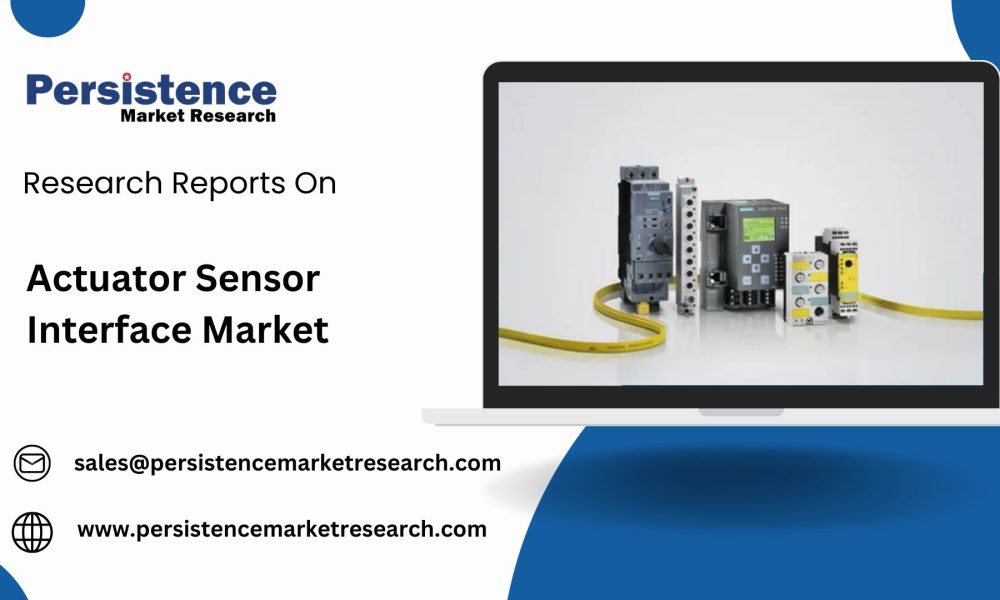
The global actuator sensor interface (ASI) market is poised for steady growth, expanding from US$ 2,019.3 Mn in 2025 to US$ 2,965.1 Mn by 2032, reflecting a compound annual growth rate (CAGR) of 5.7%. This growth trajectory is driven by the increasing integration of automation, industrial digitalization, and efficient communication systems across industries.
ASI technology plays a pivotal role in modern industrial automation by simplifying communication between control systems and field devices such as sensors and actuators. By reducing wiring complexity, ASI not only lowers installation costs but also minimizes transmission errors, accelerates production cycles, and enhances overall operational efficiency.
Understanding Actuator Sensor Interface (ASI)
Actuator sensor interface (ASI) is a standardized networking system that enables direct communication between field devices and controllers. Unlike traditional wiring systems, which often require extensive cabling and complex configurations, ASI streamlines the process through a two-conductor cable that provides both power and data transmission.
Key benefits of ASI technology include:
- Simplified wiring architecture – fewer cables mean reduced labor, lower material costs, and easier installation.
- Error reduction – minimized wiring complexity lowers the chances of transmission errors.
- Compact and scalable solutions – suitable for industries requiring smaller and flexible systems.
- High-speed communication – supports faster decision-making in process control environments.
- Enhanced system diagnostics – provides better monitoring for predictive maintenance and reduced downtime.
These advantages make ASI indispensable for industries such as automotive, manufacturing, logistics, and process control.
Elevate your business strategy with comprehensive market data. Request a sample report now: https://www.persistencemarketresearch.com/samples/35275
Key Industry Highlights
- Regional Leader – North America
North America is projected to account for 31.7% of the global ASI market in 2025, driven by strong adoption of industrial automation and smart manufacturing technologies. The presence of advanced manufacturing hubs, a focus on cost optimization, and significant investments in Industry 4.0 initiatives bolster regional demand. - Dominance of AS-i Masters
AS-i masters are expected to capture a 36.9% share in 2025, owing to their ability to streamline wiring, lower installation expenses, and efficiently manage data communication. As smart factories become more prevalent, AS-i masters will remain central to system integration. - Automotive Sector on the Rise
The automotive industry is anticipated to account for 29.5% of the ASI market in 2025. Factors such as increasing vehicle automation, the rise of ADAS (advanced driver-assistance systems), and the shift toward electric vehicles (EVs) are fueling demand for ASI systems to improve efficiency and reliability in production lines. - Trend Toward Compact Devices
Industries are increasingly seeking smaller, more compact devices to optimize space without compromising functionality. This has encouraged the development of miniaturized AS-interface components. - Push for Faster Decision-Making
In industries like chemical processing, automotive assembly, and electronics manufacturing, fast and reliable communication networks are crucial. ASI technology enables quicker data transfer, supporting real-time decision-making and reducing downtime.
Market Drivers
Several factors are contributing to the rising adoption of actuator sensor interface systems:
- Rising Industrial Automation
Automation is no longer a choice but a necessity for manufacturers aiming to remain competitive. ASI supports automation by integrating multiple devices into a unified network, reducing wiring complexity, and enabling real-time monitoring.
- Industry 4.0 and Smart Manufacturing
The global transition toward Industry 4.0 emphasizes smart factories, IoT-enabled devices, and predictive maintenance. ASI, with its high-speed and reliable communication, fits seamlessly into this ecosystem.
- Cost and Time Efficiency
Traditional wiring systems are both labor-intensive and prone to errors. ASI reduces installation time by up to 40% and lowers material costs, making it a cost-effective solution for manufacturers.
- Automotive Industry Transformation
The automotive industry is undergoing a transformation with the rise of EVs, hybrid vehicles, and ADAS integration. ASI plays a critical role in managing the increasing complexity of assembly lines, ensuring precision, speed, and reliability.
- Demand for Predictive Maintenance
Predictive maintenance, enabled by ASI’s diagnostic capabilities, reduces unexpected machine downtime, saving industries significant costs and increasing productivity.
Challenges Facing the Market
While ASI offers numerous benefits, some challenges remain:
- Compatibility with legacy systems – Upgrading from older wiring architectures to ASI requires initial investments.
- Cybersecurity concerns – As industrial networks expand, safeguarding them against cyberattacks becomes critical.
- High initial implementation costs – Though cost-effective in the long run, smaller manufacturers may find upfront costs challenging.
Sectoral Insights
Automotive Industry
As automotive manufacturing shifts toward EVs and autonomous technologies, ASI systems are crucial for managing high-speed, high-precision production lines. With a projected 29.5% share in 2025, automotive will remain a key growth driver.
Process Industries
Sectors such as oil & gas, chemicals, and pharmaceuticals require real-time data communication for decision-making. ASI ensures reduced downtime, precise monitoring, and enhanced safety.
Logistics and Warehousing
The boom in e-commerce has led to higher demand for automated warehouses and material handling systems. ASI supports smooth operations in conveyor systems, robotic sorting, and automated guided vehicles (AGVs).
Electronics and Semiconductors
In electronics manufacturing, where miniaturization and precision are critical, ASI provides reliable communication networks for advanced assembly lines.
Regional Outlook
North America
Strong demand for automation and government initiatives supporting advanced manufacturing make North America the leading market. The U.S. is at the forefront of adopting ASI in automotive and electronics sectors.
Europe
Europe is a mature market, with countries like Germany and France leading due to their emphasis on Industry 4.0, robotics, and energy efficiency. The region also benefits from established automotive giants.
Asia-Pacific
Asia-Pacific is emerging as the fastest-growing region, driven by China, Japan, and India. Rapid industrialization, investments in smart factories, and the region’s dominance in electronics manufacturing underpin growth.
Middle East & Africa
Adoption in the Middle East is fueled by demand in oil & gas and petrochemicals, where process automation is critical.
Latin America
Brazil and Mexico are driving adoption with expanding automotive and manufacturing sectors.
Future Opportunities
- Integration with IoT and AI
The combination of ASI with IoT-enabled sensors and AI-powered analytics will enable predictive decision-making, reducing downtime and optimizing production cycles. - Growth in Compact and Wireless Systems
Demand for smaller, wireless, and modular ASI components will grow, especially in industries with space constraints. - Sustainability and Energy Efficiency
With industries focusing on reducing carbon footprints, ASI’s ability to optimize energy use will gain importance. - Expansion in Emerging Markets
Countries in Asia-Pacific, Latin America, and Africa present vast untapped potential as industrial automation gains momentum.
Conclusion
The global actuator sensor interface (ASI) market is on a strong growth trajectory, projected to expand from US$ 2,019.3 Mn in 2025 to US$ 2,965.1 Mn by 2032. With a CAGR of 5.7%, the market’s future will be shaped by industrial automation, the automotive industry’s transformation, and the ongoing adoption of Industry 4.0.
ASI technology’s ability to simplify wiring, reduce costs, and enable fast, reliable communication makes it an indispensable part of modern manufacturing and process control. While challenges such as cybersecurity and initial implementation costs exist, the integration of IoT, AI, and compact system designs will open new avenues for growth.
As industries continue to embrace automation and digitization, actuator sensor interfaces will remain at the core of this evolution—supporting faster, smarter, and more efficient operations worldwide.
Related Reports:




