
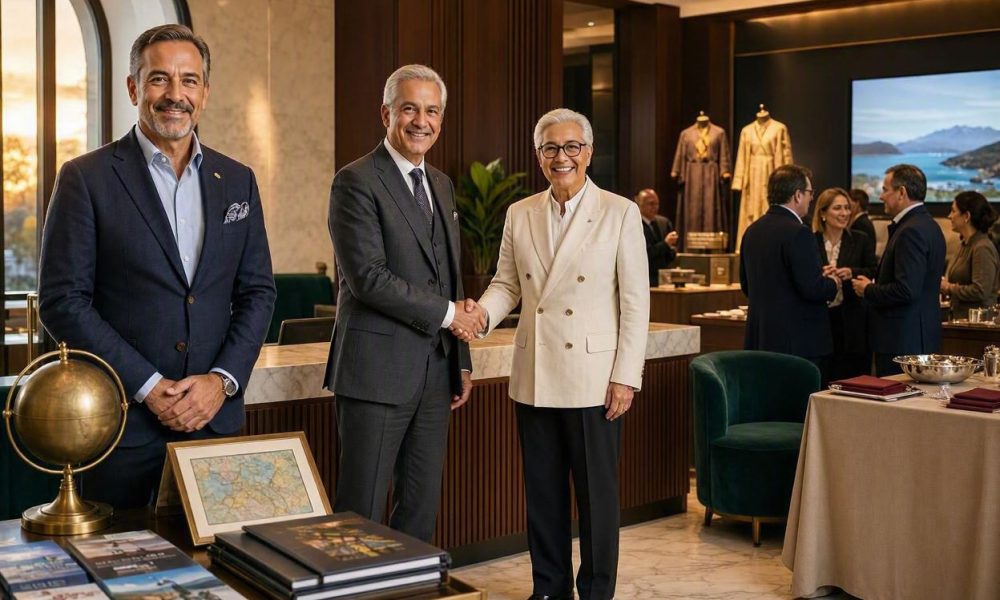
Travel agency owners, destination specialists and hotel executives can contribute local knowledge, international relationships and event facilities to honorary consular assignments, provided their professional resources support the appointing country’s objectives and the responsibilities authorized for the post.
WASHINGTON, DC, September 21, 2026
Hospitality and tourism professionals can bring practical strengths to honorary consular work, including experience welcoming international visitors, coordinating events and maintaining relationships with local businesses, particularly where the appointing government seeks stronger tourism, cultural and community connections.
Boutique travel agencies may understand how travelers discover and experience a destination, while hotel executives may have facilities and organizational expertise suited to receptions, exhibitions and visiting delegations, making both backgrounds potentially relevant to particular consular assignments.
Those advantages depend on the individual and the government’s priorities, however, because operating a luxury business does not establish eligibility for appointment, and access to impressive venues provides only one part of the resources needed for reliable public service.
Tourism Outreach Can Support Broader Consular Objectives
The Vienna Convention on Consular Relations includes developing commercial, economic and cultural relations among consular functions, providing a framework within which authorized tourism outreach can contribute to relationships between the appointing country and the community hosting its representative.
Practically, tourism can bring together commercial exchange, cultural awareness, and personal contact, allowing an honorary consul with relevant responsibilities to help introduce a country through its destinations, traditions, and opportunities for meaningful visits.
A proposed initiative might connect an official tourism organization with local travel businesses or help arrange a cultural presentation, with the supervising mission deciding whether the activity fits its priorities and the honorary consul’s assigned role.
That framework allows different approaches across countries and locations, rather than establishing a universal requirement that honorary consuls promote tourism or act as representatives of a national tourism board in every commercial or public setting.
Boutique Travel Agencies Can Contribute Destination Knowledge
An owner experienced in designing specialized travel may understand how visitors choose destinations, what information they need before booking, and which experiences appeal to different audiences, providing useful insight when a government considers local tourism outreach.
That knowledge could help explain whether potential visitors are interested in heritage, nature, food, education or business travel, allowing a proposed event or information session to address specific questions instead of relying on general promotional claims.
In a hypothetical example, an agency specializing in cultural travel could help identify local organizations interested in an exhibition about the appointing country, bringing relevant audiences together while leaving the official presentation and messaging subject to the mission’s direction.
The value comes from informed understanding of travelers and distribution channels. At the same time, any claim that a particular campaign increased arrivals or spending would require supporting evidence rather than an assumption based on the organizer’s professional Background.
Destination Management Experience Supports Coordination
Destination management professionals may bring experience assembling itineraries, organizing transport, and coordinating several suppliers, skills that can help when an honorary consular assignment includes support for an approved delegation, cultural program, or familiarization visit involving local participants.
Their contribution could include identifying practical scheduling constraints, estimating travel time between venues, and ensuring that organizers understand the services available, helping a supervising mission evaluate whether a proposed program is realistic before commitments are made.
For a hypothetical visiting delegation, that experience might reveal that a planned sequence of meetings leaves insufficient time for transport or interpretation, allowing the organizers to revise the arrangements while preserving the purpose of the visit.
Operational expertise is most useful when responsibilities are agreed in advance, including who approves the itinerary, who communicates changes and which organization is responsible for contractual commitments, so that coordination remains dependable as the program develops.
Luxury Hotels Can Offer Suitable Event Facilities
A hotel executive may have access to meeting rooms, accommodation, catering and experienced event teams, resources that could support receptions, business presentations or cultural gatherings when the facilities match the requirements of the proposed official activity.
A suitable venue can make participation easier by bringing several services into one location, particularly when visitors require accommodation and meeting space, although the quality of the arrangement depends on actual access, availability and agreed operating conditions.
Ownership and management should also be distinguished, because a senior executive may need corporate approval before offering discounted space, committing staff time or making arrangements that affect the hotel’s commercial operations and contractual responsibilities during an event.
The most useful assessment therefore considers what facilities can actually be provided, on what terms and with whose approval, rather than assuming that an executive’s job title guarantees unrestricted access to every resource within the property.
Official Visits Require More Than an Attractive Venue
Hosting a foreign dignitary can involve detailed coordination over schedules, invitations, accessibility, and communications, making hospitality experience useful while leaving the responsible mission and relevant authorities to determine official protocol and any necessary security arrangements for the visit.
A hotel team may be able to explain the building’s layout, manage catering, and coordinate arrivals. Still, the honorary consul should confirm which arrangements require instructions or approval before presenting a proposed program as an official commitment.
A practical planning approach would first identify the event’s purpose and expected participants, then select facilities that support those needs, avoiding unnecessary complexity that makes attendance or coordination harder for the people the event is intended to serve.
For example, a small meeting focused on tourism cooperation may benefit from a quiet conference room and reliable interpretation. At the same time, a public cultural exhibition may need accessible display space, suitable opening hours and arrangements for a broader audience.
Cultural Events Can Connect With Wider Communities
Hospitality venues can provide space for film screenings, food presentations, exhibitions or discussions that introduce aspects of the appointing country, especially when organizers work with appropriate cultural partners and develop a program that serves a clear public purpose.
An honorary consul with relevant responsibilities could help connect artists, community organizations and a supervising mission, using local relationships to identify potential collaborators while ensuring that the program reflects the participants’ expertise and the government’s agreed objectives.
Diaspora events may benefit from similar coordination, although a community’s needs should be explored through consultation rather than inferred from the availability of a hotel ballroom or the preferences of a small group of established business contacts.
A thoughtful program could accommodate different ages, languages and accessibility needs, recognizing that meaningful community engagement depends on who can participate and what the event offers, alongside the quality of the venue and the efficiency of its organization.
Visitor Assistance Draws on Local Service Knowledge
Professionals accustomed to assisting travelers may know local transport providers, accommodation options and other practical services, knowledge that can help an honorary consul identify useful contacts when assistance to nationals forms part of the authorized responsibilities of the post.
In a hypothetical case involving a stranded visitor, that familiarity could help clarify available transport or accommodation options and connect the person with the appropriate mission, without implying that the honorary consul must personally fund the resulting arrangements.
The distinction between customer service and consular assistance remains important because an ordinary booking problem, an urgent welfare concern and a request for official documentation may require different responses from different organizations within the local and governmental systems.
A useful preparation exercise would identify the relevant contact channels and escalation arrangements before an urgent request arrives, allowing the honorary consul to apply local knowledge within an agreed process rather than improvise commitments beyond the assigned role.
Luxury Market Experience Is Only One Possible Strength
Experience serving high-end travelers may develop attention to detail, discretion, and complex itinerary management. Still, those capabilities do not mean luxury-sector professionals are inherently better suited to honorary consular service than candidates from other tourism or community backgrounds.
The needs of an honorary consular district might involve students, families, seasonal workers or residents with limited resources, so the candidate’s ability to communicate effectively across different circumstances deserves attention alongside their experience with affluent international clients.
Similarly, an accessible community venue may be more appropriate for a particular event than a luxury hotel, depending on the audience, purpose, and venue; the location is an operational decision rather than a measure of official prestige.
A strong candidate can explain how their experience translates into the proposed public responsibilities, including how they would adapt their approach to people whose needs differ substantially from those encountered in the normal course of their commercial work.
Commercial Bookings and Official Activities Need Clear Arrangements
A travel agency owner or hotel executive may face overlapping interests when an official event could generate revenue for their own business, so it helps to discuss procurement, pricing, and decision-making arrangements in advance before selecting a supplier.
For a hypothetical tourism reception, the supervising mission could establish who chooses the venue and approves expenditure, giving participants a clear understanding of how the decision is made and how any personal commercial interest has been addressed.
The appropriate arrangement will depend on applicable rules and the circumstances, so neither a universal ban on using the officeholder’s facilities nor automatic permission to direct official business toward those facilities should be assumed without examining the requirements.
Written agreements can help clarify costs, sponsorship and responsibilities, allowing both the mission and the business to understand what has been promised while reducing the chance that donated services or discounted facilities create unexpected expectations about future commercial opportunities.
Trust Depends on How the Appointment Is Used
An honorary consul’s professional relationships can support useful introductions and cooperation. Still, people approaching the office should be able to understand whether they are discussing an official matter, attending a public event, or considering a private commercial transaction.
The ICIJ and ProPublica Shadow Diplomats investigation documented controversies involving honorary consuls and weaknesses in oversight, showing why individual conduct matters without establishing that hospitality businesses, as a category, are unsuitable for participation in consular networks.
For a tourism professional, practical transparency could include clearly identifying commercial offers and explaining who organizes an event, so that the presence of an honorary consul does not leave participants uncertain about sponsorship, official endorsement, or payment obligations.
The same clarity benefits the business itself by defining the commitments associated with the appointment, allowing colleagues and customers to understand how public responsibilities fit alongside existing services without relying on assumptions about the meaning of the consular title.
Availability and Continuity Matter Alongside Facilities
Hospitality and travel businesses may involve demanding schedules, frequent travel and periods of concentrated activity, so a prospective honorary consul should examine whether the proposed responsibilities can receive consistent attention alongside the realities of their existing professional commitments.
A realistic operating plan could set out appointment availability, communication channels and arrangements for referring requests during absences, giving the supervising mission a concrete basis for assessing how the individual intends to maintain reliable service throughout the year.
Administrative employees may help with scheduling and correspondence where permitted. Still, their commercial employment should not be treated as establishing official consular authority, making clear instructions necessary whenever staff supports an officeholder who also manages the business.
Planning should also consider changes in employment or ownership, because access to a hotel’s facilities or a travel agency’s staff may change, requiring the honorary consul and supervising mission to review how the official assignment will continue.
Professional Experience Must Match the Government’s Assignment
For readers exploring the role, Amicus International Consulting’s honorary-consul overview provides introductory Background. At the same time, the appointing government and receiving country remain responsible for determining recognized status and the official responsibilities that an individual may exercise within the consular district.
The company’s information about second-passport services concerns a separate subject involving citizenship documentation, which should not be confused with appointment to public office or treated as independently establishing authority to perform consular functions for a foreign government.
Under the Convention, appointment by the sending state and admission by the receiving state are distinct governmental steps. Hence, business connections, event facilities, and tourism experience can support a suitability assessment without creating recognized status on their own.
A well-developed proposal from a hospitality or travel professional would identify the government’s local needs, explain the resources genuinely available, and show how tourism outreach, cultural engagement, or visitor assistance could be delivered consistently within the authorized assignment.




