
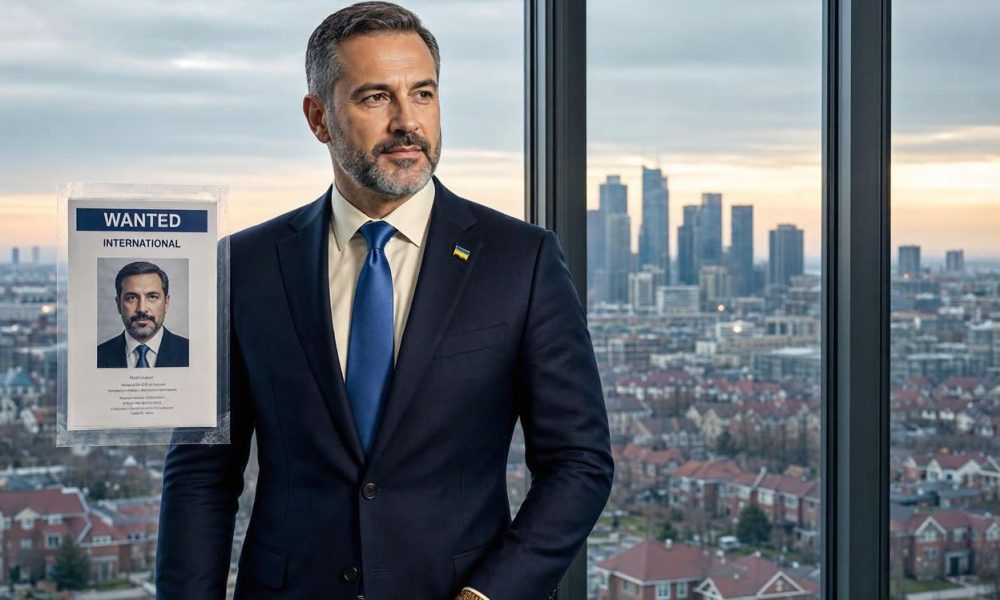
The Ukrainian mining and industrial tycoon received Cypriot citizenship shortly before Ukrainian police listed him as wanted over alleged money laundering. Still, no verified evidence establishes an American indictment, FBI fugitive notice, Interpol alert, or passport-enabled asset shield.
WASHINGTON, D.C. — Vadim Shulman, a Ukrainian businessman whose interests have included mining, chemicals, energy, telecommunications and extensive international investments, obtained citizenship from Cyprus through the Mediterranean island’s controversial investment-naturalization program in July 2019.
Approximately two weeks after Cypriot authorities approved his application, Ukrainian police reportedly placed Shulman upon a domestic wanted list as a suspect in a money-laundering investigation, an allegation he denied through representatives and public reporting.
That compressed sequence raises legitimate questions about whether Cyprus adequately evaluated his background, political exposure, and developing legal risks before granting citizenship that carries the rights and mobility associated with membership in the European Union.
However, the available public record does not show that the Federal Bureau of Investigation placed Shulman upon an international wanted list, that United States prosecutors indicted him for wire fraud, or that Interpol circulated a Red Notice under his name.
The American real estate and fraud elements appear to combine Shulman’s civil disputes involving an Ohio steel mill with unrelated federal prosecutions of defendants with the surname Schulman, including American lawyers and property investors.
There is likewise no verified evidence that Shulman used his Cypriot passport to establish trusts, defeat American seizure warrants, or travel through Interpol controls without detection. In contrast, later Cypriot reporting listed him among investors facing citizenship revocation.
Who Is Vadim Shulman?
Born in 1960 in Kryvyi Rih, an industrial city central to Ukraine’s iron and steel economy, Shulman developed extensive business interests during the post-Soviet privatization period and became associated with several of the country’s most powerful commercial figures.
His portfolio reportedly spanned mining, ferroalloys, chemicals, energy, and telecommunications. He also led the Ukraine Tennis Federation and was involved with the Jewish community and philanthropic organizations across Europe and the former Soviet region.
Shulman was once a close business partner of Ihor Kolomoisky and Gennadiy Boholiubov, the former owners of PrivatBank, before their relationship deteriorated and led to years of contentious litigation across England, the British Virgin Islands, and the United States.
Those disputes involved allegations that Kolomoisky and Boholiubov deprived Shulman of substantial proceeds and interests connected with industrial ventures, including Warren Steel Holdings, a company formed to acquire and operate a steel mill in Warren, Ohio.
Shulman consequently appeared in American courts primarily as a plaintiff seeking recovery from former partners rather than as a criminal defendant charged by federal prosecutors with laundering money through United States real estate.
That distinction is fundamental because civil allegations filed by a business person against former partners cannot be transformed into an FBI prosecution of the business person merely because the litigation discusses fraud, money laundering and American industrial assets.
Cyprus Approved His Application During July 2019
Leaked government records published through The Cyprus Papers investigation identified Vadim Shulman, born in 1960, as an approved investment-citizenship applicant whose Cypriot naturalization formally received final official government authorization on July 11, 2019.
The program allowed wealthy foreign applicants to obtain Cypriot nationality after making qualifying investments, commonly involving expensive real estate, while imposing no conventional requirement that each successful investor develop deep residence, language, or cultural connections with Cyprus.
Cypriot citizenship also conferred European Union citizenship, giving a successful applicant extensive residence and movement rights across participating European countries while providing a nationally issued passport recognized by governments and financial institutions worldwide.
Public reporting also identified Shulman as holding Ukrainian, Israeli, and Russian citizenship. However,h details on how each nationality was acquired, retained, or treated under Ukrainian law require careful qualification rather than assumptions drawn from incomplete databases.
The available leak confirmed Cypriot approval, but it did not demonstrate that Shulman joined the program to evade an FBI investigation, protect criminal proceeds, or bypass an Interpol notice that had already been circulated when his application was considered.
No verified application file reviewed publicly disclosed the precise assets or approved investment through which he qualified, making any categorical claim about a particular real estate purchase, trust arrangement or source-of-funds representation unsupported without additional documentation.
Ukraine Listed Him as Wanted Two Weeks Later
Ukraine’s National Police reportedly listed Shulman as wanted on July 26, 2019, after identifying him as a suspect in a money-laundering investigation, placing the development approximately fifteen days after Cyprus approved his citizenship application.
Contemporary Ukrainian reporting described the notice as appearing within the Interior Ministry’s wanted-person database, while also stating that no preventive measure or comparable judicial restraint had yet been selected publicly in connection with the allegation.
Shulman denied the accusation, and the public sources reviewed for this article do not establish a final conviction, trial judgment, or adjudication resolving the alleged laundering offense against him within Ukraine’s domestic legal system.
The timing nevertheless raised a serious due-diligence question because investigators may have been developing the case before the public listing, while Cyprus was simultaneously completing one of the most consequential government benefits available to a wealthy foreign applicant.
It remains critically important to describe the notice accurately as Ukrainian rather than American, since national investigators and databases operate independently from the FBI, United States federal prosecutors, and Interpol’s separate international police-cooperation channels.
A person can appear upon a domestic wanted list without becoming the subject of an Interpol Red Notice. At the same time, a Red Notice itself requires a separate request, compliance review, and publication or restricted circulation through Interpol’s systems.
No Verified FBI Wanted Notice Has Emerged
Searches of United States Justice Department announcements, federal court materials, FBI public notices and reputable international reporting produced no reliable evidence that Vadim Shulman was indicted or officially declared wanted by American law-enforcement authorities.
No identified federal charging document assigns him counts involving wire fraud, money laundering, bank fraud, conspiracy, or criminal forfeiture, and no public FBI profile requests assistance locating or arresting him within the United States or another country.
The absence of a public notice does not prove investigators never reviewed information about him, particularly because law-enforcement inquiries may remain confidential before charges. Still, an unpublished possibility cannot support reporting that an international warrant unquestionably existed.
American investigators extensively examined Kolomoisky and Boholiubov’s alleged laundering of PrivatBank money through United States properties and industrial businesses, some historically connected to ventures in which Shulman claimed a legitimate ownership or partnership interest.
That overlap may explain how Shulman’s name became associated with an FBI investigation. However, association with witnesses, counterparties, victims, plaintiffs, or disputed assets does not establish that the individual was a criminal target or wanted fugitive.
Responsible reporting must identify the issuing court, case number, charging district, statutory offenses and warrant date before asserting publicly that federal prosecutors formally sought someone’s arrest through the FBI and international police-cooperation systems.
Several Unrelated Schulman Prosecutions Invite Confusion
During December 2020, federal prosecutors in Maryland indicted attorney Jeremy Schulman for alleged wire fraud, mail fraud, bank fraud, and money laundering involving approximately $12.5 million in frozen assets held on behalf of the Somali government.
The defendant was an American lawyer from Bethesda, Maryland, whose surname included the letter “c,” and the alleged scheme concerned claimed authority to recover Somali sovereign assets rather than Vadim Shulman’s Ukrainian mining businesses or Cypriot citizenship.
A separate federal prosecution involved real estate investors Fredrick Schulman, Moshe Silber, and Chaim Puretz, who admitted participating in a $119 million mortgage-fraud conspiracy involving apartment and commercial properties in Ohio and Michigan.
The Justice Department’s official description of that property case identifies Fredrick Schulman as the defendant. It describes inflated purchase prices, falsified documents, and deceptive loan closings without mentioning Vadim Shulman or a Cyprus passport.
These cases use the same vocabulary as the proposed account, including federal prosecutors, wire fraud, multimillion-dollar real estate, and lengthy financial investigations, making accidental combination plausible when names and case details are not checked carefully.
Matching only a similar surname is never sufficient for criminal attribution, because reporters must compare complete names, ages, nationalities, residences, corporate roles, docket numbers,s and alleged conduct before assigning an indictment to a particular person.
Shulman Was a Plaintiff in American Litigation.
In August 2019, Shulman and related entities filed a civil action in Delaware against Kolomoisky, Boholiub, and numerous associated companies, alleging fraud, conversion, unjust enrichment, fiduciary breaches,s and coordinated misconduct involving industrial and financial investments.
His complaint asserted that former partners deprived him of money and property connected with Warren Steel, an Ohio mill acquired through a joint venture, while allegedly using the industrial company as part of a broader money-laundering network connected with PrivatBank.
The defendants disputed his allegations and challenged the action on jurisdictional, limitation, and corporate-law grounds, creating a complex private case in which courts had to determine whether Shulman had viable claims and the proper procedural vehicle for pursuing them.
Reporting from Delaware during 2025 showed the case continuing through arguments over dismissal, with Shulman alleging losses approaching $60 million while the defense maintained that his claims were untimely and belonged in other jurisdictions.
This record is almost the reverse of the proposed circumstances because Shulman invoked an American court to pursue assets and remedies, rather than federal prosecutors charging him with secretly laundering proceeds through a nationwide real estate portfolio.
Civil litigation does not prove every allegation made by the plaintiff. Still, its docket and pleadings provide strong identity evidence showing which party accused whom and what role Shulman claimed in the disputed transactions.
The Ohio Steel Mill Was Not a Shulman Criminal Case
Warren Steel became central to Shulman’s conflict with Kolomoisky and Boholiubov because the former partners participated in a venture intended to acquire, finance, and operate the struggling industrial facility in northeastern Ohio.
Shulman alleged that he contributed substantial money and partnership value. At the same time,e his associates manipulated ownership, financing, and transfers for their own benefit, accusations the defendants contested as the dispute moved through several national and offshore courts.
The steel mill later closed, eliminating more than 150 jobs. At the same time, the litigation linked its corporate structures to broader allegations of money removed from PrivatBank and invested through numerous American companies and physical assets.
Those circumstances could attract FBI or Justice Department interest in transactions involving Kolomoisky, Boholiubov, and associated entities. Still, they do not establish that the United States government indicted, wanted, or accused Shulman.
Indeed, Shulman stated that he had been defrauded through the venture and only learned much later that the facility allegedly served purposes beyond the legitimate industrial partnership he believed he had joined.
The correct formulation is that Shulman participated in, and later litigated over, an American steel investment implicated in wider laundering allegations against others, not that prosecutors accused him of directing a United States property-fraud network.
His Offshore Structures Predated the Cypriot Passport
Paradise Papers reporting identified a network of companies in the Isle of Man and British Virgin Islands that advisers established for Shulman to own, operate and service a Gulfstream G450 aircraft purchased in 2012.
The aircraft reportedly cost approximately $35 million. At the same time, internal documents from offshore services provider Appleby characterized the engagement as high risk and recorded corporate arrangements used to administer the jet across international jurisdictions.
Whatever compliance questions those structures presented, they existed approximately seven years before Cyprus approved Shulman’s citizenship, making it chronologically impossible to attribute their original establishment to powers or privileges arising from his 2019 Cypriot passport.
Offshore companies can serve lawful ownership, registration, financing, leasing, and liability-management purposes for internationally operated aircraft. However,h secrecy, false ownership information, or illicit funds can transform otherwise legal structures into instruments of financial misconduct.
The published materials did not establish that the companies held criminal proceeds or defeated United States seizure warrants. At the same time, an adviser’s high-risk classification indicates a need for enhanced review rather than constituting a judicial finding of illegality.
The evidence therefore supports describing Shulman as an experienced user of international corporate structures. Still, it does not support claiming that Cypriot citizenship enabled him to create those entities or immunized their assets from enforcement.
American Real Estate Does Not Establish a Fraud Prosecution
Public property reporting identified Shulman as purchasing a Malibu oceanfront residence for approximately $25 million in 2014, supported partly by a substantial mortgage from an American financial institution before the Cyprus naturalization.
He reportedly sold the California property for approximately $40 million in early 2022, creating another verifiable American real estate connection that could be mistakenly linked to unrelated mortgage-fraud prosecutions bearing the Schulman surname.
A high-value property purchase, mortgage, or profitable sale is not evidence of wire fraud, money laundering, or asset concealment unless investigators trace unlawful proceeds, identify deceptive loan representations, or establish other elements required by the applicable criminal statutes.
No reviewed source states that American authorities seized the Malibu property as criminal proceeds, obtained a forfeiture warrant against it, or alleged that Shulman used Cypriot nationality to prevent enforcement against the residence or sale proceeds.
The fact that an asset was not seized does not prove that a passport protected it, because authorities may lack evidence of criminal proceeds, jurisdictional grounds, timely claims, or any legal basis to restrain an otherwise ordinary transaction.
Claims of passport-enabled asset protection therefore require an identified enforcement order, ownership structure, blocking action, and documented official failure directly attributable to citizenship, none of which has been produced concerning Shulman’s American property and investment history.
A Cypriot Passport Would Not Defeat an Interpol Alert
Interpol notices and national border alerts generally connect to a person’s identifying information rather than a single passport number, allowing authorities to compare names, dates of birth, photographs, fingerprints, and other available identifiers across documents.
A second passport may initially complicate a poorly maintained database. Still, it does not lawfully erase an arrest request or guarantee that automated checks will overlook a traveler who presents an alternative nationality at inspection.
A Red Notice is not an international arrest warrant. It does not compel every member country to detain the subject, because each government applies domestic law when deciding whether provisional arrest, immigration action or further review is authorized.
No reliable record examined for this article establishes that Interpol issued any Red Notice or diffusion concerning Shulman, making it impossible to claim that his travel history demonstrates successful passage through alerts that may never have existed.
Even if an international notice had circulated, evidence would still be required showing when and where he traveled, which passport he presented, whether officials received an alert, and why no detention followed under the destinationcountry’ss law.
Without those details, the assertion that Cypriot citizenship ensured travel beyond Interpol red flags converts a hypothetical technical weakness into a factual claim about specific conduct that the available record does not substantiate.
Cyprus Later Reviewed and Reportedly Revoked His Citizenship
After the Cyprus Papers disclosures and an undercover investigation exposed systemic program weaknesses, Cyprus terminated its investment-citizenship program during 2020. It began reviewing naturalizations that may have violated eligibility rules or relied upon incomplete information.
Cypriot newspaper Politis reportedly included Shulman in November 2024 within a group of 77 principal investors whose golden passports had been revoked or placed through the government’s deprivation process, alongside affected relatives connected with the original applications.
Public reporting concerning the list noted that deprivation can involve written notice, an opportunity to challenge the proposed action, independent review and a final Cabinet decision, making procedural status important when describing whether every revocation has become conclusive.
The government historically withheld many affected names, and English-language confirmation concerning Shulman’s completed deprivation remains limited. Hence, credible Cypriot reporting identified him among the investors subjected to revocation action.
That development substantially weakens any portrayal of citizenship as permanent insulation because the issuing state retained authority to investigate the naturalization and withdraw the passport when officials concluded that legal requirements had not been satisfied.
It also strongly reinforces why lawful second-citizenship planning requires full disclosure of investigations, wanted notices, source-of-funds information, and international corporate interests during both the original application process and any subsequent formal governmental review.
Cyprus Faced a Serious Timing and Screening Problem
Shulman’s application was approved shortly before the Ukrainian wanted listing became public, creating uncertainty about whether the underlying investigation had begun early enough to appear within competent local police, court, or intelligence checks available to Cypriot reviewers.
If Ukrainian authorities had not yet entered searchable data or communicated their suspicions internationally, Cyprus may not have received a conventional database match even after conducting the background checks required under its program at that time.
However, strong due diligence should extend beyond automated criminal-record certificates by examining litigation, adverse media, political and commercial associations, offshore structures, unexplained wealth, and direct intelligence obtained through credible investigators in relevant countries. Shulman’s exceptional wealth, ties to PrivatBank’s former owners, international litigation, and extensive offshore portfolio already justified enhanced review, even without a publicly visible criminal proceeding on the date his application received final approval.
Once the Ukrainian notice publicly emerged, Cyprus should have promptly reassessed whether the new information affected representations in the application, program eligibility, source-of-funds conclusions, or the country’s broader reputational and European legal obligations.
This analysis concerns the integrity of the approval process rather than presuming criminal guilt, because Shulman denied Ukraine’s allegations and no final laundering conviction appeared in the public record reviewed for this article.
Citizenship Does Not Create an Asset-Seizure Shield
Citizenship determines nationality and provides associated residence, political, and consular rights. At the same time, trusts and companies are separate legal arrangements governed by their constituting documents, ownership facts, and the laws of the jurisdictions where they operate.
A Cypriot citizen can establish companies or trusts where local law permits. Still, the passport does not prevent courts from identifying beneficial ownership, freezing property, compelling disclosure, or recognizing foreign judgments through applicable cooperation and enforcement procedures.
Complex structures may increase the time and expense required to trace wealth, particularly when nominees and several offshore jurisdictions are involved. However, complexity should not be confused with lawful immunity from seizure or judicial examination.
To prove that Shulman shielded primary wealth from American warrants, reporting would need to identify the targeted assets, issuing court, warrant or forfeiture order, corporate chain, enforcement attempt, and specific legal obstacle created by his Cypriot nationality.
No such supporting evidence was found, while his public litigation, aircraft structures, Malibu residence, and corporate investments show international wealth management without establishing that American authorities have valid seizure claims against any of those assets.
The key legal distinction is that legitimate international planning can diversify residence and holdings, whereas concealing criminal proceeds or frustrating lawful court orders remains prohibited, regardless of how many citizenships an individual ultimately holds.
Why Accurate Attribution Matters
Alleging that a named businessman became an FBI fugitive for laundering and wire fraud is substantially more damaging than accurately reporting a disputed Ukrainian investigation, making precise attribution essential for fairness, credibility, and protection against avoidable legal exposure.
The supported facts already justify substantial scrutiny because Cyprus granted Shulman valuable European citizenship immediately before Ukrainian authorities publicly identified him as wanted, and his financial history included numerous offshore companies and high-value international assets.
Those facts do not need embellishment through American charges belonging to other people, particularly when official Justice Department records clearly identify defendants with different names, residences, professions, and alleged schemes within separate federal districts.
Similarly, a real domestic wanted listing should not automatically become an Interpol notice, since international circulation requires additional procedural steps and national governments retain their own authority when deciding whether an alert supports detention.
Journalists should preserve the distinction between allegations, charges, notices and convictions, while also separating criminal cases from civil disputes in which Shulman asserted that former partners had defrauded him through American and offshore companies.
These corrections strengthen accountability reporting by focusing attention upon Cyprus’s real approval failure and subsequent review, rather than offering sensational claims that collapse when readers compare names against accessible court and government documents.
The Accurate Outcome
The available evidence establishes that Shulman accumulated considerable wealth through Ukrainian industrial and communications interests, maintained offshore corporate structures, held several nationalities and obtained Cypriot investment citizenship through an approval formally dated July 11, 2019.
Ukraine placed him upon a wanted list approximately two weeks later as a suspect in alleged money laundering. At the same time, Shulman denied the accusation, and no review identified any final criminal Judgment resolving the allegations.
The evidence does not establish that the FBI placed him upon an international wanted list, that United States prosecutors charged him with wire fraud, or that Interpol circulated an arrest alert enabling authorities to detain him worldwide.
American federal fraud cases bearing a similar surname involved Jeremy, Fredrick, and other Schulman defendants. At the same time,e Vadim Shulman’s principal United States proceedings concerned civil claims he brought against former business partners over disputed industrial investments.
His Isle of Man and British Virgin Islands aircraft companies existed years before his Cypriot naturalization, defeating the proposed causal claim that the European passport enabled him to establish the underlying offshore network throughout Western Europe.
No documented seizure warrant showed failure because of his citizenship, and no verified travel incident showed he used the Cypriot passport to cross a border after an Interpol match without triggering appropriate official review.
Later Cypriot reporting included Shulman among investors subjected to golden-passport revocation action, suggesting that the citizenship ultimately became another contested legal interest rather than a permanent guarantee of movement, privacy or asset protection.
For readers, the defensible conclusion is exact: Shulman’s Cyprus passport and Ukrainian wanted status are documented, but the available public record does not support the proposed FBI prosecution, Interpol-evasion and American asset-shielding narrative.




