
The guilty plea moved the matter into the final sentencing phase.
WASHINGTON, D.C. — The Patrick Lutts Jr. case spent more than two decades waiting for the defendant to return to an Orange County courtroom.
Once he was back, the final stage moved in a matter of weeks.
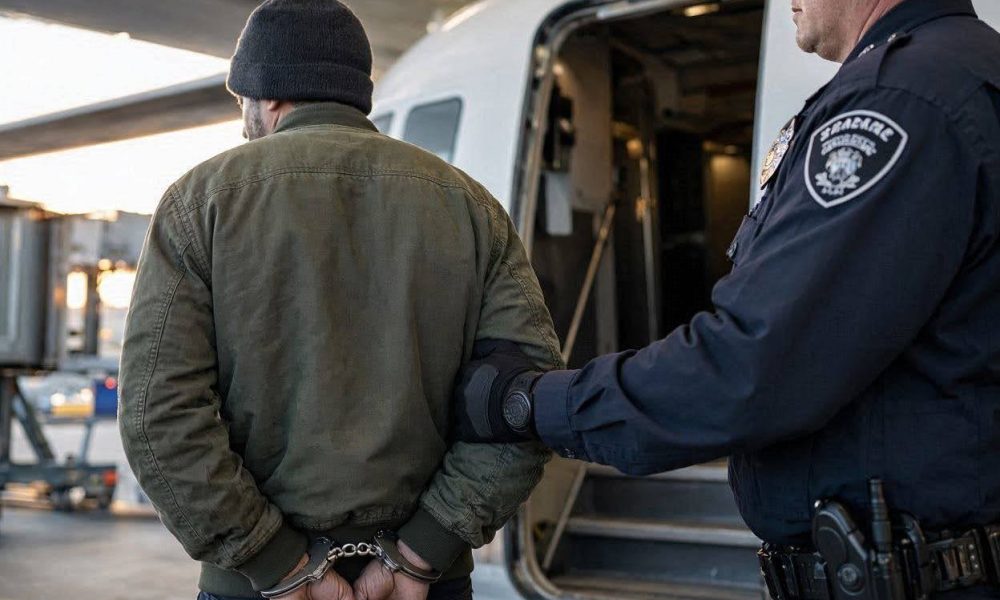
U.S. Marshals escorted Lutts from Toronto to Orlando on February 5, 2026, completing the Canadian extradition process and placing him in Florida custody. He still faced the two DUI manslaughter charges filed after a Christmas morning crash killed Nancy Lopez Leon, 19, and her boyfriend, Darvin Javier DeJesus-Taboada, 18.
Lutts could have required prosecutors to take the case to trial. Instead, on March 27, he changed his plea to guilty on both counts.
The plea eliminated the need for a jury to determine guilt based on evidence collected in 1998. It moved the court directly into sentencing, where the consequences of the crash, the years of flight and the time Lutts had already spent in Canadian custody could be addressed.
Under the plea agreement, the judge sentenced Lutts to 13 years in prison, followed by two years of probation. His driving privileges were permanently revoked, and he received credit for the time he had been incarcerated in Canada.
Lutts apologized to the victims’ families before he was fingerprinted and returned to custody. Nancy’s relatives described the future she and Darvin had planned and the pain that continued through nearly three decades of delay.
The guilty pleas did more than close the prosecution. They completed the hearing process Lutts had interrupted when he failed to appear in October 2003.
The Charges That Survived the Delay
The legal foundation of the plea remained the same as it had been when prosecutors filed the case in March 1999.
During the early morning hours of December 25, 1998, Lutts’s pickup truck struck the vehicle carrying Nancy and Darvin near State Road 528 in Orlando.
The collision ejected the two teenagers from their car, killing them both.
Florida Highway Patrol investigators said Lutts smelled strongly of alcohol after the crash. His blood alcohol concentration was measured at 0.272, more than three times Florida’s legal limit of 0.08.
The two deaths resulted in separate counts of DUI manslaughter.
Each count represented a life lost. Although both charges arose from the same collision, the case did not treat Nancy and Darvin as a single legal consequence.
The passage of time did not reduce the seriousness of the counts. The arrest warrant remained active, and prosecutors preserved the case while Lutts lived outside the United States.
His eventual guilty pleas resolved allegations that had remained formally unanswered for nearly 27 years.
The Hearing That Never Happened in 2003
Lutts initially returned to the legal process after another impaired-driving collision led to his arrest in Connecticut in June 2002.
He was released on a $5,000 bond and scheduled to attend an Orange County plea hearing on October 1, 2003.
The proceeding appeared likely to bring the case closer to a conclusion. Instead, Lutts failed to appear and left the United States.
Canadian records later showed that he attempted to enter Canada at Niagara Falls two days before the hearing. Border authorities refused him admission because of the pending Florida case, but he subsequently reached Toronto.
The missed appearance prevented the court from accepting any plea, determining guilt or imposing a sentence. An arrest warrant preserved the prosecution, but the courtroom could not proceed without the defendant.
For more than two decades, that unfinished plea stage became the defining procedural fact of the case.
Lutts was not tried and acquitted. The charges were not dismissed. He simply remained beyond the court’s physical reach.
When he finally pleaded guilty in 2026, the case effectively resumed from the stage he had abandoned in 2003.
The Toronto Years
Lutts settled in Toronto’s Church and Wellesley neighborhood, where he reportedly lived with his longtime partner in the same apartment for more than 20 years.
Canadian court documents described him as having no lawful immigration status. He used the name Pat Lighthelp in public and worked as an online psychic, relationship adviser and life coach.
He also hosted monthly horror-themed trivia events at a Toronto bar and participated in the city’s entertainment community.
The public persona appeared disconnected from the Florida defendant named in the warrant.
That separation ended after an anonymous person contacted a Florida crime-reporting service in November 2023. The tipster reportedly used facial-comparison technology, social media photographs and public information to connect Lutts with Pat Lighthelp.
Toronto police placed Lutts under surveillance and confirmed that he lived at an Isabella Street apartment. After investigators established his identity and Canadian officials authorized extradition proceedings, Toronto fugitive officers arrested him on February 26, 2025.
His capture reopened the possibility of a plea. It did not immediately place him before the Florida judge.
The Extradition Stage
Lutts spent nearly a year in Canadian custody while the United States pursued his surrender.
Canada’s extradition system required American authorities to submit supporting documentation and demonstrate the legal basis for returning him. Canadian officials and courts retained responsibility for determining whether the request met domestic legal standards.
Lutts sought bail and offered to remain under house arrest at his Toronto apartment. He said he had no passport, Canadian bank account or ability to flee.
Florida prosecutors opposed release, pointing to his previous failure to appear and his long absence from the United States. A Canadian judge denied bail.
In a sworn affidavit, Lutts acknowledged leaving for Canada rather than facing the Florida charge. He described that decision as a mistake and said he was tired of running.
By late 2025, Lutts reportedly decided not to continue fighting extradition. The choice cleared the main procedural obstacle to his surrender.
The case illustrates how extradition proceedings address a question separate from guilt. Canada was determining whether Lutts could lawfully be returned, while the Florida court retained authority over the manslaughter charges.
Once the Canadian process ended, the underlying prosecution could restart.
Back in Orange County
On February 5, 2026, U.S. Marshals escorted Lutts from Toronto to Orlando.
Authorities arrested him at Orlando International Airport on the outstanding warrant and transferred him to the Orange County jail.
The airport arrival ended his fugitive status and returned control of the case to Florida prosecutors and the circuit court.
Lutts was now a detained defendant rather than an international fugitive.
That change accelerated every remaining step. Lawyers could negotiate within the Florida proceeding, the court could schedule hearings, and prosecutors no longer had to rely on another country to maintain custody.
The original records, laboratory evidence and charging documents could be placed back before the court. The defense could assess the strength of the prosecution, the available legal arguments and the consequences of proceeding to trial.
A court hearing was scheduled in March. Before the month ended, Lutts had agreed to resolve the case through guilty pleas.
What a Guilty Plea Accomplished
A guilty plea is a formal admission that allows a court to enter a conviction without a trial.
The defendant gives up several important rights, including the right to require prosecutors to prove guilt beyond a reasonable doubt before a jury, the right to confront witnesses at trial, and the right to remain silent while the state presents its evidence.
Because those rights are fundamental, a judge must ensure that a plea is entered knowingly and voluntarily.
The court typically confirms that the defendant understands the charges, the potential penalties, and the rights being surrendered. The judge also determines whether there is a factual basis supporting the plea.
For Lutts, the decision avoided a trial involving a record created nearly three decades earlier.
A trial would have required prosecutors to present the surviving evidence in an admissible form. Witnesses would have to be located and prepared, and older records would have to be authenticated.
The state possessed significant evidence, including the reported blood alcohol result and crash investigation. The age of the case nevertheless created practical risks for both sides.
The plea removed those uncertainties. Lutts accepted criminal responsibility, and prosecutors secured convictions on both counts.
Why the Plea Came So Quickly
Only about seven weeks separated Lutts’s arrival in Orlando from his guilty pleas and sentence.
That speed contrasted sharply with the decades that preceded it.
The case could move quickly because many of the central legal questions had already been narrowed. Lutts’s identity was established, extradition was complete, and he remained in custody.
The state had maintained the DUI manslaughter charges rather than replacing them with new allegations centered on his flight. The prosecution could therefore return to the evidence collected after the 1998 crash.
Both sides also had reasons to seek certainty.
Prosecutors wanted convictions and a substantial sentence without exposing an old case to the difficulties of trial. Lutts faced two serious felony counts and the possibility of a longer term if convicted after litigation.
A negotiated plea defined the outcome in advance. It established the charges of conviction, prison term, probation, driving consequences, and treatment of the Canadian custody period.
Plea agreements do not erase the underlying crime or prevent victims’ relatives from addressing the court. They create an agreed framework within which the judge can impose judgment.
For Nancy and Darvin’s families, the agreement meant the case would not enter another prolonged period of uncertainty.
Two Counts, Two Victims
The entry of guilty pleas on both counts formally recognized that the crash caused two separate deaths.
Nancy and Darvin were young adults beginning to imagine a shared future. Nancy’s mother said the couple dreamed of marriage, a home, and children.
Those plans ended on Christmas morning in 1998.
The prosecution’s structure preserved the individuality of each loss. Lutts did not plead guilty to one generalized incident. He accepted convictions arising from the deaths of both victims.
This distinction mattered during sentencing, where relatives described the people behind the count numbers.
Nancy’s family spoke about her personality, aspirations and absence from family gatherings. Christmas became an annual reminder of the crash rather than a celebration untouched by grief.
Prosecutors told the court that Darvin’s next of kin was no longer alive. The delay had outlasted some of the people who might otherwise have spoken for him.
The pleas arrived too late for every relative to witness them.
The Sentencing Agreement
As part of the plea resolution, the judge imposed a 13-year prison term.
Lutts was also sentenced to two years of probation following release. His driving privileges were permanently revoked.
The permanent revocation reflected the nature of the convictions. The case arose from conduct involving severe intoxication behind the wheel and the deaths of two people.
Probation will extend court supervision beyond the prison term. Conditions can regulate conduct after release and require compliance with court orders.
The sentence also included credit for the time Lutts spent in Canadian custody after his February 2025 arrest.
Custody credit prevented the extradition detention from being ignored in the final calculation. Although he was held in Canada rather than Florida, the incarceration resulted directly from the Orange County prosecution and the request for surrender.
The final term therefore connected the Canadian and American phases of the case.
The Role of Flight in the Closing Stage
Lutts’s disappearance did not replace the manslaughter charges, but it influenced the context in which the plea was considered.
He had previously been released on bond and failed to appear. That history contributed to the denial of bail in Canada and ensured that he remained in custody during extradition.
The flight also shaped the victims’ statements. Family members were not addressing only the 1998 crash. They were describing the additional harm caused by waiting more than two decades for the defendant to return.
The prosecution had to distinguish between punishing the conduct charged and recognizing the procedural history surrounding it.
The 13-year agreement reflected a resolution of the two DUI manslaughter counts. Public reporting did not indicate that Lutts received a separate conviction for his years in Canada.
Nevertheless, his absence remained inseparable from the emotional meaning of the hearing.
The guilty pleas answered charges that could have been resolved in 2003. Every year between the missed hearing and the 2026 sentence became part of the story the court inherited.
The Families Address the Court
Nancy’s mother, Nelida Leon, attended the sentencing with other relatives.
She described the continuing pain of losing her daughter and the way Christmas had changed permanently for the family. The holiday became tied to the decision to drive while severely impaired and the young lives that ended as a result.
Nancy’s sister, Lydia Lopez, thanked American and Canadian law enforcement for continuing to pursue a case dating back to 1998.
Her statement emphasized that investigative persistence had survived the passage of time. Officers, prosecutors and agencies changed, but the warrant remained active until a tipster supplied the information needed to find Lutts.
The family’s appearance ensured that the closing stage did not focus solely on the unusual fugitive story.
Lutts’s Toronto alias, work as a psychic, and long residence in one apartment had generated public attention. The victim-impact statements returned attention to the reason the case existed.
Two teenagers died. Their relatives carried the consequences while the defendant lived another life in Canada.
The courtroom allowed those relatives to place that history into the official record before the judge-imposed sentence.
Lutts’s Apology
Before being fingerprinted and returned to custody, Lutts stood and addressed the court.
He apologized for the pain he had caused the families. He said he had taken time to reflect on his life and was working to make changes and become a better person.
An apology cannot reverse a death or recover the years during which the prosecution remained stalled. It can only acknowledge the harm after the fact.
For Lutts, the statement followed two other significant acknowledgments.
In Canada, he admitted that leaving rather than facing the Florida charge had been a mistake. In Orlando, he pleaded guilty to the two counts arising from the deaths.
Together, those statements marked a sharp departure from the choice he made in 2003.
He no longer sought to avoid the hearing. He accepted the convictions and sentence.
Whether the apology provided comfort was a question only the families could answer. The court’s role was to enter judgment and impose the agreed legal consequences.
Why the Plea Mattered After 27 Years
A negotiated plea is sometimes viewed as a compromise rather than a full trial-based reckoning. In an old case, however, certainty has particular value.
Evidence deteriorates over time. Witnesses become unavailable, documents must be located, and memories become less reliable. Even a strong prosecution faces risks when nearly three decades separate the crime from the courtroom.
The guilty pleas eliminated those evidentiary uncertainties.
They produced convictions on both original counts and a prison sentence without requiring the families to endure a trial. They also prevented further delay through pretrial litigation and scheduling.
The resolution demonstrated why long-running fugitive cases do not simply return to the exact procedural environment that existed when the defendant left. Lawyers must evaluate the surviving evidence, changes in law, and the practical interests of everyone involved.
The Lutts prosecution returned to court in 2026 carrying a 1998 factual record and 22 years of procedural history.
The plea brought those elements together in one final judgment.
From Plea to Prison
Once the judge accepted Lutts’s guilty pleas, there was no need for a jury trial.
The matter moved immediately into sentencing under the negotiated terms. The court entered the convictions, heard from the victims’ relatives, allowed Lutts to speak and imposed the prison term.
Lutts was then fingerprinted and taken back into custody.
The March 27 plea and sentencing hearing completed a case that had outlasted investigative careers, technological eras and the lives of some relatives.
The speed of the final hearing did not diminish the years behind it.
Every part of the outcome depended on earlier steps: the anonymous tip, Toronto surveillance, arrest under Canadian law, denial of bail, extradition and the February flight to Orlando.
Without those developments, there could have been no guilty plea.
The Case Finally Has a Judgment
For more than two decades, the Lutts file contained allegations, evidence and an outstanding warrant but no final judgment.
The March 2026 pleas changed that status permanently.
The court was no longer waiting for a missing defendant. Prosecutors were no longer preserving charges for an uncertain future. The families were no longer asking whether Lutts would ever answer the case.
He had admitted guilt on both counts and received a defined sentence.
The resolution did not restore Nancy and Darvin’s futures or return the years lost to delay. It gave the case the legal conclusion that should have arrived decades earlier.
Lutts’s disappearance suspended the prosecution. His extradition restarted it. His guilty pleas completed it.
The final stage lasted only weeks because the central contest had ended. After years spent avoiding the Orange County courtroom, Lutts chose not to require a trial and accepted the consequences of the charges that had followed him from Orlando to Toronto and back again.