
Residential pest control services are what most people picture when they think about pest management — a technician treating a home for ants, roaches, or whatever else has shown up uninvited. But property owners, landlords, and business operators in the Atlanta and Nashville areas often find themselves managing both residential and commercial spaces simultaneously, and the two require meaningfully different approaches. Understanding what separates them helps you choose the right level of protection for each property rather than applying a one-size-fits-all solution that underserves at least one of them.
The Core Difference Is Stakes, Not Just Scale
The most important distinction between residential pest control services and commercial treatments isn’t square footage — it’s consequence. In a home, a pest problem is uncomfortable, potentially damaging, and worth addressing promptly. In a commercial setting — a restaurant, food distribution facility, hotel, or healthcare building — that same pest problem can trigger a health department citation, generate negative reviews that spread rapidly, or result in a temporary closure that takes weeks of revenue with it.
Those higher stakes drive different requirements. Commercial pest control programs typically include scheduled service visits at defined intervals rather than reactive call-only coverage, detailed service logs that satisfy health department inspection requirements, and treatment protocols designed for occupied commercial spaces where chemical exposure to staff and customers has to be carefully managed. Commercial pest control services are built around those requirements from the ground up rather than adapted from residential programs.
What Residential Treatment Actually Covers
For Georgia and Tennessee homeowners, residential pest control services are built around a combination of perimeter barrier treatment and targeted interior treatment when needed. The exterior perimeter barrier — applied around the foundation, entry points, window frames, and eave lines — is the primary defense against the most common invaders: ants, spiders, roaches, crickets, and the range of other insects active in the Southeast’s warm, humid climate.
Atlanta and Nashville area homes face a particularly active pest environment because the climate supports year-round pest pressure rather than the seasonal dormancy that colder climates provide. That means barrier treatments need consistent refreshing rather than a single annual application — and the specific pests active in each season shift enough that a program calibrated to the local environment is more effective than a generic national approach.
Eco-Friendly Formulations as the New Standard
One of the most meaningful shifts in residential pest control services over the past decade has been the move toward lower-toxicity, targeted chemistry as the default rather than the premium option. Modern pest control formulations have evolved to the point where effective treatment doesn’t require the heavy synthetic applications that were standard in previous decades. Products that break down quickly in the environment, leave minimal residue, and are specifically targeted to pest biology rather than broad-spectrum application get results without the exposure concerns older chemistry carried.
For homeowners with children, pets, or health sensitivities — which describes most households — this shift matters in a direct and practical way. Eco-friendly pest control isn’t a compromise on effectiveness; it’s the current standard for quality residential treatment.
Georgia and Tennessee Pest Pressures Specifically
The pest environment that homeowners and business operators encounter in the Atlanta and Nashville corridors reflects the region’s warm, humid climate and significant tree canopy in residential areas. Termites are a serious ongoing concern across both states — Georgia consistently ranks among the highest-risk states for subterranean termite activity, and Middle Tennessee’s soil conditions create similar exposure. Unlike most pest problems, termite damage accumulates silently over time before becoming visible, which makes proactive inspection and preventive treatment significantly more valuable than waiting for signs.
Fire ants are nearly universal in Georgia yards and increasingly present in Tennessee. Mosquitoes represent a significant quality-of-life concern during the extended warm season. Bed bugs have become a persistent challenge in areas with high rental and hotel density like Atlanta and Nashville proper — and require treatment protocols that differ substantially from standard residential pest control services.
Starting With an Inspection
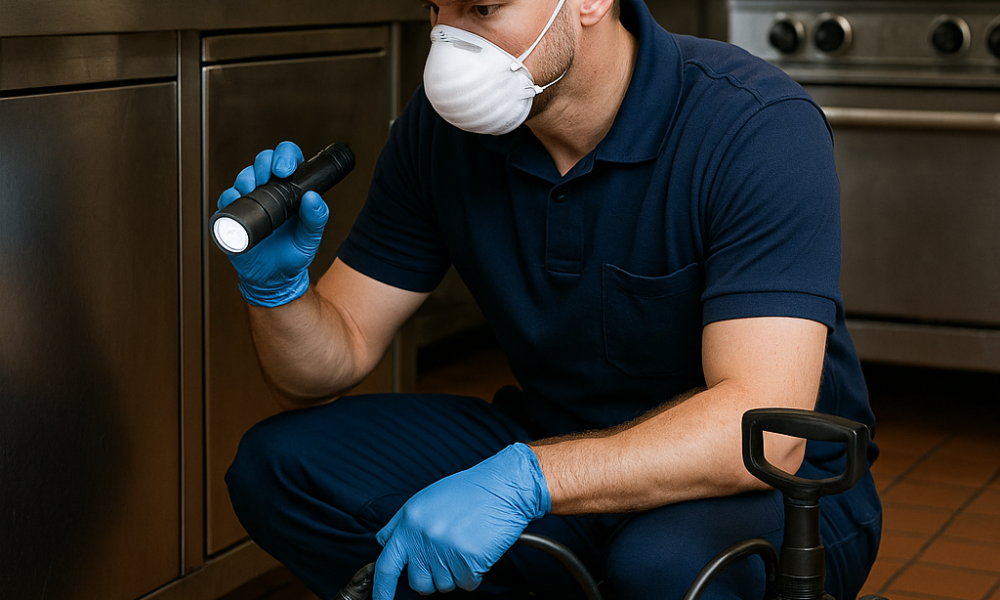
The most effective pest control programs — residential or commercial — start with a thorough property inspection that identifies current activity, entry points, conducive conditions, and any structural vulnerabilities like wood moisture issues that attract specific pests. That assessment drives a treatment plan specific to the property rather than a generic application that may not address what’s actually happening.
For homeowners and business operators in the Atlanta and Nashville service areas, getting that initial inspection in place before pest activity intensifies is consistently the lower-cost and lower-disruption path compared to addressing an established infestation after the fact.




