
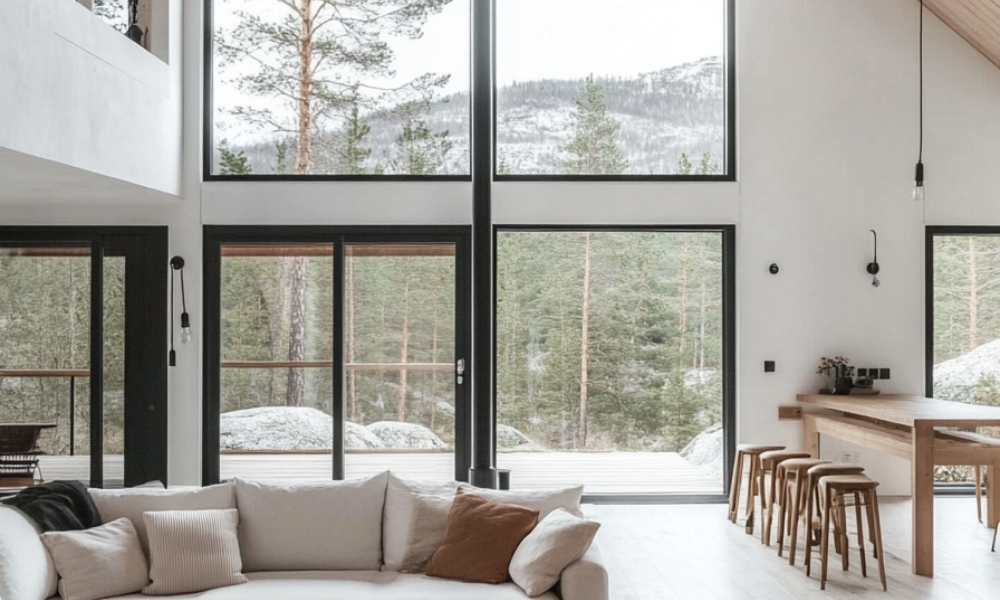
The alternative — designing architecture, interiors, cabinetry, and furniture as a single coordinated process rather than sequential handoffs — changes the quality of the outcome in ways that are visible in the finished space even when you can’t articulate exactly why. Rooms feel more resolved. Proportions feel intentional. Materials and finishes speak to each other because they were selected in relation to each other, not by separate professionals working from different briefs.
In an integrated process, the ceiling height in a living room is determined in part by the furniture that will anchor it. The kitchen layout is developed with the cabinetry design in mind from the beginning, which changes how the architect thinks about the relationship between the island, the perimeter counters, and the sight lines through to adjacent spaces. Window placement accounts for where art will hang, how furniture will be arranged, and what the morning and afternoon light will do to each room throughout the day.
For San Diego homeowners, working with a full-service architecture firm that handles both the architectural and interior dimensions of a project means those decisions get made together — which is significantly more efficient and produces a far more cohesive result than coordinating between separate firms after the fact.
Why Scandinavian Design Principles Translate So Well to San Diego Living
Danish design, which forms the philosophical foundation of DNA Design Group’s work, has a set of core principles that align almost perfectly with how San Diegans actually want to live. Clean lines without sterility. Natural materials that age well and feel good to live with. A deep commitment to functionality that doesn’t sacrifice beauty. An understanding that the best spaces feel effortless to inhabit — not ones that demand constant upkeep or that feel like they’re performing rather than serving the people in them.
Scandinavian architecture also has a sophisticated relationship with natural light that translates beautifully to San Diego’s climate. The challenge in Scandinavian design is maximizing light in environments where it’s limited. The challenge in San Diego is managing abundant light so that spaces feel warm and inviting rather than harsh and overexposed. The same design intelligence that solves one problem applies elegantly to the other — careful window placement, interior material choices that respond to light rather than fight it, and spatial planning that creates shade and warmth at the right moments throughout the day.
The result, in a well-executed San Diego home, is an interior that feels genuinely comfortable in every season and at every hour — not a showroom that photographs beautifully but gets the curtains drawn by 10 AM because the glare is unbearable.
Custom Cabinetry as Architecture, Not Furniture
One of the most significant differences between a home that feels designed and one that feels assembled is cabinetry. In most residential projects, cabinetry is selected from a catalog and fitted into a space that was designed around generic dimensions. In an integrated design process, cabinetry is part of the architecture — designed in proportion to the specific room, finished in materials selected in relation to the floor, countertops, and walls, and built to dimensions that serve the actual people who will use the space rather than whatever the standard sizes happen to be.
This is especially visible in kitchens, where the difference between cabinetry designed as part of the architecture and cabinetry fitted into an existing layout is immediately apparent. Custom kitchen and bath cabinetry designed alongside the architectural plan produces a kitchen where every dimension feels purposeful — because it was.
The same principle applies in closets, home offices, and living spaces where built-in storage and display are part of the design rather than an afterthought. When cabinetry is designed at the same time as the architecture and interior design, the result is a space that looks like it was always exactly this way — which is the highest compliment any finished interior can receive.
The Turnkey Advantage for San Diego Homeowners
Beyond the design quality argument, there’s a very practical case for working with a firm that manages a project from concept through completion. Custom home projects involve an enormous number of decisions, vendor relationships, and coordination points. When a single firm is responsible for the architectural design, interior design, cabinetry specification, and project oversight, the homeowner has one point of contact for the entire process rather than managing relationships between multiple professionals with different timelines, communication styles, and approaches to problem-solving.
Turnkey design services reduce the management burden on the homeowner while also reducing the likelihood of coordination failures between disciplines — which is where most project delays and budget overruns actually originate. For busy San Diego homeowners who want a beautiful result without becoming full-time project managers, that consolidation is as valuable as the design quality itself.
DNA Design Group has been delivering this kind of fully integrated work in San Diego since 2001, with projects spanning La Jolla, Rancho Santa Fe, Del Mar, Pacific Beach, Point Loma, and neighborhoods across the county. If you’re planning a custom home or a significant remodel, the full services overview is the clearest way to see how the different pieces of an integrated project fit together before your first conversation.
SEO TAGS: custom homes San Diego, architecture interior design San Diego, integrated home design, Scandinavian architecture San Diego, custom cabinetry San Diego, DNA Design Group, luxury home design San Diego, turnkey home design, Danish architecture San Diego, custom kitchen design San Diego




