
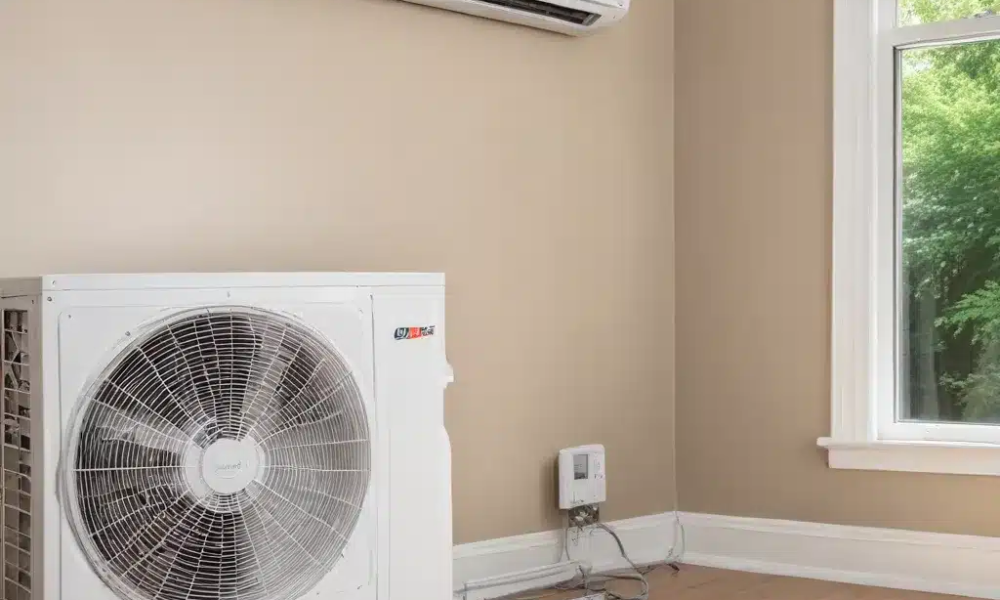
Ductless HVAC systems, commonly called a mini-split, is made up of two components: an outdoor compressor unit and one or more indoor air handlers mounted on a wall or ceiling inside the home. The two are connected through a small conduit running through the wall that carries refrigerant, power, and a condensate drain line. No ductwork involved at any point.
Each indoor unit operates on its own, which means different rooms or zones can be set to different temperatures simultaneously. One bedroom stays cool while a living room runs a little warmer, all from the same outdoor unit. That kind of individual control is something a conventional ducted system simply can’t offer. With a traditional central system, you’re conditioning the entire house to one temperature whether you’re using every room or not. Over a Richmond summer that runs hard for months, that adds up to a lot of wasted energy.
Why Richmond Specifically Is a Strong Case for Ductless
Richmond’s climate is genuinely demanding on both ends. Summers are hot and humid, winters get legitimately cold, and a system that performs well through both extremes is what every homeowner here actually needs. Modern ductless HVAC systems are built for exactly that. High-efficiency heat pump models maintain effective heating even when outdoor temps drop well below freezing, which takes care of the old concern that heat pumps couldn’t handle Virginia winters.
Richmond also has a large share of older housing stock, homes built before central air was standard, where adding ductwork is either extremely difficult, expensive, or genuinely not possible. Crawl spaces that are too tight to run ducts through, plaster walls that can’t be disturbed, historic properties where installation would cause real damage — these situations come up constantly across Richmond neighborhoods. Ductless sidesteps the duct problem entirely and makes comfort possible in spaces where traditional options just don’t fit.
For homeowners who’ve added a sunroom, converted a garage, finished a basement, or built any kind of addition that the existing duct system doesn’t reach, a single-zone mini-split is almost always the fastest and most cost-effective solution. Running new ductwork to a single room addition rarely pencils out. A ductless unit almost always does.
The Energy Efficiency Argument
One of the biggest selling points of ductless systems is efficiency, and it’s worth understanding why the gap is as significant as it is. Traditional ducted systems lose a meaningful percentage of conditioned air through leaks and heat transfer in the ductwork. Estimates put that loss anywhere between 20 and 30 percent in many homes. Ductless systems deliver conditioned air directly into the living space with no ductwork losses at all.
On top of that, zone control means you’re only conditioning the spaces you’re actively using. For homeowners who work from home, keep irregular schedules, or have sections of the house that rarely get used, the monthly savings add up quickly, especially through a long Richmond summer when the system is running consistently for months at a stretch.
That efficiency only gets realized with proper installation though. An undersized outdoor unit will run constantly and still struggle to keep up. An oversized one will short-cycle, which is hard on the compressor and leaves the air feeling clammy because the system isn’t running long enough to properly dehumidify the space. A proper load calculation done before installation is what separates a system that performs the way it should from one that disappoints from day one. Scheduling HVAC services in Richmond with a technician who does that calculation correctly upfront makes all the difference in long-term performance.
What About Heat Pumps Specifically?
Ductless mini-splits are heat pump systems, which means they handle both heating and cooling from the same equipment. In the summer they pull heat out of your home and move it outside. In the winter they reverse that process, pulling heat from the outdoor air and moving it in. Even in cold weather there’s usable heat energy in the air, and modern heat pump systems are efficient enough to extract it effectively at temperatures that used to be considered too cold for heat pump operation.
For Richmond homeowners who are running separate systems for heating and cooling, or who are looking at replacing an aging furnace, a ductless heat pump is worth serious consideration. You get year-round performance from one system, better energy efficiency on both ends of the calendar, and no separate fuel source to manage for heating.
Is Ductless the Right Call for Your Home?
Ductless isn’t the right answer for every situation, and it’s worth being straightforward about that. For a newer home with well-sealed, properly sized ductwork and a system that’s still performing well, a traditional central system makes perfectly good sense. Ductless earns its place when the existing setup isn’t working, when ductwork isn’t realistic, or when you need zone control and flexibility that a conventional system can’t provide.
If you’ve got a room that’s always uncomfortable, an addition without conditioning, or an older home where duct installation has never been feasible, it’s worth having a technician look at the actual situation and give you an honest comparison. Armstrong Mechanical offers HVAC inspections and assessments for Richmond homeowners who want a real answer based on what’s actually in their house, not a sales pitch.
Richmond heat keeps coming every summer without fail. Having a system that handles it efficiently, consistently, and in every room of the house is worth getting right.
SEO TAGS: ductless HVAC systems, mini split Richmond VA, ductless heating and cooling, HVAC Richmond Virginia, heat pump installation Richmond, ductless AC installation, energy efficient HVAC, mini split system benefits, HVAC upgrade Richmond, ductless mini split Virginia




