The 2025 Philadelphia Venture Report makes a quiet, devastating argument about ecosystem building. Most readers will miss it, because the headline numbers look like a slowdown. Deal count down. Fundraising down. Tourist capital retreating. Read it that way and you’d conclude Philadelphia is treading water.
I read it differently, and see it as a stress test of what an ecosystem actually is, and think Philadelphia is doing something almost no one else in the country is doing right now. They’re proving that diversified, locally-rooted, mission-aligned ecosystem building outperforms hype concentration over a full cycle. The data is in the PACT report. The lessons matter for every region that wants to be more than a satellite of Silicon Valley.
I’ve written before about why the old innovation pipeline model is structurally broken, and about what Station F in Paris reveals about ecosystem architecture done right. Philadelphia is the third leg of that argument. Station F shows what designed architecture looks like at scale. Philadelphia shows what a forty-year compounding bet on the same principles looks like when a region commits to the work and refuses to chase the cycle.
The signal hiding inside the slowdown
Here’s the number that should reframe every conversation about regional venture markets in 2026: Philadelphia’s share of US venture capital deal volume rose to 3.2% in 2025, up from 2% a decade ago. Their absolute deal count fell year-over-year. Their share of the national market grew by more than half over ten years.
That only happens when the rest of the country is concentrating faster than you are. The Bay Area now accounts for 54.4% of US VC deal value. AI alone represents nearly 70% of national venture deal value and 40% of volume. Strip AI out and US dealmaking is weaker than it looks. The headline number is one thing; the underlying ecosystem health is another.
Philadelphia’s gain is structural. It’s a region quietly winning at ecosystem building because everyone else is overconcentrating.
What ecosystem building actually means
The word “ecosystem” gets thrown around so freely in economic development circles that it has lost most of its meaning. The PACT report, almost without trying, restores it. An ecosystem isn’t a deal volume number. It isn’t a unicorn count. It isn’t whichever city has the most coworking space per capita.
An ecosystem is a self-reinforcing system in which local capital, local talent, local institutions, and local demand compound on each other across decades. Ecosystem building is the deliberate, patient work of strengthening each of those layers so that they support each other when the macro environment turns.
Philadelphia’s report shows what that looks like in practice across four dimensions:
- Sectoral depth, not sectoral fashion. Life sciences and healthcare anchor 47.1% of total VC deal value, built on the University of Pennsylvania, Temple, Penn State, Children’s Hospital of Philadelphia, and decades of institutional investment in cell and gene therapy. This isn’t a pivot, it’s a forty-year compounding bet.
- Foundation over apex. 72.6% of deals are pre-seed, seed, or early-stage. The pyramid is wide at the bottom, where ecosystems either work or don’t.
- Mission-aligned local capital. Ben Franklin Technology Partners has supported more than 2,000 companies over four decades, generated more than $5 billion in economic impact, and created 32,000 jobs. They are an evergreen, mission-driven fund, not a tourist. When tourist capital fled in 2025, Ben Franklin kept writing checks.
- Applied AI, not aspirational AI. Philadelphia’s AI startups aren’t building foundation models. They’re applying AI to clinical research, biometric monitoring, restaurant analytics, athletic marketing, logistics. The report’s phrase is sharp: their AI is “distinctly rational compared with that of its Silicon Valley counterparts.”
That’s ecosystem building, and while none of it is glamorous in the moment, all of it compounds.
The translation gap is where ecosystems live or die
Philadelphia’s biggest tell is in what tourist capital won’t fund and what local mission-driven capital does. The report puts it plainly: deals with New York and Bay Area investor participation carried median post-money valuations nearly 1.5x the regional median, while pre-seed and early-stage rounds were largely excluded from outside capital. Local players, principally Ben Franklin, filled that gap.
This is the translation gap rendered in venture data. The early-stage layer, where research becomes a company and a company becomes a fundable proposition, is exactly the layer that tourist capital underprices, ignores, or abandons in down cycles. It is also the exact layer that determines whether a region builds its own pipeline or remains a hunting ground for coastal acquirers.
A region that lets the early-stage layer atrophy doesn’t have an ecosystem. It has a farm team. The companies it produces will be acquired and absorbed elsewhere, and the ecosystem will eventually starve. I have been a witness to this, watching companies in our region of Southern California obtain funding and move to Silicon Valley or Austin.
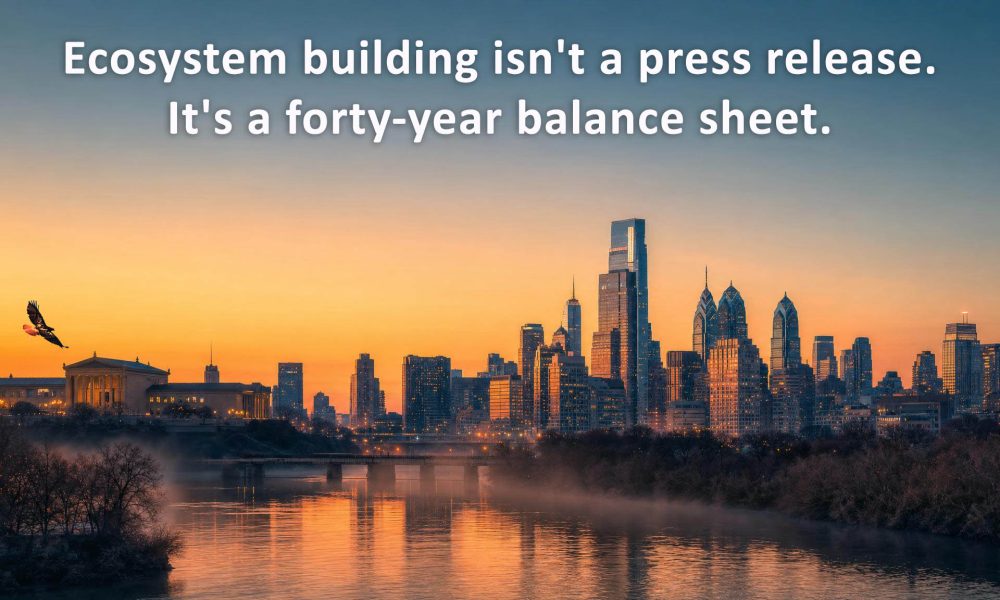
A region that builds and protects the early-stage layer through mission-driven local capital, university partnerships, and patient institutional support has the architecture for compounding returns. This is the heart of ecosystem building: protecting the layer that everyone else takes for granted. Philadelphia has that architecture. Most regions don’t, because the work is unglamorous, slow, and politically thankless. Ecosystem building isn’t a press release. It’s a forty-year balance sheet.
What the PACT report says about win/win architecture
There’s a passage in the Ben Franklin Q&A at the back of the report that should be read closely by anyone thinking about regional innovation. Asked about the gaps Philadelphia must close, Jonathon Beschen names “capital connectivity” and the need for “stronger linkages between investors across all stages” to prevent “leakage of high-potential startups to other regions.”
That’s the win/win architecture problem, expressed in venture vocabulary. Leakage happens when local capital, local operators, and local institutions don’t coordinate – when the ecosystem is a collection of self-interested actors instead of an aligned system. It happens in every region that hasn’t done the deliberate work of connecting its parts.
Philadelphia hasn’t fully solved it either. The report is candid that growth-stage capital remains thin, operator talent for early-stage life sciences companies is scarce, and access to enterprise customers for portfolio companies is a structural constraint. These are the same constraints every non-coastal region faces.
The difference is that Philadelphia’s ecosystem building institutions – PACT, Ben Franklin, Penn, the Science Center, regional health systems, are naming the gaps and coordinating across them. That coordination is the real product of ecosystem building. Most regions still treat it as someone else’s job.
What gets missed, and why it matters
The Philadelphia story will be misread by people who only read the deal count chart. They’ll see a 12.6% year-over-year decline and conclude the region is in trouble. They’ll miss that share of national market is up. They’ll miss that the early-stage foundation is intact. They’ll miss that local mission-driven capital is doing the work tourist money walked away from. They’ll miss that the AI deals being done are profitable, applied, and rational rather than speculative.
This is the same misreading that has dogged every non-coastal region for two decades. Coastal venture media reports on what’s loud, such as megadeals, hype rounds, the latest AI valuation. Real ecosystem building is quiet by nature. It looks like a flat line until it doesn’t, and then it looks like a region that suddenly has its own gravitational pull.
Philadelphia isn’t suddenly. It’s forty years of compounding. That’s the actual story, and it’s the one every region that wants to be more than a satellite needs to internalize.
The work itself, and where Redtail Capital fits
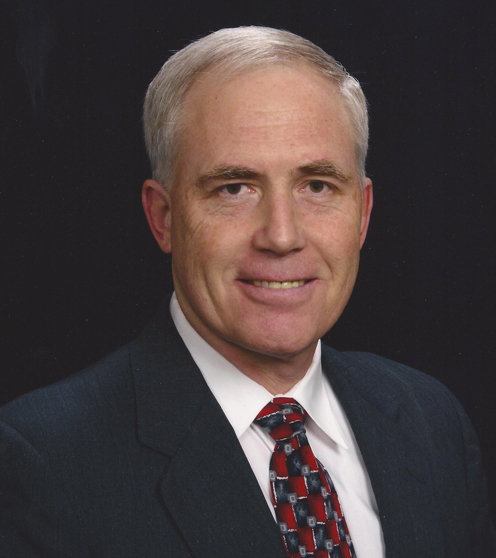
I’ve spent four decades inside the question of where capital actually creates value, as a founding executive of one of the country’s largest unregulated energy providers, as CEO of a genomics company, as managing partner of a life science venture fund, and now as the founder of Redtail Capital. The Philadelphia story reinforces something I’ve come to believe with more conviction the longer I do this work: ecosystem building and value creation are the same discipline at different scales.
What Ben Franklin Technology Partners does at the regional level like deploying patient capital, deal-by-deal translation, alignment between what founders need and what the system actually provides is the same work Redtail Capital strives to do at the company level. The Investment Lens scores pitch decks against the criteria that actually predict success, not the criteria that flatter founders. The Enterprise Value Creation Roadmap translates founder intent into the operating discipline that builds durable enterprise value. Research Lens, in early development, will translate university research into investable signal. Different tools, same orientation: do the translation work where it actually matters, deal by deal, founder by founder, with everyone in the transaction required to come out ahead.
That orientation is why Redtail’s work is increasingly global, supporting founders across the US, Europe, India, and Africa, on terms where every participant has to win for the model to count. Ecosystem building done right doesn’t require proximity. It requires architecture.
The takeaway
The 2025 Philadelphia Venture Report is, on paper, a regional venture data summary. When read carefully, it’s something more important: a working model of what ecosystem building looks like when a region commits to it for a generation.
Three things define the model:
- Diversification beats concentration over a full cycle. Philadelphia’s sectoral spread protected it from the AI hype-and-correction cycle that will reshape Silicon Valley over the next 24 months.
- Mission-aligned local capital is the ecosystem’s load-bearing wall. When tourist capital retreats, local capital is what keeps the early-stage layer alive. Without it, the foundation cracks.
- Connective tissue is the differentiator. Sectoral depth and local capital don’t compound on their own. They compound when ecosystem building institutions deliberately connect them across stages and decades.
Philadelphia is showing the country what that looks like. Station F is showing Europe. The question for every other region, and every firm that claims to support founders, is whether they’ll read the work carefully enough to learn from it, or keep chasing the hype that the data has already begun to expose.
Innovation that doesn’t create durable value isn’t innovation. It’s activity. Ecosystem building is the discipline that turns one into the other.