
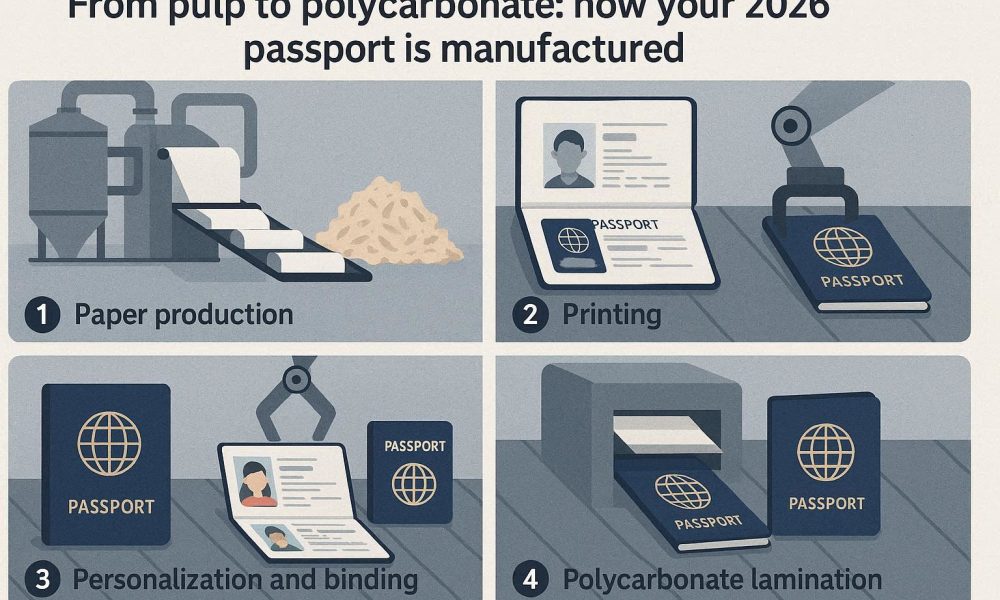
Inside the high-tech facilities, layers of secure plastic are fused to create a virtually indestructible travel document.
WASHINGTON, DC — May 7, 2026.
The modern passport has become one of the most engineered objects a traveler carries, evolving from a paper booklet of stamps and ink into a layered security instrument built with polycarbonate, laser personalization, embedded electronics, forensic artwork, and manufacturing controls designed to withstand both physical damage and criminal manipulation.
In 2026, the passport is no longer merely a diplomatic convenience or a border document; it now functions as a biometric access key, a machine-readable identity file, a government-issued credential, and a physical security product manufactured under conditions closer to those of a defense laboratory than a traditional printing plant.
The passport data page has become the fortified heart of the travel document.
For decades, the personal information page inside a passport was essentially paper protected by laminate, making it vulnerable to peeling, substitution, ink alteration, heat damage, photo replacement, chemical attacks, and the slow destruction caused by moisture, bending, border handling, and repeated international travel.
The shift to polycarbonate changed that equation because the identity page is now built from multiple sheets of secure plastic fused under heat and pressure, creating a single bonded structure that cannot be separated without leaving obvious damage visible to inspectors, forensic examiners, and automated document readers.
Instead of printing personal data on the surface, modern passport systems use laser engraving to burn information, portraits, machine-readable zones, and security details into the plastic’s internal layers, making alteration far more difficult because the identity data is physically embedded in the document itself.
The U.S. Department of State describes the Next Generation Passport as using a polycarbonate data page, laser engraving, and updated artwork, reflecting a wider global movement toward identity documents that are harder to counterfeit, harder to tamper with, and easier for border systems to authenticate.
This transformation matters because the passport data page carries the traveler’s name, nationality, date of birth, document number, expiration date, photograph, and machine-readable code, making it the most valuable real estate inside the booklet for both legitimate governments and criminal networks seeking fraudulent mobility.
Manufacturing begins long before the booklet is assembled.
A modern passport facility starts with secure design, not printing, because governments must define the document’s artwork, forensic features, optical effects, chip placement, inspection zones, typography, background patterns, and personalization architecture before a single blank booklet reaches the production floor.
Specialized designers build visual themes around national symbols, landscapes, architecture, historical references, or cultural motifs, but those images are not mere decorative filler; they also conceal microtext, line structures, ultraviolet reactions, anti-scan patterns, tactile effects, hidden images, and inspection cues for trained officers.
The traditional paper pages used for visas remain highly specialized, often incorporating watermarks, fibers, security threads, ultraviolet features, intaglio printing, and complex background designs, although the strongest identity protection is increasingly concentrated inside the polycarbonate page where the holder’s personal data is locked into plastic.
Once the design is approved, manufacturers prepare secure substrates under controlled conditions, using paper stock for visa pages, reinforced cover materials for durability, and layered polycarbonate sheets for the data page, each of which must meet tight specifications for thickness, optical clarity, bonding behavior, and machine readability.
Blank passport components are treated like controlled security assets rather than ordinary stationery, with serialized inventory, restricted access, guarded transport, production logs, waste tracking, and destruction protocols designed to prevent unused materials from leaking into counterfeit markets.
Polycarbonate changed the physical logic of passport security.
Polycarbonate is valuable because it is tough, transparent, heat responsive, and highly compatible with laser engraving, allowing manufacturers to place identity information beneath the surface rather than relying on ink, adhesive laminate, or exposed printed layers that can be attacked.
During production, multiple polycarbonate layers are stacked with embedded security elements placed between them, then fused through lamination processes that use pressure and heat to create a single solid page with no practical seam for a counterfeiter to exploit.
The resulting page can bend, resist moisture, survive years of handling, and reveal tampering attempts more clearly than paper-based laminated pages, which is why governments increasingly view the polycarbonate page as the foundation of next-generation passport durability.
The process also allows designers to incorporate transparent windows, ghost portraits, tactile structures, laser-perforated document numbers, optically variable images, and embedded machine-verifiable features, creating multiple layers of authentication that work together under white light, ultraviolet light, magnification, and electronic inspection.
As TravelPulse reported during the U.S. transition to next-generation passports, the most visible changes included the polycarbonate data page and enhanced security features, showing how manufacturing choices now shape the traveler’s everyday experience at airports, consulates, and border checkpoints.
The fusion process is the stage at which the passport becomes a security object.
The polycarbonate data page begins as a stack of engineered films, not as a single sheet, and each layer may carry a different function, including optical clarity, printed security artwork, embedded electronic pathways, laser-sensitive zones, protective surfaces, or transparent features.
Inside high-security production rooms, those layers are aligned with precision, pressed together, heated, cooled, inspected, and tested, because even slight misalignment can affect visual inspection, chip performance, machine reading, page strength, or the registration of security artwork.
The lamination stage is critical because the page must become one inseparable object, meaning any later attempt to replace a portrait, alter a name, substitute a date of birth, or remove the electronic chip should visibly disrupt the bonded structure.
Manufacturing teams also test how the page behaves under light, pressure, flexing, temperature changes, and repeated handling, because a passport must remain usable after years in pockets, bags, hotel safes, humid climates, immigration booths, and automated e-gates.
The goal is not simply to make the passport beautiful or durable, but to create a layered identity platform in which every feature supports another, forcing counterfeiters to defeat the material, the artwork, the laser engraving, the chip, and the inspection system all at once.
Laser engraving has replaced surface printing for the most sensitive identity data.
In older passports, ink sat on or near the surface, making alteration possible through chemical washing, scraping, delamination, photo substitution, or skilled manipulation of protective films, particularly when inspection technology was weaker and border officers relied heavily on visual comparison.
With polycarbonate, lasers personalize the document by creating controlled carbonization within the plastic layers, producing black-and-white portraits, text, document numbers, and sometimes additional hidden or secondary images that become part of the page’s internal structure.
Because the data is inside the page, not printed on top of it, tampering becomes much more difficult, since changing the holder’s identity would require destroying or reconstructing the bonded plastic itself while also matching every surrounding security feature.
Laser personalization can also create tactile effects, variable depth marks, fine detail, and high-resolution portrait structures that are difficult to reproduce with consumer equipment, commercial printers, or counterfeit laminates used in older forms of document fraud.
This is why the passport manufacturing story has shifted from ink quality to materials science: the strongest protection now comes from how light, plastic, laser energy, electronics, and forensic artwork interact within a single controlled object.
The electronic chip turns the booklet into a digital credential.
Modern e-passports contain an embedded chip that stores biometric and biographic information, allowing border systems to compare the printed data page with electronically signed data that should match the issuing government’s cryptographic records.
The chip does not replace the physical passport, but it adds another layer of authentication because a fraudulent booklet must now defeat both visual inspection and digital verification, including checks against tampering, cloning, signature failure, and mismatched identity data.
Manufacturers must position and protect the chip and antenna so they survive normal passport use, because the document must open, bend, scan, and travel repeatedly without losing electronic performance at the moment a traveler reaches inspection.
The chip also changes how governments think about document lifecycle management, since a passport is no longer only a printed object issued once, but part of a larger ecosystem involving application vetting, biometric capture, personalization, issuance, border reading, database comparison, and eventual expiration.
That ecosystem has become increasingly important for lawful mobility planning, which is why professional advisory firms such as Amicus International Consulting monitor passport standards, travel document modernization, and identity verification trends as governments tighten the relationship between physical credentials and digital border systems.
The booklet still matters, even in a biometric age.
Although the data page receives most attention, the rest of the passport remains a sophisticated product because visa pages, stitching, covers, page numbering, adhesives, threads, inks, and binding methods all contribute to durability and tamper evidence.
Passport covers must withstand abrasion, humidity, pressure, temperature fluctuations, and repeated handling, while still conveying national identity, document class, and official symbolism that border authorities recognize before opening the booklet.
The binding must securely hold the data page within the passport while resisting removal, replacement, or substitution, which is why stitching patterns, thread materials, reinforcement strips, page sequencing, and cover integration remain central to manufacturing security.
Visa pages are also engineered to reveal fraud, because watermarks, fibers, ultraviolet patterns, page numbers, background printing, and specialized inks can expose page replacement or counterfeit insertion when officers inspect the booklet under controlled light.
The passport is therefore not a single security feature but a coordinated architecture of paper, plastic, electronics, ink, thread, typography, numbering, imagery, and government data, all designed to make unauthorized alteration expensive, visible, and operationally risky.
Quality control is as important as the technology itself.
A passport can include advanced features and still fail if production controls are weak, because security depends not only on materials but also on custody, inspection, audit trails, staff vetting, equipment calibration, and strict separation between blank production and personalization.
Manufacturing facilities inspect blank booklets for page order, binding quality, chip functionality, data page clarity, artwork registration, laminate bonding, optical features, and physical defects before the documents proceed to personalization or government issuance.
During personalization, systems must ensure that the correct applicant data is matched to the correct booklet, the portrait aligns properly, the chip is encoded accurately, and the printed or engraved information matches the machine-readable and electronic records.
Rejected booklets are not tossed into ordinary waste because defective security documents must be recorded, controlled, destroyed, and reconciled, preventing damaged or partially produced materials from entering illicit supply chains.
This tight production discipline is one reason real passports remain difficult to counterfeit at scale: criminals may imitate a single visible feature, but reproducing the entire controlled manufacturing environment is a far greater challenge.
Passport security now responds to the global identity fraud market.
The move toward polycarbonate has accelerated because identity fraud has become more technical, more international, and more connected to organized crime, sanctions evasion, human smuggling, financial crime, and fugitive travel.
Fraud networks no longer rely solely on crude fake passports, as they may also use lookalike passports, breeder document fraud, insider manipulation, stolen blanks, counterfeit residence cards, synthetic identities, altered birth records, or genuine documents obtained through false claims.
Polycarbonate does not solve every problem, but it narrows the attack surface by making the final travel document harder to alter after issuance, especially when combined with biometric enrollment, database checks, watchlist screening, and stronger application vetting.
This distinction is important because document security begins before manufacturing, as a perfectly made passport issued under a fraudulent identity still poses a risk if the upstream civil registry, application review, or identity proofing process is compromised.
For individuals navigating lawful citizenship, second passport, or identity restructuring questions, the practical lesson is that legitimate outcomes depend on government authorization, documented eligibility, compliance review, and transparent legal pathways, not counterfeit documents or underground shortcuts.
The rise of polycarbonate has changed border inspection.
At modern airports, border officers and automated gates examine passports in several ways at once, using optical scanners, chip readers, ultraviolet light, infrared checks, facial comparison, database queries, and machine-readable zone validation to determine whether the document and traveler align.
A polycarbonate page supports that environment because its security features can be read by both humans and machines, enabling layered inspection rather than relying on a single officer’s ability to spot a forged stamp or an altered photograph.
The document’s physical durability also improves inspection reliability because damaged paper, lifted laminate, faded ink, or warped pages can trigger delays, secondary screening, or suspicion even when the traveler is legitimate.
In 2026, this matters more than ever because border systems increasingly combine passport inspection with biometric identity checks, entry-exit databases, airline verification, visa authorization systems, and law enforcement alerts that can flag mismatches before the traveler reaches the booth.
The passport has therefore become a bridge between the analog and digital border, providing a physical credential that still fits in a pocket while carrying enough embedded structure to participate in global identity verification networks.
The traveler sees a booklet, while governments see a layered trust system.
To the ordinary traveler, a new passport may appear different because the data page feels thicker, the portrait looks monochrome, the artwork has changed, the page sounds different when tapped, or the booklet feels more rigid near the front.
To governments, however, those changes represent a strategic investment in trust, because each feature is designed to protect national reputation, prevent fraudulent travel, reduce identity theft, improve border efficiency, and support international document standards.
The trust system also extends to airlines, banks, immigration lawyers, consulates, private security contractors, and global mobility advisers, since passports remain foundational documents for cross-border movement, residency applications, financial onboarding, and emergency relocation planning.
That is why Amicus International Consulting’s second passport advisory work is increasingly shaped by the same global trend visible in passport factories, where legal identity, citizenship documentation, tax records, banking access, and border compliance must align before mobility becomes reliable.
A polycarbonate passport may be physically tougher than its predecessors, but its real power comes from the underlying lawful identity system, because a strong document only works when the person, records, government authority, and verification trail are coherent.
The future passport will be harder, smarter, and more connected.
The next stage of passport manufacturing is likely to bring more transparent features, more advanced laser structures, improved chip durability, stronger cryptographic verification, renewable or lower-impact materials, and deeper integration with mobile digital travel credentials.
Yet the physical passport is unlikely to disappear quickly, because governments still need a durable fallback document for international recognition, emergency travel, visa placement, consular assistance, and travelers who cannot rely exclusively on mobile devices.
The 2026 passport, therefore, occupies a transitional moment, standing between the paper booklet of the twentieth century and the digital credential ecosystems now emerging across airports, immigration agencies, and border control networks.
Its polycarbonate page shows how governments are preparing for that future, using materials engineering to make personal identity harder to falsify while building a document that can communicate with machines, withstand real-world travel, and support biometric inspection.
From pulp to polycarbonate, the passport has become a compact piece of national security infrastructure, carrying the traveler’s legal identity through an increasingly automated world where every layer of plastic, every line of engraving, and every encrypted chip must prove that the person holding the booklet is exactly who the document says they are.




